
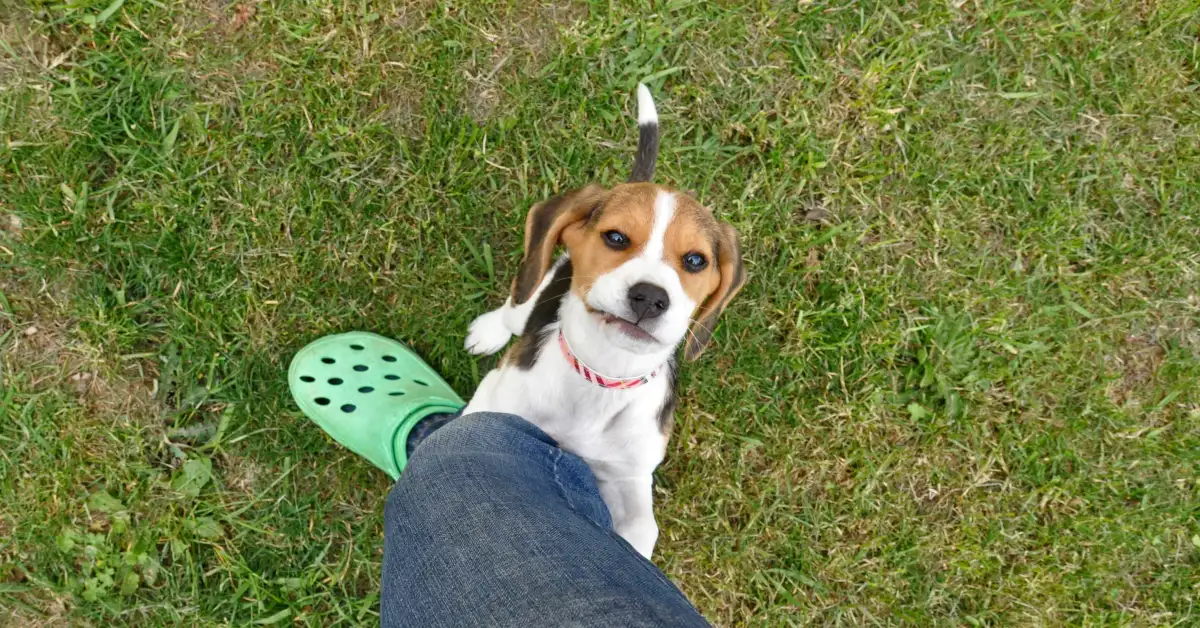
Disclosure: This post about “why do dogs hump” contains affiliate links. If you click through and make a purchase, I may earn a commission — at no extra cost to you. I only recommend products and courses I genuinely believe in, and all opinions expressed here are my own.
It happens mid-play, or in the middle of the living room, or right in front of guests you were hoping to impress. Your dog starts humping — another dog, a pillow, someone’s leg — and the room either erupts in awkward laughter or uncomfortable silence. You’re left wondering what on earth is going on, and whether you should be concerned.
If you’ve ever asked yourself why do dogs hump, you’re in very good company. It’s one of the most commonly searched dog behavior questions on the internet, and also one of the most misunderstood. The explanations that get passed around — “he needs to mate,” “she’s being dominant,” “it’s a male thing” — are almost always wrong.
Let’s clear this up properly.
Why Do Dogs Hump? Starting With the Sexual Explanation
The sexual explanation feels obvious, which is probably why it persists. But mounting behavior in dogs is only reliably sexual under one specific set of circumstances: when an intact male dog is in the presence of a female in heat, actively producing the pheromones that signal fertility and receptivity.
What the Canine Heat Cycle Actually Looks Like
This is where it helps to understand how the canine estrous cycle works — because it is nothing like the human menstrual cycle, and the difference matters.
Female dogs typically come into heat roughly twice a year, with cycles spaced approximately six to eight months apart. The full cycle lasts around two to three weeks, but the window during which she is actually fertile and receptive is considerably shorter — often just five to ten days. During this period, she produces specific hormonal signals that intact males can detect, and those signals are what actually trigger sexually motivated mounting.
Outside of this specific window — which accounts for a small fraction of the year — there is no hormonal trigger for sexual mounting. And in neutered or spayed dogs, the hormonal basis for sexual mounting is largely absent regardless of the calendar. Yet those dogs hump too. Which tells you that something else entirely is usually going on.
Puppies hump. Spayed females hump. Neutered males hump. Dogs hump objects, furniture, air. The behavior is so widespread and so disconnected from reproduction in most cases that the question “why do dogs hump” needs a completely different answer than the one most people give it.
Why Do Dogs Hump? The Real Reasons Most Dogs Hump Most of the Time
Veterinary behaviorists now understand mounting primarily as an emotional regulation behavior. A physical outlet for internal states that a dog doesn’t quite know what to do with. There are three broad categories that cover the vast majority of cases.
Positive Emotional Overload
This is the most common cause, and also the most benign. Your dog is having a wonderful time — playing intensely, greeting someone they love, running in an open field — and their excitement builds beyond what they can comfortably contain. The physical action of mounting is a release valve for that emotional pressure. It’s not sexual, it’s not aggressive, and it’s not a statement about anything. It’s simply a body doing something with energy it doesn’t know how to process otherwise.
You’ll often recognize this kind by the context: it happens at peak excitement, stops relatively quickly, and the dog moves easily back into whatever they were doing. Some dogs are simply more prone to it than others, particularly those with naturally high arousal levels or those who didn’t have much opportunity to learn appropriate self-regulation during early socialization.
Stress, Anxiety, and Emotional Release
The flip side of the emotional coin. A dog who is experiencing negative emotional tension — anxiety, frustration, overstimulation — can express it through exactly the same physical behavior. In this context, mounting is what behaviorists call a displacement behavior: an action that occurs out of context as a way of managing internal conflict that has no better outlet.
You might see this in a dog who mounts compulsively when left alone, or who starts humping the moment a visitor arrives and the social situation becomes overwhelming, or who does it reliably when they haven’t had enough exercise or social interaction. The behavior itself is identical to the excited version — but the emotional origin is very different, and so is the appropriate response.
Understanding which one you’re dealing with requires paying attention to context. What happened just before? What does the dog’s body language look like overall — loose and playful, or tense and anxious?
Attention-Seeking — When Humping Gets a Reaction
Dogs learn. And one of the things they learn with remarkable speed is which behaviors reliably produce a human response. Humping, it turns out, almost always gets a reaction — laughter, a sharp “no” being pushed away, being picked up. All of these are attention, and attention is something dogs want very much.
If a dog has discovered — even accidentally, even once — that mounting a person or another dog produces an immediate response from their owner, there is a real chance they will return to it when they feel ignored or understimulated. The behavior has been rewarded, not through praise, but through the response itself.
What About Dominance?
You may have heard that humping is a dominance display — a dog asserting their superior status over whoever is unlucky enough to be on the receiving end. This explanation was widespread for a long time and still circulates freely.
It’s not accurate as a general explanation. While mounting can occasionally occur in the context of genuine social conflict between dogs — as one of many signals in a complex interaction — it is not a routine assertion of dominance, and treating it as one leads to responses that miss the point entirely. A dog humping out of overstimulation doesn’t need a status correction. They need help regulating their emotional state.
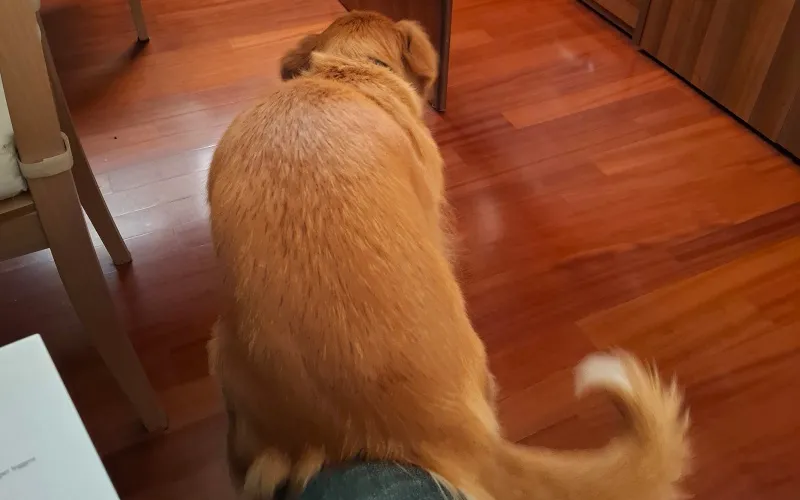
Why Do Dogs Hump? What to Do About It — A Response for Each Cause
The appropriate response depends entirely on which cause you’re dealing with — which is why understanding the context matters so much.
When It’s Excitement
If the target is another dog who is unbothered, you can often let it resolve itself. Dogs who find it unwelcome usually communicate that clearly, and a well-socialized interaction will sort itself out. If it’s bothering you, redirect calmly before the arousal peaks: call your dog, give them a simple task they know well, or shift the activity. Don’t shout or react dramatically — that adds energy to an already overexcited dog.
When It’s Stress or Anxiety
This one deserves more than redirection. Try to identify what’s driving the tension. Is your dog getting enough physical exercise and mental stimulation? Is there a specific trigger — certain environments, certain people, time alone — that precedes the behavior? Addressing the underlying emotional need is the actual solution. If the pattern is frequent and linked to a specific situation, working with a qualified force-free trainer who can observe the dog in context is well worth it. As I explore in the post on dog mental health, a dog who has no outlet for emotional expression will find one — and it may not be the one you’d choose.
When It’s Attention-Seeking
The most effective response is also the hardest one: do nothing. No eye contact, no verbal response, no touching. If the behavior gets zero reaction every time, its usefulness to the dog disappears. That said, make sure the dog’s genuine social and interaction needs are being met proactively. Attention-seeking behaviors intensify when a dog’s connection with their owner feels thin.
In all three cases, the moment the behavior stops and the dog settles, that’s when you engage warmly. You’re not rewarding the humping by ignoring it — you’re rewarding the calm that follows by responding to that instead.
Why Do Dogs Hump? When It’s Worth Taking More Seriously
Occasional mounting in clearly emotional contexts is normal behavior, not a problem that requires fixing. It becomes worth addressing more deliberately when it happens compulsively and frequently, when it causes conflict with other dogs, or when it seems to be the dog’s primary tool for navigating any form of emotional activation.
In those cases, the behavior is usually telling you something important about what’s missing in the dog’s daily life. Sufficient movement, social contact, mental engagement, or the basic security of a predictable environment. These are the foundations. When they’re in place, most of the behaviors that worry owners either resolve on their own or become much easier to redirect.
If you’d like structured support building exactly that kind of foundation — one that addresses behavior at the root rather than symptom by symptom — the Total Transformation Masterclass by K9TI is the resource I recommend most. It’s built on the same philosophy: understand the dog in front of you, and the rest follows.
Has your dog ever left you reaching for an explanation at the worst possible moment? Leave a comment — this is a judgment-free zone, and you’re definitely not alone.