
Disclosure: This post regarding the question “should dogs sleep inside or outside?” contains affiliate links. If you click through and make a purchase, I may earn a commission — at no extra cost to you. I only recommend products and courses I genuinely believe in, and all opinions expressed here are my own.
Whether you’ve just brought home a new dog or you’ve had one for years, the question of where they should sleep tends to generate surprisingly strong opinions. Some people consider it obvious that a dog belongs inside with the family. Others were raised with the equally firm conviction that dogs belong outside — that it’s natural, tidy, and just the way things are done.
If you’re genuinely uncertain, or if someone in your household holds a different view from yours, this post is for you. Because the answer matters more than it might seem at first — and most of the conversations around it miss the most important point entirely.
Where the “Dogs Sleep Outside” Tradition Comes From
The idea that dogs should sleep outdoors has real historical roots. Understanding those roots helps put the question in perspective. For most of human history, dogs were working animals — hunters, herders, guards — with a specific function that justified their place in our lives. The relationship between dog and owner was fundamentally transactional. The dog performed a role, and in return was fed and sheltered, often in a kennel outside the main dwelling.
From that tradition came a set of assumptions that lingered long after the circumstances changed. Concerns about hygiene, about dogs being “animals” rather than family members, about maintaining a certain kind of order in the home — these were the arguments, and many of them were reasonable given the context of the time.
But that context has changed almost completely. The vast majority of dogs today are companion animals, chosen specifically to share our lives. The hygiene gap between a cared-for indoor dog and an outdoor dog has essentially closed. And our understanding of what dogs actually need — psychologically and emotionally — has grown enormously. It’s worth revisiting old assumptions with new information.
Should Dogs Sleep Inside or Outside? The Reason That Actually Matters
Most articles that address this question focus on physical factors: temperature, weather, parasites, safety. These things matter, and we’ll get to them. But they’re not the deepest reason why the answer to “should dogs sleep inside or outside” is almost always inside.
The deeper reason is this: your dog is a social animal whose sense of security is rooted in spatial belonging. Being part of a group, sharing a territory, resting in proximity to the beings they’re bonded with. These aren’t nice extras for a dog. They are fundamental to how a dog understands their place in the world and how safe they feel within it.
As I write about in my post on the four needs that shape your dog’s wellbeing, one of those core needs is a healthy relationship with space. Specifically, feeling like a real member of the household rather than an appendage to it. A dog who sleeps outside, separated from the family every night, is a dog who spends a significant portion of their life in a state of low-level social exclusion. Not because they’re punished or neglected. But because the most vulnerable hours of the day — nighttime, when the group is resting together — they’re on the other side of a wall.
This exclusion has consequences. It makes it harder to build the kind of deep, secure bond that makes everything else — training, communication, day-to-day behavior — work well. A dog who feels genuinely included in the family’s space tends to be more settled, more trusting, and more resilient than one who sleeps alone outside every night, however well-fed and cared-for they are in other respects.
Should Dogs Sleep Inside or Outside? The Physical Arguments Are Real Too
Beyond the relational dimension, there are practical reasons to keep your dog indoors at night that are worth taking seriously.
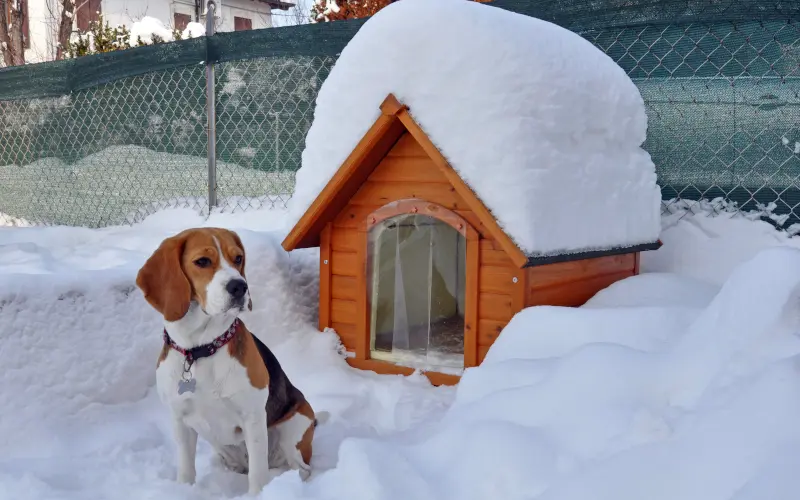
Exposure to temperature extremes — both cold and heat — takes a cumulative toll on a dog’s body over time, particularly on their joints as they age. A dog who “seems fine” sleeping outside for years may develop problems earlier than they otherwise would.
Outdoor dogs are also at higher risk from parasites and insects. In many parts of the United States, mosquito-borne heartworm is a genuine and serious concern. A dog sleeping outside through warm nights has significantly more exposure than one who sleeps indoors. Ticks, fleas, and other parasites follow similar logic.
And there’s the simple matter of safety. A dog enclosed in a yard overnight is more vulnerable to theft, to encounters with wildlife, and to escape attempts driven by sounds or stimuli in the night that they can’t process calmly when alone.
None of these are reasons to be alarmist. They are reasons to make an informed choice rather than defaulting to tradition.
What Getting It Right Actually Looks Like Indoors
Deciding your dog sleeps inside is only part of the answer. The other part is how you set things up. Because a dog without a clearly defined space of their own inside the house can develop its own set of problems.
Give Your Dog a Den of Their Own
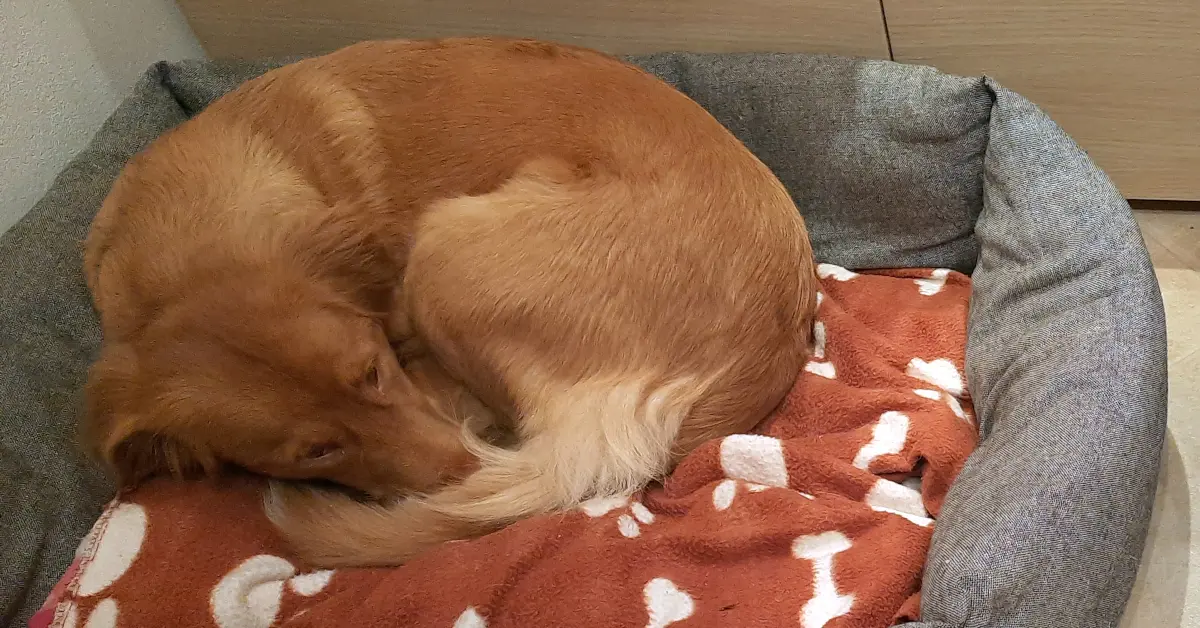
Dogs have a genuine need for a personal space that belongs to them. A retreat that is safe, predictable, and unambiguously theirs. A crate, a covered bed in a quiet corner, or a defined area behind a baby gate all serve this purpose. The key is that the space is consistent, always available, and respected by everyone in the household. Nobody disturbs the dog when they’re in their space, and the dog is never punished there.
This setup does something important beyond just providing comfort. It means your dog doesn’t need to claim another piece of furniture — a sofa, a chair — as their personal territory. When a dog has a den of their own, shared spaces like sofas can remain genuinely shared. A place the family gathers, where the dog is welcome but doesn’t feel ownership over.
How to Think About Shared Spaces and Private Spaces
The clearest framework I’ve found for thinking about space in the home is this.
- Shared living spaces (the living room, the garden, the kitchen). These are for everyone, and your dog being present and comfortable in those spaces is healthy and normal.
- Private spaces — especially bedrooms and beds. These are worth managing more deliberately. Not because it’s wrong to let your dog in, but because boundaries that are consciously set are easier to maintain than ones that drift.
If you enjoy having your dog in the bedroom or on the bed, that’s a completely legitimate choice, and there’s genuine research suggesting it can be beneficial for both of you. What matters is that you’re the one deciding when they come up and when they don’t — not that the decision has been made for you by default. The same consideration applies in reverse: your dog’s sleeping space is theirs. Respecting that boundary goes both ways, and it’s one of the small things that builds genuine trust.
For a fuller look at how your dog’s overall daily needs — including how they experience time alone — affect their sense of security and belonging, you might find this post on how long you can leave a dog alone useful alongside this one.
The Short Answer, If You Need One
Should dogs sleep inside or outside? Inside, as a general principle. Not because the outdoors is inherently dangerous, but because nighttime is when your dog’s need for social connection and spatial belonging is most directly in play. A dog who sleeps inside, in a space that is theirs, surrounded by the sounds and smells of the people they’re bonded with, wakes up in a fundamentally different emotional state than one who has spent the night alone and separated.
That difference accumulates over time. And it shows up in the relationship.
If you’d like structured support in building the kind of home environment where your dog genuinely thrives — spatially, behaviorally, and relationally — the Total Transformation Masterclass by K9TI is the resource I recommend most to owners who want to get the foundations right.
Where does your dog sleep? I’m curious whether this has ever been a source of disagreement in your household. You’d be surprised how often it is. Leave a comment below.