
Disclosure: This post about dog park socialization contains affiliate links. If you click through and make a purchase, I may earn a commission — at no extra cost to you. I only recommend products and courses I genuinely believe in, and all opinions expressed here are my own.
Dog park socialization sounds like the perfect shortcut.
You load your puppy into the car, drive to the nearest fenced field, and open the gate. A few hours of running and sniffing, and your dog comes home tired and “socialized.” That’s the promise, anyway.
I wish it were that simple.
In my work as a trainer, I’ve met plenty of dogs whose owners did exactly this with good intentions. Many ended up with a dog who barks, lunges, or freezes around other dogs. The dog park isn’t a magic fix. It’s a tool, and like any tool, it works only when you use it the right way.
What Dog Park Socialization Actually Means
Socialization isn’t the same as exposure.
Just letting your puppy be around other dogs doesn’t automatically build confidence. It can just as easily build fear, depending on what happens during those minutes.
Real dog park socialization means giving your puppy positive, manageable experiences with other dogs, people, sounds, and environments.
This works best during the period when their brain is most open to learning that the world is safe. That window runs roughly from three to fourteen weeks of age. The habits formed there shape behavior for years afterward.
A crowded dog park is one of the least controllable environments for this kind of learning.
Strangers of every size and temperament arrive and leave all day. That doesn’t mean it has no value. It means it’s the wrong starting point for most puppies.
Why the Dog Park Isn’t the Best First Step
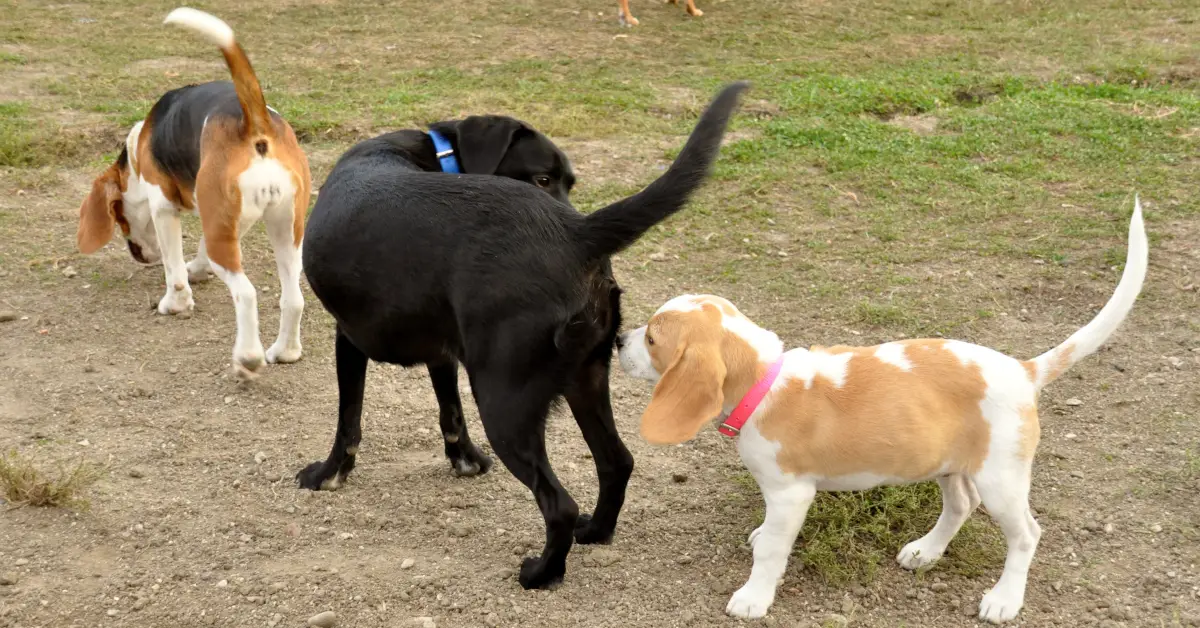
Picture a typical Saturday afternoon at a busy dog park. Ten or fifteen dogs, none of whom know each other, share the same fenced space.
Some are confident, others are anxious, and a few haven’t been properly introduced to other dogs at all. Now add a seven-month-old puppy who’s never seen this many dogs in one place.
One overly excited adult dog can overwhelm a young puppy who isn’t ready for that level of chaos. Here’s the part that catches owners off guard: a single bad experience is often enough to plant a lasting fear of other dogs. Puppies don’t need dozens of encounters to learn a lesson. Sometimes one is enough, for better or worse.
I always tell my clients the same thing: quality beats quantity every time.
Five calm, positive minutes with one well-mannered dog will do more for your puppy’s confidence than two chaotic hours surrounded by twenty strangers.
The “Pack of Friends” Approach I Recommend Instead
Instead of treating the dog park as your default plan, I encourage owners to build something more deliberate.
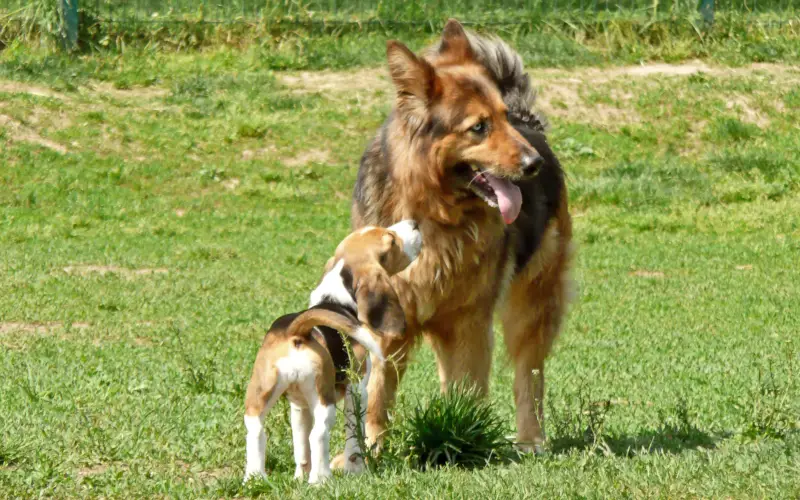
Aim for a small, steady group of dogs your puppy can see regularly.
Maybe it’s two or three neighborhood dogs whose temperaments you already trust, meeting up once or twice a week in a quiet, fenced space.
This setup gives your puppy everything a dog park promises, minus the unpredictability. They get to play, burn energy, and practice reading canine body language with dogs who are familiar and appropriately matched in size and play style.
Over time, these regular meetups often turn into genuine friendships, both for the dogs and for you.
Many towns now have smaller off-leash areas, sometimes attached to a dog walking community or local park district, where access requires registration or a key. These tend to have lower turnover than the big public parks. You actually get to know who’s likely to be there.
How to Tell If Your Puppy Is Ready
Before stepping into any shared dog space, watch for a few green lights.
A puppy who’s ready will usually approach new dogs with a loose, wiggly body rather than a stiff one. They’ll recover quickly after a startle, shaking it off and going back to play within seconds. They’ll also take breaks on their own, sniffing the ground or checking in with you instead of locking onto the other dog with intense focus.
If your puppy hides behind your legs, freezes, or barks frantically at the first dog they see, that’s a sign they need more groundwork first.
This is completely normal at certain ages, and it isn’t something to push through. Rushing a fearful puppy into a busy space tends to backfire, sometimes for months.
Rules I Never Skip Before Letting My Puppy Off Leash
A few habits make any socialization attempt safer, whether you’re at a dog park, a private yard, or a friend’s place with their dog.
- Always watch the group before you join it. Spend a few minutes at the gate observing the dogs already inside. If something feels off, that instinct is usually right, and it’s fine to leave without entering.
- Skip toys and food in any shared space. Resource guarding around a ball or treat is one of the most common triggers for fights between dogs who’d otherwise get along fine.
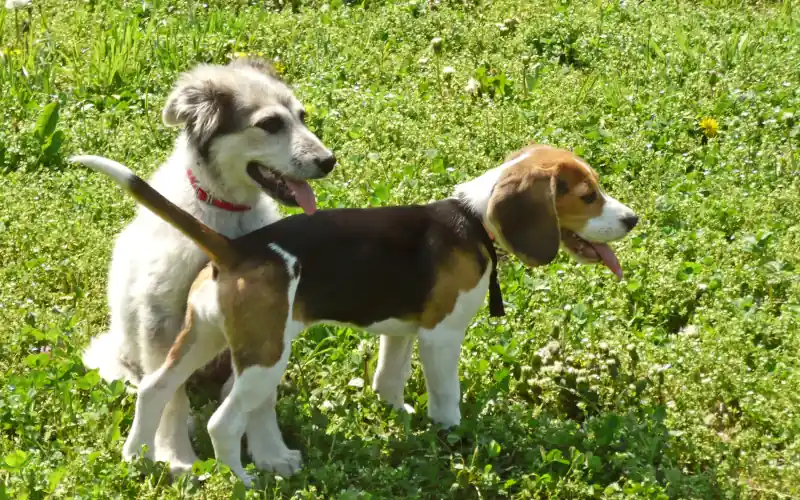
- Match your puppy’s size and energy to the dogs around them. A bouncy ten-pound puppy and an exuberant eighty-pound adolescent rarely make a safe pairing, even when both dogs mean well.
- Never force an interaction. If your puppy wants to disengage, let them. Trusting that instinct teaches your dog that you’ll keep them safe, which is the entire foundation of good socialization.
When Group Play Reveals Bigger Gaps
A rocky dog park visit isn’t always about the other dogs at all. Sometimes it’s a sign that a puppy needs more structured groundwork on confidence, impulse control, and reading social cues before group settings make sense.
If your puppy struggles in almost every new situation, not just around dogs, that’s worth addressing directly rather than hoping more exposure will smooth it out.
This is actually one of the gaps I see most often in DIY socialization attempts. Owners focus entirely on exposure (more dogs, more places, more often) without building the underlying skills first.
The Total Transformation Masterclass walks through exactly this kind of foundational work. Its free workshop is a solid starting point if you want a clearer framework before your next outing.
Building Confidence Beyond the Dog Park
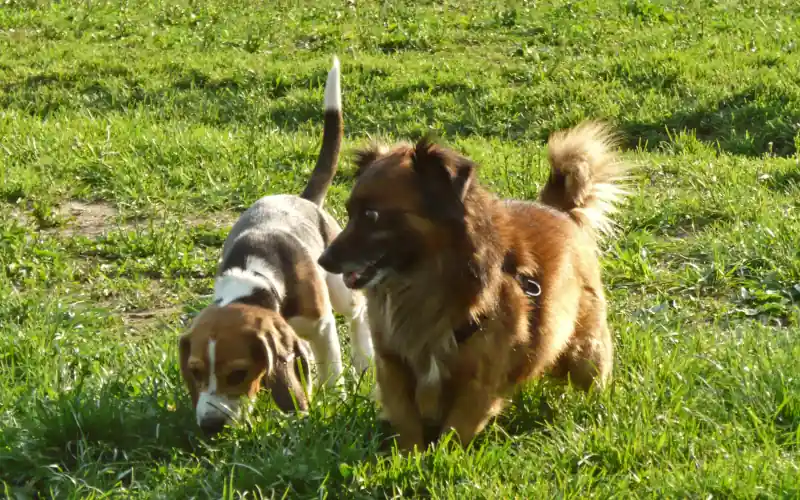
Socialization doesn’t have to mean dogs meeting dogs. Confident, well-adjusted puppies also need positive exposure to everyday sounds, surfaces, and situations: a vacuum running nearby, walking on grass versus pavement, riding in a car, meeting a calm stranger on a walk.
If your puppy struggles with everyday transitions, like being left alone for short stretches, it’s worth checking whether separation anxiety is part of the picture before adding more social pressure.
It also helps to know what to expect at home during this stage. Many puppies working through socialization are also teething and exploring the world with their mouths. That’s why you might notice an uptick in chewing on furniture or shoes around the same age. It’s a separate developmental phase, not a sign that socialization is going badly.
A designated play or rest area at home can help too. A puppy playpen gives your dog a safe home base to decompress after a stimulating outing, which matters more than people expect.
A Slower Path to Dog Park Socialization Still Counts as Progress
Skipping the dog park, or waiting longer than your neighbor did, doesn’t mean you’re falling behind.
Patience during this stage is what actually builds a dog who’s relaxed around others for life, not anxious or reactive. Real dog park socialization, done at the right pace, pays off for years.
I’d love to hear how socialization has gone for your puppy so far. Did you start with a dog park, a small group of friends, or something else entirely? Drop a comment below and tell me what’s worked, or hasn’t, for your dog. I’d be happy to read 🙂