
Disclosure: This post about “enrichment walk for dogs” contains affiliate links. If you click through and make a purchase, I may earn a commission — at no extra cost to you. I only recommend products and courses I genuinely believe in, and all opinions expressed here are my own.
If you’ve been walking the same routes with your dog for months — or years — you’ve probably noticed something. The walk still happens. The dog still comes. But a certain quality of engagement has faded a little. Your dog follows along, does what needs to be done, and comes home. Fine, but not exactly thrilling for either of you.
The good news is that you don’t need to find new trails, buy new equipment, or completely change your routine. What you need is a shift in how you use what’s already there. And that’s exactly what an enrichment walk for dogs is about.
What an Enrichment Walk for Dogs Actually Is
An enrichment walk isn’t a specific route or a specific duration. It’s an approach — a way of walking that treats the environment as a resource rather than just a backdrop. Instead of moving through a neighborhood or park, you and your dog engage with it. Sniffing this, balancing on that, finding something hidden, ducking under a bench, circling a lamppost…
The goal isn’t to exhaust your dog physically. It’s to give their brain something genuinely worth doing. And a brain that has worked hard is, in my experience, far more satisfying to a dog — and far more tiring — than legs that have covered extra miles.
As I explore in the post on dog mental stimulation, the science backs this up. Mental engagement activates neural pathways and releases the kind of neurological resources that physical movement alone doesn’t reach. A 30-minute enrichment walk for dogs often leaves them more settled and content than a brisk hour of straight walking. That’s not a small thing.
Enrichment Walk for Dogs: Why Mental Fatigue Beats Physical Fatigue
There’s a pattern I see regularly with owners who feel like they’re doing everything right — long walks, regular exercise, plenty of outdoor time — and yet their dog comes home and is immediately restless, looking for something to do.
Physical fitness adapts. The more you walk a dog, the fitter they get, and the more walking they need to feel the same effect. Mental engagement doesn’t work that way. A dog asked to think, problem-solve, explore, and cooperate during a walk uses a different kind of energy — and comes home genuinely satisfied rather than just physically spent.
This is the fundamental promise of “canine enrichment”: not more stimulation, but better stimulation. And it’s something any owner can provide on any walk, in any neighborhood, with no special equipment at all.
A Few Principles Before You Start
Before getting into the specific activities, a few things worth keeping in mind — because how you introduce these things matters as much as what you introduce.
Always let your dog choose to participate. If you try to coax them onto a surface they’re uncertain about and they back away, respect that. Move on, come back to it another day. The experience should feel like an invitation, never a demand.
Keep the first sessions short and reward generously. The goal in the beginning is simply to establish that engaging with things on walks leads to good outcomes. Once your dog understands that, their curiosity does most of the work for you.
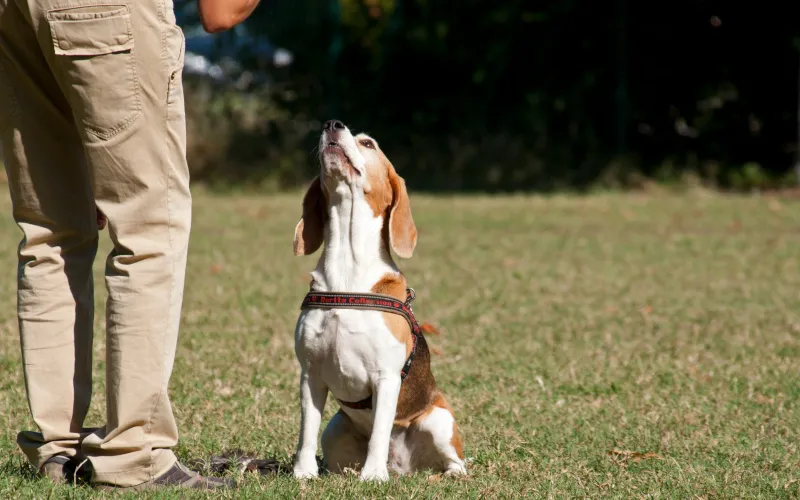
Use food or a toy — whichever your dog finds more motivating. Hold it close to guide them through an activity, and give it as the reward the moment they complete it. Over time, as they understand each activity, you can add a simple verbal cue.
Six Activities You Can Do in an Enrichment Walk for Dogs With What’s Already There
Let the Nose Lead
This one doesn’t require any setup at all — just the willingness to stop and wait. When your dog pulls toward a smell, let them follow it. Give them a real window of time to sniff thoroughly, not just a few seconds before the leash tightens. This is the foundation of every enrichment walk for dogs, and it matters more than any game you could add.
Sniffing is cognitively demanding in ways that are easy to underestimate. Your dog is reading a layered landscape of information — who was here, when, what they were doing — and processing all of it at once. A walk where the nose is allowed to lead is a walk that uses the brain properly. If you want to make it more active, say “go sniff” as they approach something interesting. You’re turning a natural behavior into a shared invitation.
Balance and Body Awareness
Street bollards, low walls, wide tree stumps, the flat top of a park bench — these are natural balance stations, and most dogs find them genuinely satisfying once they’ve tried. Guide your dog toward the surface with a treat held just above it, let them figure out how to get up, and reward generously the moment all four paws are on. Some dogs will stand there with obvious pleasure, looking around at the world from their new vantage point.
This is the foundation of what the anglophone dog community calls dog parkour — using urban and natural features for body awareness and movement training. It’s one of the most effective ways to build a dog’s confidence and proprioception without a single piece of equipment.
Start with wide, stable surfaces and low heights. As your dog gets comfortable, you’ll find they start offering these behaviors themselves — heading toward a bollard and looking back at you. That moment of initiative is worth more than any command.
Obstacles — Over and Under
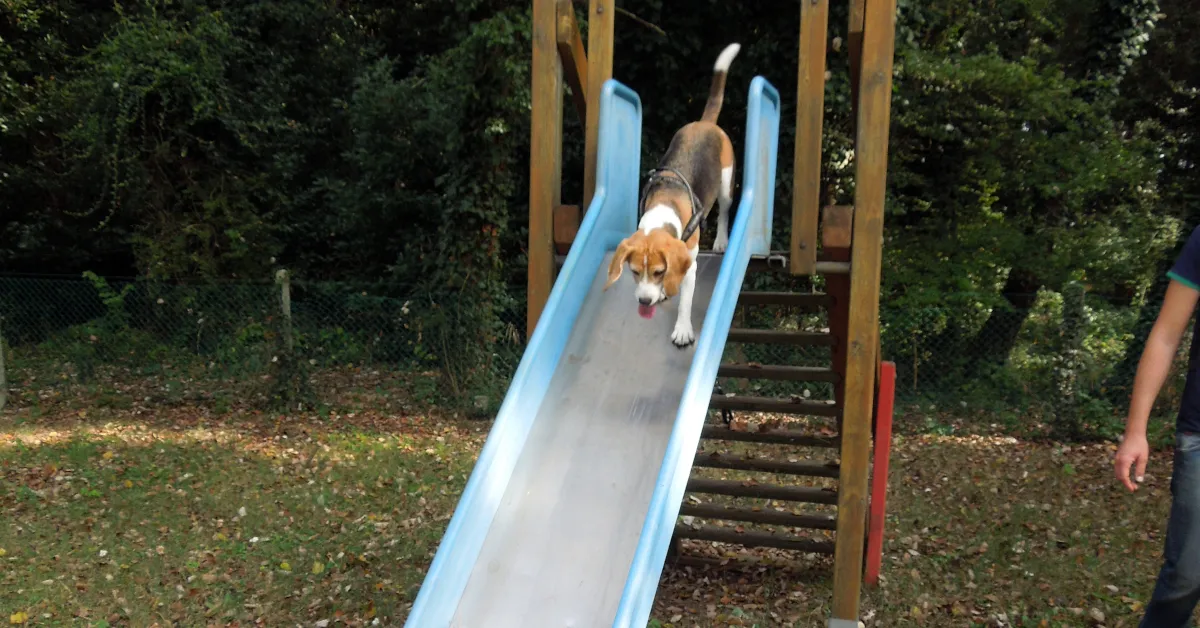
A horizontal bar on playground equipment, a low branch, a park bench — invite your dog to jump over it, or duck under it. Guide them with the treat held just in front of their nose, moving in the direction you want them to go. Reward the moment they complete the movement.
Keep the heights very modest to start, and never force or push. The point isn’t athleticism — it’s the combination of physical coordination and the cognitive engagement of figuring out how to navigate something. Over time, you can vary which surfaces you use, which creates the novelty that keeps the activity mentally fresh.
The Weave
A row of vertical posts, a series of small trees, parked bikes in a rack — anything with a regular pattern can become a weave course. Start with two or three obstacles maximum, guide your dog through with the treat held at nose height, and reward at the end. This builds coordination, body awareness, and — importantly — attentiveness to you, since they need to follow your guidance rather than just move forward.
Once they understand the movement, try adding a word like “weave” as they go through. Eventually you’ll find they look for these opportunities themselves.
Hide the Treats
This one lights up every dog who has ever had a nose. While walking through a park, scatter a small handful of kibble or treats in a patch of long grass, a pile of fallen leaves, or among the roots of a tree. Move away, then bring your dog back and say “find it.” Step back and let the nose work.
The foraging instinct this activates is deep and genuinely satisfying. A dog who has spent five minutes intensively searching for hidden food has used their brain in a way that a mile of walking doesn’t replicate. You can make it progressively harder by hiding fewer pieces in larger areas, or by using a more interesting smell when the dog is ready for a challenge.
Hide and Seek — When They’re Ready
This one requires either a recall solid enough that your dog won’t simply disappear, or a second person to keep them in place while you hide. If you have one of those two things, it’s worth trying: duck behind a tree or around a corner, wait quietly, and call your dog when you’re hidden.
The moment they find you should be celebrated properly — real enthusiasm, a good reward, genuine engagement. You’re not just playing a game. You’re reinforcing the idea that paying attention to where you are matters, and that finding you is one of the best things that can happen on a walk.
Enrichment Walk for Dogs: Making It a Habit
You don’t need to do all of this on every walk. Even one or two small interactions with the environment — a sniff window, a balance on a bollard, a quick scatter of treats in the grass — shifts the character of the whole outing. Your dog starts to walk with a different quality of attention: scanning, curious, checking in with you more often, because the walk has become a shared experience rather than a parallel one.
That attentiveness is, in my view, one of the most valuable things you can build through daily walks. It isn’t trained through commands. It grows through engagement.
If you’d like to develop this kind of relationship — one built on cooperation, curiosity, and genuine communication — the Total Transformation Masterclass by K9TI is the resource I point people to when they want a structured path into this way of working with their dog.
Do you already do anything to mix up your walks, or is this something you’re thinking of starting? I’d love to hear what your routes and routines look like — leave a comment below.