
Disclosure: This post about basic obedience training contains affiliate links. If you click through and make a purchase, I may earn a commission — at no extra cost to you. I only recommend products and courses I genuinely believe in, and all opinions expressed here are my own.
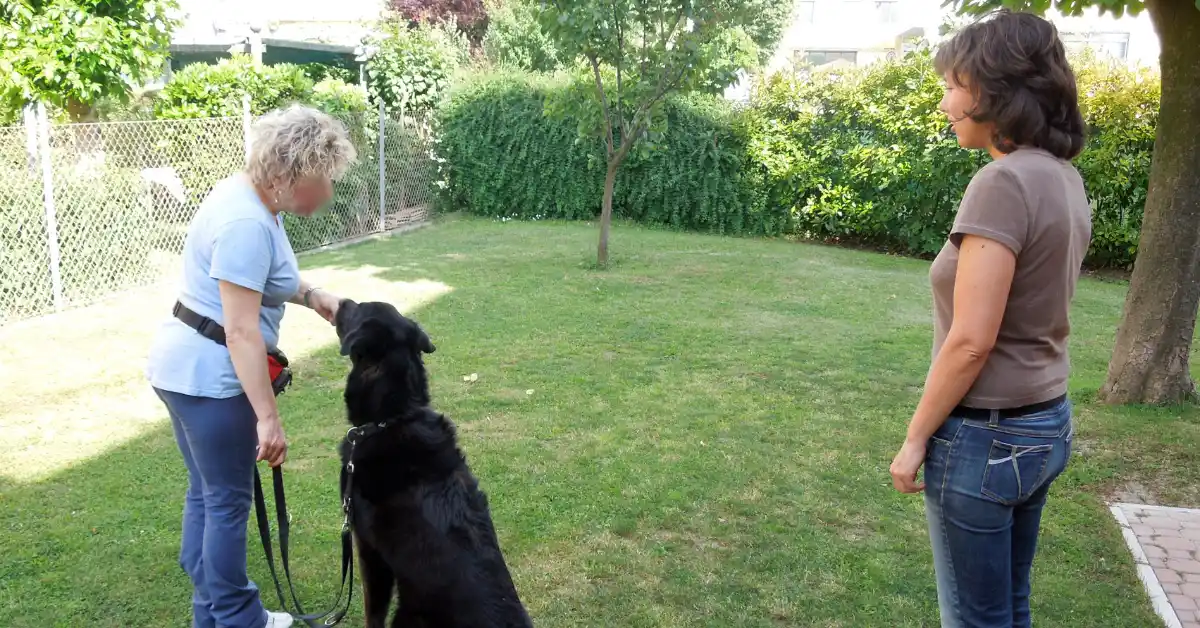
I hear about basic obedience training in two very different moments, and both of them bother me a little.
The first is when something has already gone wrong. The jumping, the pulling, the barking at guests. Suddenly training becomes the emergency fix.
The second is almost the opposite. Someone shows off a dog doing a string of party tricks, purely to impress friends, like obedience is just a performance.
Neither one is really what basic obedience training is for. Done right, it’s neither a cure nor a circus act. It’s groundwork, laid early, for a calm and confident adult dog.
It’s Not a Fix, and It’s Not a Party Trick
Here’s the pattern I keep noticing. People start caring about training once behavior problems already exist. At that point, we’re not really talking about basic obedience training anymore. We’re talking about behavior rehabilitation.
That’s a slower, harder process than teaching good habits from the start would have been.
The opposite mistake is treating training as optional flair. A dog who can shake hands or roll over on command looks impressive at a barbecue. But none of that actually helps a dog navigate the real world calmly.
Basic obedience training was never meant to be a party trick. It’s meant to be a functional skill set your dog uses every single day.
What Basic Obedience Training Actually Is
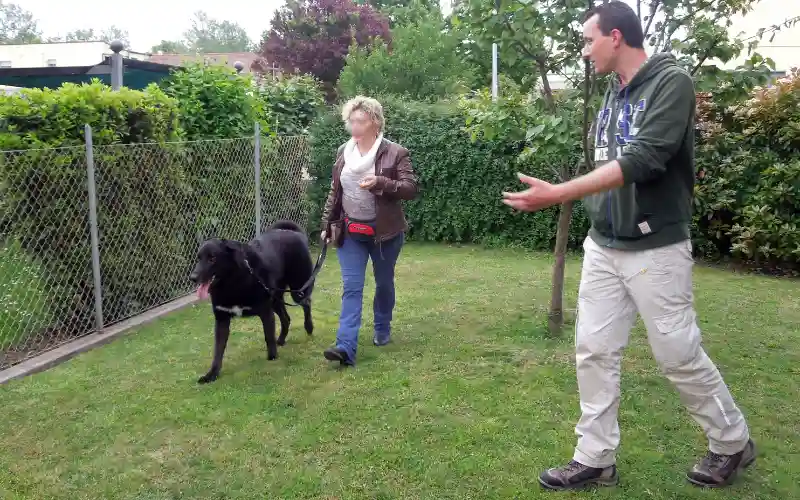
At its core, basic obedience training is a set of skills that let your dog succeed in a human world.
Left to pure instinct, a dog has no idea how to handle most of what we ask of them. Standing calmly at a crosswalk while cars rush by isn’t instinctive. Waiting quietly while a gate swings open isn’t instinctive either. Neither is staying composed when the front door flies open for the first time.
These are all learned responses.
A dog builds them through repetition until calm behavior becomes the default, not the exception. Done well, training doesn’t just install commands.
It gives your dog the tools to choose the right response on their own. Whatever situation they end up in.
The Skills Behind Basic Obedience Training
Most basic obedience training programs, whether taught at a local training center or by a private trainer, converge on a similar core skill set, and the AKC agrees that every dog benefits from it, competition-bound or not.
You’ll typically see: attention or eye contact on cue, sit, down, stay in both positions, recall, and stand. Some programs add loose leash walking and a release word to that list too.
People often call these “commands,” and honestly, that word undersells what’s happening.
Taught well, a dog isn’t obeying like a puppet on a string. They’re making a decision, based on what they’ve learned works, in that specific moment. The word “command” is just the term that stuck.
Learned in the Yard Isn’t the Same as Learned in the Real World
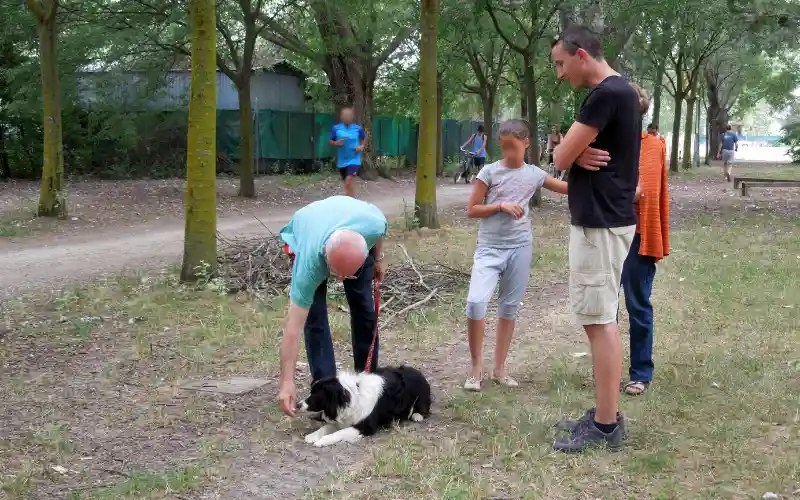
Here’s a detail a lot of owners miss. Getting your dog to sit reliably in your living room is only step one. The real test is different. Does that same “sit” hold up on a busy sidewalk? At a crowded vet’s office? With another dog trotting past?
Most dogs perform beautifully in a quiet, familiar space and then fall apart the moment real distractions show up.
That’s not defiance. It’s a training gap. A behavior has to be practiced deliberately across distance, duration, and distraction before you can call it reliable.
Once your dog has that foundation solid, more advanced skills like off-leash distance work become realistic. They’re a nice bonus, though, not a requirement for a good day-to-day life together.
The Bond That Comes Along With It
Basic obedience training does more than help your dog cope with a human world. It’s also one of the most effective ways to build a real relationship with your dog.
Learning and practicing these skills together, consistently, creates shared experience in a way almost nothing else does. That shared experience teaches your dog something important.
The human world isn’t some frightening, unpredictable place full of threats. It’s simply where good things happen, alongside people they trust.
Training also keeps a dog’s brain genuinely engaged. That matters even more when you’re working through something harder, like anxiety or fear-based reactivity.
A dog who’s already used to thinking through a situation has real tools to draw on, instead of just reacting.
Basic Obedience Training: What Tends to Happen When It Gets Skipped
This part isn’t meant to scare anyone, just to be honest about the stakes.
Behavior problems are consistently one of the most common reasons dogs are surrendered to shelters in the US. A meaningful share of those cases trace back to gaps in training, rather than a “bad dog.”
A dog who’s never learned how to settle, greet people politely, or come when called is simply harder to live with, through no fault of their own.
Skip the groundwork, and you tend to get a more reactive, more stressed dog. Plus a more stressed owner trying to manage them. Build it in early, and both of you end up calmer, more in sync, and genuinely enjoying life together more.
Where to Actually Start
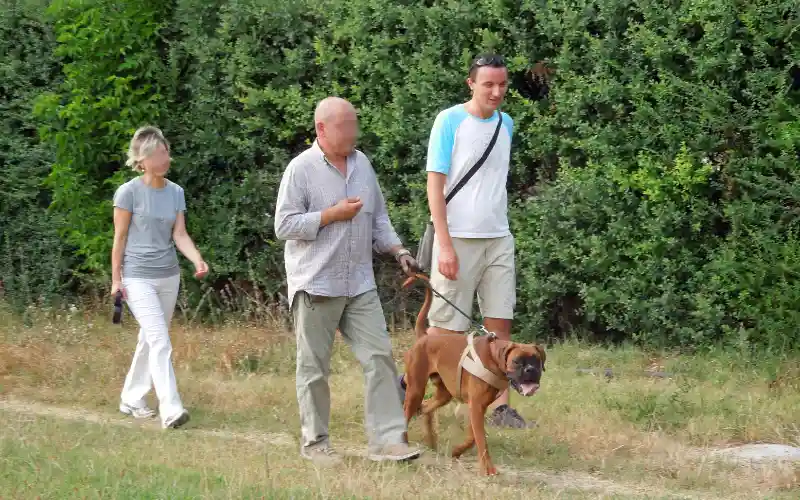
If you want a structured path rather than piecing things together from scattered advice, that’s exactly what K9TI’s Total Transformation Masterclass is built for. It walks you through this entire skill set step by step. That includes how to proof each behavior against real-world distractions, not just living room ones.
Outside of formal training, plenty of everyday habits reinforce these same skills. Asking for a sit before meals, before leash clips go on, before doors open.
If you want a deeper look at how that kind of everyday structure builds trust, I’ve written a full guide on becoming a better dog owner. And since a well-trained dog still needs regular practice out in the world, my guide to socializing a dog the right way pairs naturally with everything here. Both rely on the same consistency that makes basic obedience training actually stick.
The Bottom Line
Basic obedience training isn’t an emergency patch, and it isn’t a party trick either. It’s the groundwork for a dog who feels genuinely at ease in your world.
It also builds a relationship between the two of you that gets stronger with every session.
Start before there’s a problem to fix, and you’ll likely never need the fix at all. Pair it with regular exposure to new dogs and people, and you’ve covered the two things that matter most for a genuinely easygoing dog.
Where are you starting from with your own dog? A clean slate, or a few habits you’re hoping to untangle?
I’d genuinely love to hear about it in the comments 🙂