

Disclosure: This K9 Training Institute review contains affiliate links. If you click through and make a purchase, I may earn a commission — at no extra cost to you. I only recommend products and courses I genuinely believe in, and all opinions expressed here are my own.
If you found this K9 Training Institute review because you are wondering whether the Total Transformation Masterclass is worth your hard-earned money, I get it completely.
I have worked through every class myself. I also completed all three bonus masterclasses. This review reflects my honest, first-hand experience.
It is not a quick skim of the sales page. As a certified dog trainer, I do not hand out recommendations lightly. Everything below comes from actually sitting through the material, week by week, and comparing it against what I already know works in my own practice.
My quick verdict: Yes, for most owners. The Total Transformation Masterclass is a structured, fully force-free program built on short daily sessions, with three genuinely useful bonus classes and a weekly Q&A. It’s best for puppies and everyday manners problems. It’s not a replacement for in-person help with serious aggression or fear. If you’d like to see the approach first, K9TI offers a free workshop.
What Is the K9 Training Institute Total Transformation Masterclass?
The K9 Training Institute created the Total Transformation Masterclass as an online course. Dr. Alexa Diaz teaches most of the classes herself. She has a background in service dog training and animal behavior. Earlier in her career, she trained rescue dogs alongside prison inmate handlers, preparing them as emotional support dogs for veterans.
The course does not aim to turn your dog into an officially certified service animal, that is not the goal at all. Instead, it aims to help any dog reach the kind of calm, reliable behavior you would expect from a working service dog.
Breed and age do not matter here. That distinction sets realistic expectations from the very first class.
The masterclass runs across 10 weekly video classes. Each one comes with downloadable homework sheets that break every new skill into small, manageable daily steps.
Most sessions take less than ten minutes.
That detail matters a lot in this K9 Training Institute review, because it makes the program realistic for owners who already feel stretched thin.
On top of the ten core weeks, K9TI also includes 3 bonus classes and a members-only Q&A library, which I cover in detail further down.
Inside My K9 Training Institute Review: How the 10-Week Program Is Structured
One thing I appreciated right away is that the course does not rush.
Every class builds directly on the one before it. The homework centers on short, five to ten minute daily sessions and there are no long, exhausting drills anywhere in the program.
This structure lines up closely with how I coach my own clients. That made it easy for me to judge whether the method actually holds up in practice, not just on paper.
Each week follows a similar rhythm. First comes the video class itself, introducing a new concept or cue. Then comes an optional demo video, showing the technique in action with a real, imperfect dog.
Finally comes the written homework, with a suggested day-by-day plan you can slow down or speed up as needed.
I found this three-part rhythm genuinely well designed for busy owners who cannot always train at the exact same time every day.
Weeks 1–3: Building the Foundations
The first three weeks focus on two simple building blocks.
The first is teaching your dog to make eye contact on request: trainers call this the “watch” cue. The second is teaching your dog to touch your open palm with their nose: trainers call this “touch.”
Both skills sound almost too basic to matter. Yet they quietly become the foundation for nearly everything that follows, from recall to calm greetings at the door. In week two, both cues move outdoors, where real distractions finally enter the picture.
Most dogs regress a little the first time they try this outside. The course explains clearly why that regression is completely normal. By week three, the course introduces the “sit” cue.
It also starts layering in impulse control. The dog learns to hold the position for a few seconds before you release them, instead of popping straight back up for a treat. The suggested practice format stays simple throughout: three short sets of ten repetitions, with a one-minute play break between each set.
Weeks 4–5: Loose Leash Walking, Calm Greetings, and Body Language
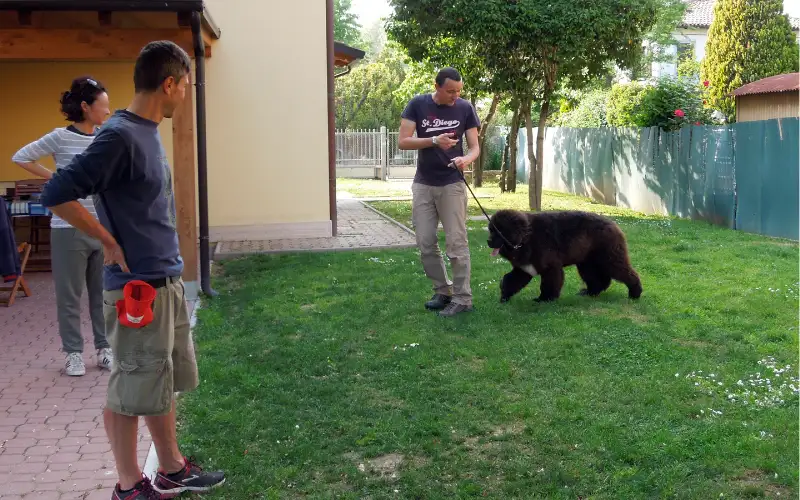
Week four takes the training outside the house. It opens with loose leash walking, the topic most owners are waiting for. The rule is simple and consistent: pulling never gets your dog where they want to go, while a loose leash by your side earns food, praise, and attention. I cover this skill in depth in my guide to loose leash walking.
The same week covers calm greetings with people and other dogs. Your dog learns to sit and check in with you a few steps away. Only then do you give permission to say hello, with all four paws on the ground.
Week five takes a completely different approach. Instead of teaching a new physical skill, it focuses on helping owners recognize canine body language and calming signals.
Think of a slower blink, a soft tail, or a subtle lip lick: these small signs may show a dog starting to feel uneasy.
I found this week particularly valuable. So many behavior problems only start making sense once an owner can actually read what their dog’s body is already telling them.
The class also warns against two common owner habits: picking an anxious dog up, and speaking to them in a high-pitched baby voice. Both, somewhat counterintuitively, tend to reinforce anxiety instead of soothing it.
Weeks 6–7: House Manners That Actually Matter
These two weeks tackle the everyday issues that fill dog owners’ search bars every single day. The class covers barking at the doorbell, chewing furniture, resource guarding, jumping on guests, and staying calm during meal prep.
For the doorbell, the course first teaches a “bed,” or “place,” command. It then proofs “bed” by gradually increasing the distance between owner and dog. Eventually, it pairs the command with a recorded doorbell sound, so the dog learns to settle rather than rush the door.
If your dog has ever destroyed a table leg out of boredom, you already know how disruptive this behavior gets. It is worth reading more about why dogs chew furniture in the first place before applying any fix. Understanding the root cause always comes first.
The course handles resource guarding with real care. It treats guarding as a trust issue to work through gradually. It never frames guarding as a dominance problem to correct harshly, which fits perfectly with a force-free approach.
Meal-time excitement gets the same gentle treatment. Instead of scolding a dog for being wound up before dinner, owners learn to simply withhold attention until the dog settles. Only then does the reward come.
Weeks 8–10: Recall, Stay, and Real-World Reliability
Week eight focuses entirely on recall. Dr. Diaz makes a point I deeply agree with: owners build a reliable “come” through months of consistent, positive association.
You never build it by chasing a dog around the yard. You never build it by scolding a dog once it finally returns to you, either. The class even suggests picking a brand-new cue word if your dog has already learned to ignore “come” because a tainted word rarely recovers its meaning.
Two of the recall games taught here need no equipment at all: a quick backward retreat, and a partner-assisted release. Both work well in a hallway.
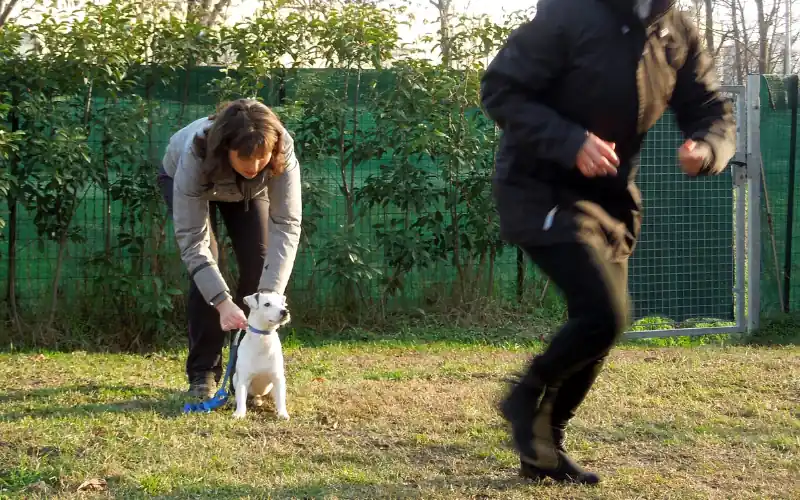
Week nine adds the “down” and “stand” cues. It then proofs the “stay” command by slowly adding distance, duration, and distraction, one small step at a time.
Week ten pulls it all together with real-world skills. The class covers calm car rides and an automatic sit whenever you stop walking. It also covers safe behavior at curbs and crosswalks, plus a short introduction to leash reactivity.
This final stretch is where the course earns the “total transformation” part of its name. It shows owners exactly how to carry every earlier skill out into daily life, instead of leaving it stuck inside a quiet training place.

The Three Bonus Masterclasses Included with K9TI
Beyond the ten core weeks, this K9 Training Institute review would not be complete without covering the three bonus classes. They add real, practical value of their own and I actually think they are underrated compared to the main curriculum.
Bonus Class 1: Kids and Dogs
The first bonus class focuses on kids and dogs. It teaches families how to supervise interactions carefully. Short, timed play sessions help prevent rough play from escalating, so neither the child nor the dog crosses into overexcitement.
The class explains why grabbing a puppy’s muzzle to stop nipping usually backfires because that kind of hands-on correction can make a dog hand-shy instead of teaching anything useful.
Bonus Class 2: Separation Anxiety
The second bonus class focuses on separation anxiety. It walks owners through a gradual desensitization plan that starts with tiny departures and slowly builds up a dog’s tolerance for being left alone.
It also covers a detail many owners get wrong: making a big fuss over goodbyes. That habit teaches a dog that your leaving is something worth worrying about. If separation anxiety is already a struggle in your own home, I have a full guide on the topic: my article on dog separation anxiety pairs well with this bonus class.
Bonus Class 3: Crate and Potty Training
The third bonus class covers crate training and potty training together. It frames the crate as a cozy den, never as a punishment, a mindset shift most struggling puppy owners need to make.
This class connects closely to another common nighttime issue, one I cover in my article on puppy crying at night. The two problems often show up in the same household, at the same time.
What I Loved About This K9 Training Institute Review Experience
A few things stood out to me as genuinely well done. First, the entire program stays force-free and rooted in positive reinforcement. There is zero reliance on certain “dominance language”, or “pack leader” framing, anywhere in the ten weeks.
This lines up closely with how modern, science-backed training actually works, because even the researcher behind the original wolf-pack dominance theory later reconsidered it himself.
Second, the videos deliberately feature real, untrained, sometimes visibly frustrated dogs, instead of polished demo animals that never make a mistake. That single choice makes the training feel achievable, not intimidating. You see dogs struggle, just like yours might, and you see the trainer work through it patiently, step by step.
Third, the course clearly acknowledges that every dog is different. The material encourages owners to slow down. Repeat a step for as many days as needed, instead of rushing ahead on a fixed weekly schedule.
This philosophy lines up closely with what I have written before about whether dogs actually have distinct personalities.
Finally, the homework structure itself deserves real credit. Short, repeatable sessions with clear, day-by-day steps make it realistic for a busy owner to actually follow through. Nobody burns out halfway through the week.
Why K9TI’s Force-Free Approach Matters to Me
I want to add one more thing before moving on.
Positive reinforcement is not just a personal preference of mine. It reflects where the actual science has landed.
Older dominance-based training theories, built around the idea of “alpha” wolves and pack leadership, came from flawed early wolf studies conducted decades ago. Once researchers studied real, wild wolf packs properly, the theory fell apart, and its own original author retracted it.
Force, corrections, and dominance language do not build trust between a dog and an owner. They tend to build fear instead, even when the dog eventually complies.
Seeing an entire commercial course commit fully to force-free methods, across ten weeks and three bonus classes, genuinely reassured me. It matches exactly what I teach my own clients.
The K9TI Q&A Library: A Feature Worth Highlighting in This K9 Training Institute Review
One feature almost got lost for me among everything else in this program, and it deserves its own spotlight here. K9TI runs a dedicated Q&A section, separate from the ten core weeks and the three bonus classes.
Members can submit any question about their own dog, at any time. Once a week, K9TI’s staff trainers respond, either through a live call or through a recorded video answering the submitted questions directly.
That alone would already carry real value, but the archive makes it even better.
Every past Q&A session stays available inside the platform. Together, they build into a genuine library of real answers to real problems, covering situations well beyond the ten core weeks.
Owners never have to troubleshoot alone between classes. For anyone worried about hitting a wall the videos cannot fully explain, this feature closes that gap. In my opinion, it is one of the clearest signs that K9TI cares about real outcomes. It is not just selling a set of videos.
Where the K9TI Course Falls Short
No course is perfect. An honest K9 Training Institute review means being upfront about the weaker points too. The video production feels functional rather than polished. The course also assumes a reasonably calm starting environment for training sessions. Owners of highly reactive or fearful dogs may need extra, one-on-one professional support alongside it. The videos alone will not solve those deeper issues by themselves.
Lastly, because most of the material comes through video and PDF homework sheets, it demands genuine self-discipline from the owner. Nobody checks whether you actually did the day’s repetitions.
The results depend heavily on how consistently you show up for your dog, week after week. The Q&A library helps with the trickier questions, but it cannot replace daily practice.
Who the K9TI Masterclass Is Actually Best For
Based on everything I worked through, I think this program fits three kinds of owners particularly well.
New puppy owners get a clear, week-by-week roadmap, instead of a confusing pile of scattered tips found online. Owners of adolescent or adult dogs with everyday manners problems also benefit — think jumping, pulling toward the door, or ignoring recall. These owners get a structured reset without needing to hire a private trainer right away.
Owners who genuinely prefer written or video learning, over in-person coaching, get a format that respects their pace and their schedule.
One caveat matters here. If your dog already shows serious aggression, or extreme fear, this course should support professional, in-person help, not replace it entirely.
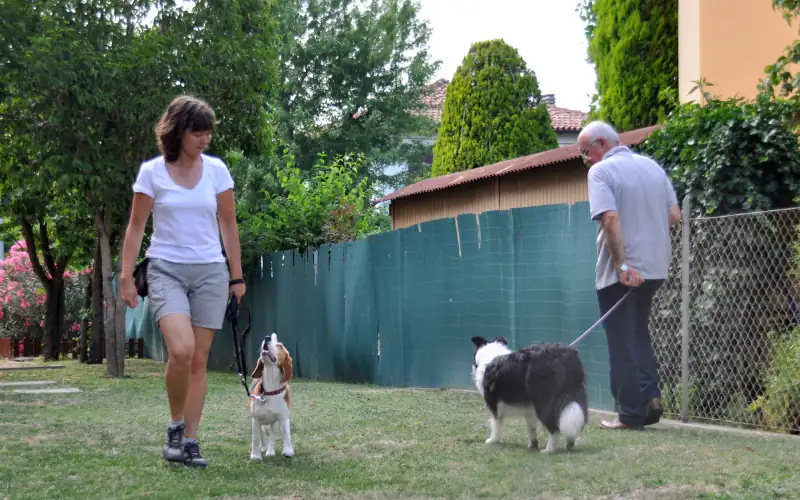
For everyone else, the structure alone is worth the price of admission. I would also add multi-dog households to that list. Several homework exercises work well with more than one dog at a time, just separate them during the early repetitions, then reintroduce distractions gradually.
How Much Does the K9 Training Institute Course Cost?
This is one of the questions I hear most, and the honest answer may surprise you. K9TI doesn’t publish a fixed price for the Total Transformation Masterclass on its website. Offers change over time, so the current one is presented at the end of K9TI’s free workshop.
What I can tell you is what you get once you enroll. My membership gives me lifetime access to the ten core classes, the three bonus classes, and the Q&A library. That matters more than it sounds, because dogs sometimes slip back into old habits, and a quick refresher is always one click away.
My suggestion is to start with the free workshop. It costs nothing, and it shows you the core philosophy before you commit to anything. The current offer and its terms are explained at the end, so you can weigh the cost against your own dog’s needs.
K9 Training Institute Review: Is the K9TI Total Transformation Masterclass Worth It? My Verdict
After going through the complete program, my honest answer is yes. This holds especially true if you want a structured, force-free system you can follow at your own pace.
You will not need to hire a trainer for every single step. The ten-week core curriculum covers the skills that make the biggest daily difference in a dog’s behavior. Three bonus classes then round out the gaps that most basic obedience courses skip entirely. The Q&A library backs up everything with real, ongoing human support.
What impressed me most, after finishing the whole thing, is the consistency.
The course stays force-free from week one all the way through week ten and every bonus class. That consistency is rare, even among paid programs. If you want to see the curriculum for yourself before committing to anything, K9TI offers a free workshop. It walks through the core philosophy behind the Total Transformation Masterclass. That alone makes it a genuinely useful starting point, even if you decide not to go any further.
I would love to hear from you in the comments.
Which part of your dog’s training feels the hardest to crack right now?
I read every comment myself, and I always try to point people toward the article, or the resource, that will actually help them most.