
Disclosure: This post about puppy independence training contains affiliate links. If you click through and make a purchase, I may earn a commission — at no extra cost to you. I only recommend products and courses I genuinely believe in, and all opinions expressed here are my own.
Most owners only start thinking about being alone once their dog already dreads it.
The chewed door frame, the frantic barking, the neighbor’s polite but pointed comment. At that point, you’re managing a problem that already exists.
Puppy independence training flips that order entirely. You teach a young dog, while they’re still a blank slate, that alone time is nothing to fear.
Not by leaving them for hours, no puppy could handle that!
By practicing short, calm separations that build real confidence over time.
Why Puppy Independence Training Beats Waiting for a Problem
Here’s a number worth sitting with. Research from the RSPCA found that eight out of ten dogs struggle to some degree when left alone, and half of them show no obvious signs of it.
That’s a lot of quiet suffering happening behind closed doors. The good news is that puppy independence training, started early, dramatically lowers the odds your dog ends up in that group.
Waiting until distress shows up means you’re doing rehabilitation, not prevention. It’s slower, harder, and more stressful for everyone involved.
A puppy is, genuinely, a blank slate on this topic. They haven’t learned to panic yet. Your job is to make sure they never need to.
Step 1: Give Your Puppy a Space That’s Truly Theirs
This step gets skipped constantly, usually because it seems too simple to matter. It matters enormously. Before any alone-time training begins, your puppy needs a personal space where they feel genuinely safe.
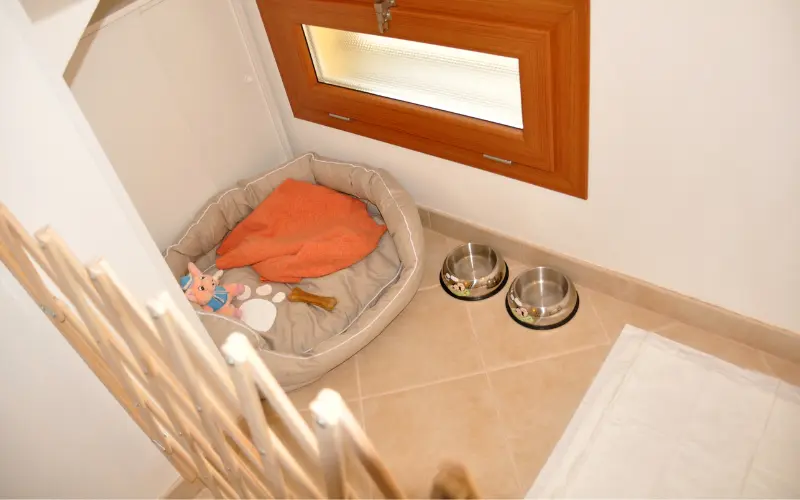
Set up a small pen or gated area, roughly double the size of their bed. VCA Animal Hospitals recommends this same basic setup for crate training generally, since a properly introduced confinement space builds security rather than stress.
Inside, include their bed or crate, a blanket that smells like you, food and water bowls, a chew toy, and a puppy pad or paper in the corner farthest from the bed.
Leave this area open during the day so your puppy can wander in and out freely.
Close it only at night, or when you genuinely can’t supervise them.
Done consistently, your puppy starts to see this space as their own personal den. Somewhere to retreat to whenever something feels uncertain. That’s exactly the association you want in place before real alone time begins.
Step 2: Practice Short, Silent Departures at Home
Once the space feels familiar, start practicing. Lure your puppy into their area with a treat, close the gate, and walk into another room. No goodbye, no announcement, no fuss.
If your puppy whines, stay quiet and out of sight. Responding teaches them that whining works. Instead, wait for a gap in the whining, even a two-second pause, and return right then. Reward calmly with praise, a treat, and a gentle stroke along the side or back rather than the head.
If your puppy stays quiet from the start, return after about twenty seconds and reward the same way.
Timing is everything here. You’re not rewarding silence after the fact.
You’re rewarding the exact moment calm happens.
Step 3: Stretch the Time, Change the Location
Repeat step two several times across different days. This is puppy independence training at its core: small, repeated reps rather than one big leap.
Watch closely for progress: less whining, or your puppy settling into a toy instead of fussing. When you see that, extend the gap before you return. Twenty seconds becomes a minute, then two, then longer. There’s no stopwatch involved, just a general sense of gradual progress.
Once your puppy handles a closed gate well, try leaving the area open and disappearing into another room, or stepping outside the front door briefly.
If your puppy struggles and gets worked up, stay at the previous step longer instead of pushing forward. There’s no race here. You’re teaching a life skill, not chasing a deadline.
Puppy Independence Training: Small Habits That Make a Big Difference
A few extra details make this whole process noticeably smoother, especially as absences get longer.
- A short walk before you leave burns off excess energy, so your puppy meets alone time already a little tired rather than wound up.
- A radio or TV left on at low volume gives them something to focus on besides the silence.
- Keep departures and arrivals boring on purpose. As tempting as it is to give a big goodbye or an excited hello, resist it. Skip the dramatic send-off when you leave.
- When you come home, wait for your puppy to settle before offering attention. Big emotional moments on either end teach a puppy that your leaving and returning are events worth being anxious about. Boring is exactly what you’re going for.
A few short sessions a day, spread out, work better than one long marathon attempt. This isn’t a process to rush. It happens gradually, on your puppy’s timeline, not a fixed schedule.
If Your Dog Already Shows Signs of Struggling
If your dog is past the puppy stage and already shows real distress when left alone, destructive chewing, non-stop barking, accidents despite being fully house-trained, these steps can still help, but you’re likely dealing with something a bit more established.
I’ve written a complete guide to dog separation anxiety that walks through recognizing the signs and working through them at whatever stage they’re currently at.
A Structured Way to Approach Puppy Independence Training
K9TI’s Total Transformation Masterclass includes a full bonus class dedicated to this exact process, with a structured, step-by-step protocol for building a dog’s comfort being alone, useful whether you’re starting fresh with a puppy or working through more established anxiety.
If you’re setting up your puppy’s very first personal space, it’s worth pairing this process with a broader look at making your whole home safe and puppy-ready from day one. And if you notice your own nerves creeping in during this process, that anxious-owner energy is worth addressing too, since your puppy reads it more than you’d think.
The Bottom Line
Puppy independence training isn’t about toughening up a young dog or ignoring their needs. It’s the opposite.
It’s giving them, early, the tools to trust that being alone is safe and temporary, so they never have to learn that lesson the hard way. A little patience now saves both of you a lot of stress later.
Did your own puppy take to alone time easily, or was it more of a process?
I’d love to hear how it went for you in the comments.