
Disclosure: This post about “dog excited before walk” contains affiliate links. If you click through and make a purchase, I may earn a commission — at no extra cost to you. I only recommend products and courses I genuinely believe in, and all opinions expressed here are my own.
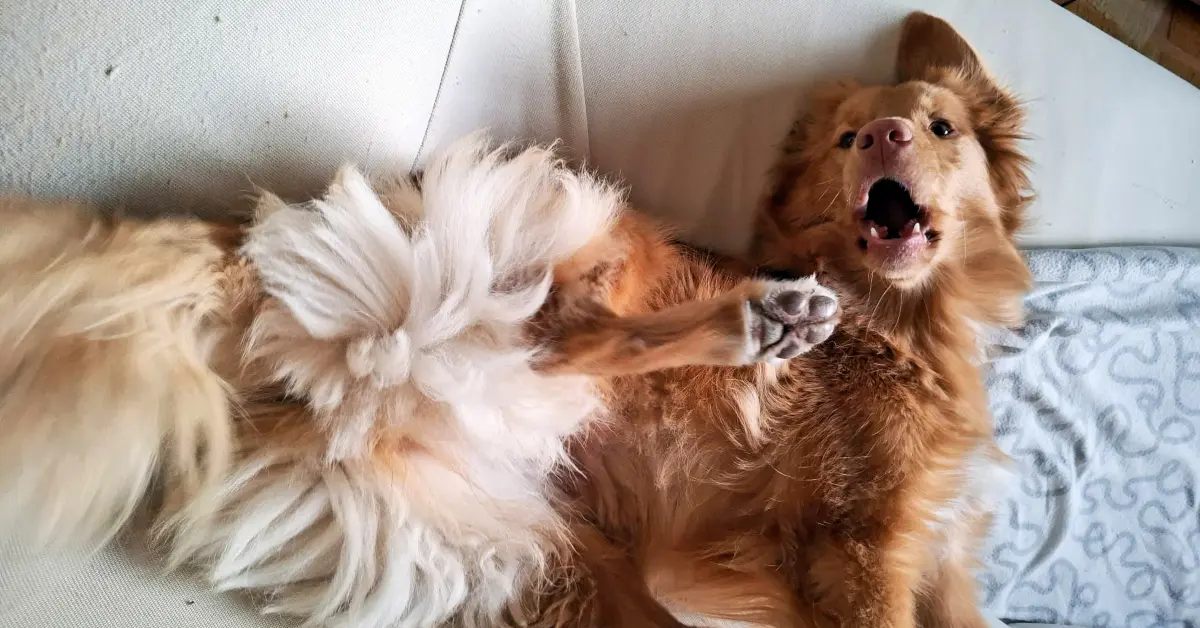
If your dog gets excited before a walk the moment you reach for the leash, you’re in good company. That spinning, barking, leaping tornado is one of the most common scenes in dog-owning households — and honestly, the first few times it’s kind of charming. But when you’re wrestling a frantic dog every single day just to get the harness clipped on, the walk stops feeling like a joy for either of you before it’s even started.
Here’s the thing, though: that explosion of energy isn’t just enthusiasm. And understanding what’s really driving it is the first step toward changing it.
Why Does a Dog Get So Excited Before a Walk?
The short answer is that your dog has learned — very efficiently — that certain signals mean something wonderful is about to happen. The moment you pick up the leash, lace up your shoes, or jingle your keys, their brain fires a recognition signal: this is it, we’re going.
This is classic conditioned association. Your dog has paired those everyday cues with one of the best experiences of their day, and that pairing becomes stronger and faster every single time it’s repeated. The leash doesn’t just mean “walk” — it is the walk, neurologically speaking, long before you’ve even opened the door.
What makes this response so intense is a second layer: the neuroscience of anticipation. Research by neuroscientist Jaak Panksepp identified what he called the “seeking system” — a dopamine-driven circuit in the brain that activates not when we get something we love, but when we expect to get it. In other words, the anticipation of the walk can generate more neurological excitement than the walk itself. That’s a powerful force, and it explains why the frenzy before the door can be more intense than anything that happens on the actual route.
Dog Excited Before Walk? That Energy Might Not All Be Joy
This is something I want you to sit with for a moment, because it changes how you respond to what you’re seeing.
When a dog is spinning, vocalizing, and unable to stand still before a walk, part of that is genuine happiness — and it’s beautiful. But when the excitement is extreme and sustained, what you’re often also looking at is arousal, a physiological state that includes elevated heart rate, faster breathing, and muscles primed for action. Arousal isn’t the same as contentment. A dog in a high arousal state is closer to “overwhelmed” than “happy,” even if the trigger is something they love.
And here’s the part most owners don’t realize: the more we inadvertently participate in the frenzy — chasing the dog to clip the leash, talking to them excitedly, reacting to the jumping — the more we reinforce it. We become part of the ritual. The dog learns that going wild gets a response, and a response is rewarding.
If your dog also pulls once you’re outside, this guide on loose leash walking might be the next step.
What This Looks Like Over Time
A dog that starts every walk in a state of high arousal often carries that energy into the walk itself. The pulling, the zigzagging, the inability to settle — a lot of that begins right there at the front door. Calm walks, in my experience, almost always start with calm departures.
How to Help a Dog Excited Before Walks Settle Down
The good news is that this is one of the more straightforward things to address, and with a little patience you’ll see results faster than you might expect. The key principle is simple: you only move forward when the dog is calm, and you stop engaging the moment they’re not.
Start with Your Own Energy
Dogs are extraordinarily attuned to us. Before you reach for the leash, check yourself. Slow your movements down. Keep your voice low and neutral. Don’t announce the walk with enthusiasm or high-pitched sounds. Move toward the door steadily and quietly, as if it’s the most ordinary thing in the world.
I know this sounds almost too simple, but it matters more than people realize. Your calm body language is the first signal you can give your dog — and it genuinely lands.
Don’t Chase, Don’t React
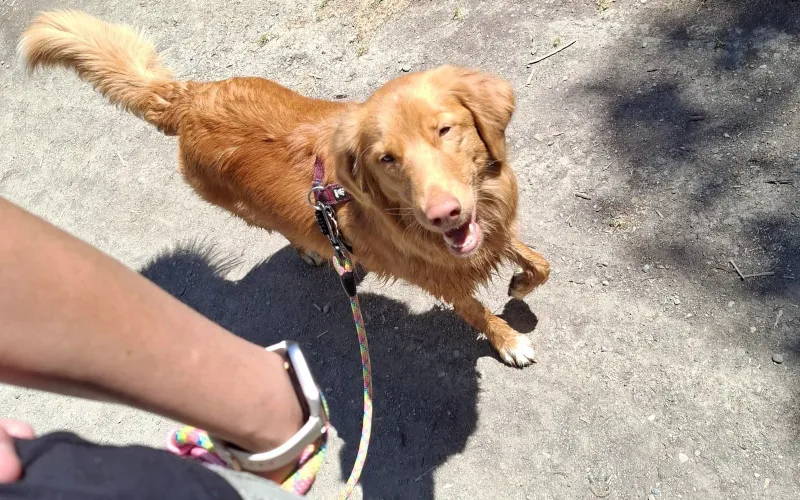
If your dog starts spinning and jumping, stop moving. Don’t follow them, don’t try to grab them mid-leap, don’t repeat their name over and over. Turn your back, stand quietly, and wait. The moment all four paws are on the floor, move calmly toward them and try again with the harness.
You’re not punishing them — you’re simply removing the thing that makes the frenzy rewarding. When chaos gets no reaction and calm gets the walk, the equation starts to shift.
Only Clip the Leash on a Calm Dog
This one takes practice, but it’s the cornerstone of the whole approach. Make it your rule: the leash goes on when the dog is still. If they jump up the moment you crouch down, stand back up. Wait. Try again. It can feel slow at first, but each repetition teaches your dog a very clear lesson — excitement pauses things, calmness moves them forward.
You can also make yourself interesting in a calm, low-key way. Pretend to look for something on the floor, pause quietly near the door, or crouch down and stay still. Dogs are naturally drawn to focused, quiet human behavior. It often redirects their attention better than any command.
The Reward Comes After, Not Before
One small note on treats: I’d encourage you to resist using food as bait to get your dog to stand still during this whole pre-walk process. Food used as a lure to catch a spinning dog teaches them that spinning near food leads to getting it. Instead, hold the reward back until the harness is on and they’re calm — then yes, absolutely, celebrate that with a treat and warm praise. The reward should mark the calm behavior, not the chaos that preceded it.
If you want to go deeper on this kind of impulse-control work and build a dog that’s genuinely calm and responsive in everyday situations, the Total Transformation Masterclass by K9TI is a resource I genuinely recommend. It covers exactly this type of foundation work — the kind that makes every single interaction with your dog easier and more enjoyable.
It Gets Better, Faster Than You Think
I always tell owners who are working on this: the improvement curve is steeper than you expect. Dogs are brilliant learners, and they adapt to new rules quickly once those rules are consistent. A week of calm, patient departures can change the entire tone of a dog’s morning routine.
The walk is one of the most important moments in your dog’s day. It’s where they explore, decompress, use their senses, and connect with you. It deserves to start well — for both of you.
So take a breath, slow down, and let the calm lead the way out the door.
Does your dog put on a show every time the leash comes out? I’d love to hear what it looks like — drop a comment below and tell me your story. You might find that other readers have been through exactly the same thing.