
Disclosure: This post about how to socialize a dog contains affiliate links. If you click through and make a purchase, I may earn a commission — at no extra cost to you. I only recommend products and courses I genuinely believe in, and all opinions expressed here are my own.
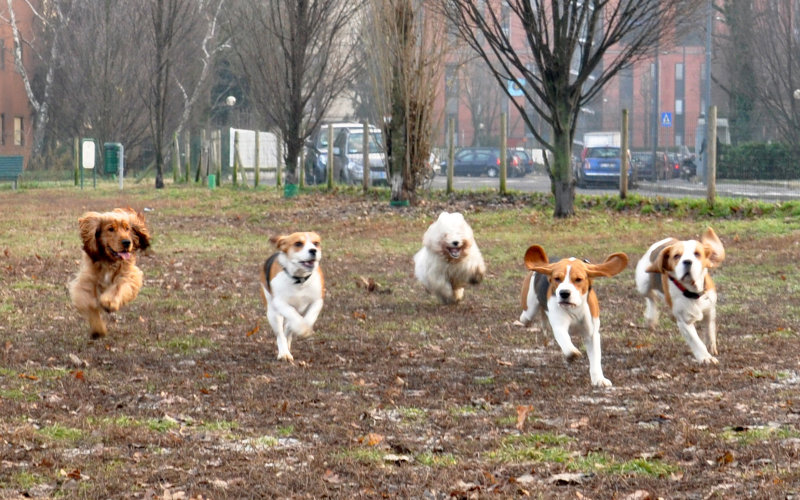
When most dog owners think about how to socialize a dog, a dog park comes to mind. A bunch of loose dogs chasing each other while the owners chat by the fence.
It’s a harmless picture, but it misses something fundamental. True socialization runs much deeper than that. It isn’t a Saturday morning activity. It’s one of the core building blocks of who your dog is.
In my work as a trainer, I’ve seen this gap play out over and over. A dog that seemed perfectly fine as a puppy starts reacting to strangers on walks, freezing up at the vet, or lunging at other dogs.
When I ask about socialization, the answer is usually some version of “Oh, we took him to the dog park a few times.” That’s not a failure on the owner’s part — nobody told them what socialization really means.
I want to change that for you here.
How to Socialize a Dog: What Dog Socialization Actually Means
The word “socialization” sounds simple, but it carries a lot more weight than most people realize.
A dog is a “social animal” — not in the casual sense we use that word, but in a biological one. Interacting with others isn’t optional for a dog. It’s woven into the fabric of who they are, as necessary to their well-being as food, movement, and safety.
When we talk about how to socialize a dog properly, we’re really talking about giving your dog a healthy relationship with the world. That means positive exposure to different people, different environments, different sounds, and other dogs.
More importantly, it means building the inner security that lets your dog encounter something new and think “I can handle this” — rather than “I need to fight or flee.”
That inner security doesn’t grow by itself. You have to build it, one small experience at a time. And understanding that process is what separates owners who get real results from those who wonder why their friendly puppy became a reactive adult.
Socialization and Habituation — A Distinction Worth Making
Before going further, it’s worth separating two concepts that are often used interchangeably but mean different things.
Socialization refers specifically to your dog building positive relationships and comfort with social beings — other dogs, people of all kinds, and the humans in their family. It’s about connection, communication, and learning that other beings are generally safe and interesting rather than threatening.
Habituation is the process of becoming accustomed to non-social stimuli — sounds, surfaces, vehicles, environments, objects. A dog habituated to traffic, elevators, umbrellas, and children on bicycles is a dog whose nervous system has learned to classify these things as ordinary and unremarkable rather than alarming.
Both are essential, and both fall under what most people mean when they say “socialization.” The reason the distinction matters is practical. The techniques that build positive social relationships are slightly different from those that help a dog stop reacting to a lawnmower.
Keeping them separate in your mind helps you notice which kind of work your dog actually needs more of.
Why How You Socialize a Dog Shapes Their Whole Character
The effects of good socialization are real, measurable, and long-lasting.
A dog that receives rich, positive social experiences during the right windows develops genuine resilience. They adapt more easily to change, recover faster from stressful situations, and carry themselves with a quiet confidence that makes everyday life better for everyone in the family.
The opposite is equally true — and this is worth sitting with.
What Happens When Dog Socialization Is Missing
Poor socialization doesn’t always show up right away. Sometimes it takes months, sometimes years.
But eventually the gaps surface, and they often look like something else entirely. I’ve worked with dogs whose owners described them as “stubborn” “unfriendly” or “just born anxious.”
In many of those cases, what I was actually looking at were defensive behaviors — strategies a dog develops when the world feels overwhelming or unpredictable.
A poorly socialized dog may become excessively fearful of new people or environments, reactive on leash, or unable to settle anywhere outside the home.
These aren’t personality flaws. They’re the result of a nervous system that never learned it was safe. Understanding that distinction changes everything about how you respond to the dog in front of you.
How to Recognize the Signs
Owners often miss early signs of poor socialization because they don’t look dramatic.
Watch for these patterns in your dog’s daily life:
- consistent avoidance of certain types of people (men with hats, children, strangers in general);
- freezing or stiffening in new environments;
- a persistent inability to settle when out of the home;
- yawning, lip-licking, or looking away as a constant response to mild novelty;
- and barking or lunging that feels disproportionate to the trigger.
None of these are character defects. They are information — and they point directly toward the kind of gradual, positive work that can genuinely help.
How to Socialize a Dog Without Throwing Them in the Deep End
Here’s where I want to slow down, because well-meaning owners make a common mistake.
Socialization is not exposure for the sake of exposure. Flooding a puppy with stimuli — bringing them to a noisy market, pushing them toward a boisterous stranger, dropping them into a chaotic dog park — can actually backfire and increase anxiety rather than reduce it.
Good socialization is gradual, guided, and always positive. You’re not trying to overwhelm your dog. You’re trying to teach them that the world is generally a place worth exploring.
Reading Your Dog’s Body Language First
The most important skill you can develop as you work on socialization is learning to read what your dog is actually communicating in any given moment.
- A dog with a loose, wiggly body, soft eyes, and voluntary forward movement is telling you they’re comfortable and curious. Keep going.
- A dog with a stiff body, a tucked tail, yawning, lip-licking, or moving away from something is telling you they’ve reached their limit. Slow down, increase the distance, and give them time to decompress.
This body language reading is the foundation of everything. Without it, socialization becomes guesswork. With it, every outing becomes a conversation.
As I explore in the post on dog mental health, learning to read these signals is also one of the most direct ways to deepen the bond between you and your dog. Because it teaches you to listen rather than just direct.
Starting Before the Vaccine Cycle Is Complete
A worry I hear often from new puppy owners is: “We can’t socialize yet — he hasn’t had all his shots.” The concern is valid. But waiting until the vaccine cycle is fully complete often means missing the most important developmental window entirely. You can start socializing safely before that point.
Invite calm, trusted friends over for short visits. Let your puppy meet adults and children of different ages and appearances. Introduce them to healthy, vaccinated adult dogs you know well. Take short car rides. Let them observe traffic and street sounds from a safe distance, and introduce different surfaces and textures at home.
In every single one of these moments, watch your puppy’s body language. If they’re curious and moving toward something, keep going. If they’re freezing or backing away, slow down and give them space.
You are the guide — and your calm, steady presence is the most powerful socialization tool you have.
How to Socialize a Dog at Any Age
Puppies and the Critical Window
Developmental science recognizes a critical socialization period in dogs — roughly from 3 to 14 weeks of age — during which the nervous system is most receptive to new experiences.
What happens inside this window has a disproportionate influence on the adult dog your puppy will become. A puppy who meets many different kinds of people, navigates varied environments, and has positive contact with other dogs during this time carries that foundation for life.
Missing this window isn’t a catastrophe — dogs are resilient — but prevention is far easier than rehabilitation. And during this period, structured home management like a safe, well-set-up puppy area can support the process enormously, giving your puppy the security of a predictable base from which to explore.
The Adolescent Dog — The Window Everyone Forgets
There is a second critical period that receives far less attention: adolescence, roughly from six to eighteen months of age. During this phase, hormonal changes and neurological reorganization can cause dogs to suddenly become more reactive, more cautious, or more easily overstimulated — even dogs who were well-socialized as puppies.
This regression is normal, and it’s temporary. But it catches many owners off-guard, leading them to conclude that something is fundamentally wrong with their dog.
What’s actually happening is that the brain is reorganizing, and the dog needs continued, patient socialization work during this period — not less of it, and certainly not punishment for what looks like “forgetting” their earlier learning.
Consistency and gentle persistence during adolescence is what determines how the adult dog comes out on the other side.
Adult Dogs: It’s Not Too Late
If your dog is past the puppy stage and you’re reading this thinking “I wish I’d known this sooner” — take a breath. Adult dogs can absolutely learn to feel safer and more comfortable in the world. The process takes more time and patience, but I’ve seen adult dogs make remarkable progress when their owners commit to the work.
The approach is the same in spirit: gradual exposure, positive associations, and always going at your dog’s pace. Never forcing, never flooding. Always watching, always adjusting. If your dog shows significant reactivity or fear-based behavior, working with a qualified force-free trainer is absolutely worth it.
One resource I genuinely recommend for owners who want to build this kind of deeper foundation is the Total Transformation Masterclass by K9TI — a comprehensive online program that guides you through relationship-based training that makes a real difference in everyday life.
How to Socialize a Dog: What Socialization Actually Looks Like Week to Week
Understanding the concept is one thing. Knowing what to do on a Tuesday afternoon is another. Here is what consistent socialization practice looks like in ordinary life.
With People
Variety is the point. Your dog should encounter — calmly, positively, without pressure — people of different ages, sizes, appearances, and energy levels. Children who move unpredictably. Men with beards. People using umbrellas or wearing hats. Visitors to your home. People encountered on walks.
The goal isn’t a high volume of interactions; it’s a wide range of them, all associated with neutral or positive outcomes. One calm, well-managed meeting is worth more than ten rushed or forced ones.
With Other Dogs
Quality over quantity is the organizing principle here. A relaxed, unhurried sniff between two dogs with compatible energy is worth far more than thirty minutes in a chaotic off-leash park where nobody is reading anyone.
Seek out calm dogs whose owners you trust, allow greetings to happen on loose leashes with plenty of space, and don’t rush either dog into sustained contact before they’re both clearly comfortable.
The enrichment walk approach — letting your dog lead with their nose and engage at their own pace — is one of the most natural frameworks for this kind of low-pressure exposure.
With Environments and Everyday Stimuli
Take your dog to different places regularly — not for any specific purpose, just to be somewhere new together. A different neighborhood. A quiet market. A train station where you sit on a bench and watch the world. A parking lot. A beach.
Each new environment, navigated calmly with you present, adds to a cumulative bank of evidence that the world is manageable. Pair these outings with the mental stimulation that comes from active engagement — sniffing, exploring, noticing — and you’re building both confidence and cognitive resilience simultaneously.
How to Socialize a Dog: The Most Common Socialization Mistakes
Relying on dog parks. Off-leash dog parks can be valuable, but they are not a socialization tool for puppies or anxious dogs. The chaos, the unpredictability, and the inability to manage interactions make them a poor environment for a dog who is still building their confidence.
Forcing greetings. Pushing your dog toward something they’re clearly uncomfortable with doesn’t build confidence — it erodes it, and it damages trust in you as a guide. If your dog is uncertain, create more distance and work from there.
Stopping too early. Many owners socialize well during puppyhood and then simply stop, assuming the work is done. Socialization is a lifelong habit, not a puppy phase. As I discuss in the post on being a better dog owner, the quality of your dog’s daily experiences across their whole life determines who they remain.
Mistaking flooding for socialization. Overwhelming a dog with a situation they can’t cope with and waiting for them to “get used to it” is not socialization. It is flooding, and it teaches the opposite lesson — that the world is unpredictable and escape is impossible.
Dog Socialization Is a Habit, Not a Phase
Socialization is not something you do once and check off a list. It’s a habit you build into your dog’s life for as long as you share it together.
New environments. New people. Calm, positive meetings with other dogs. Short trips to unfamiliar places. A nervous system that keeps learning, keeps being reassured, keeps discovering that the world is worth exploring — that’s what you build when you commit to this.
It doesn’t require extraordinary time or resources. It requires consistency, genuine attention, and the quiet willingness to see the world through your dog’s eyes.
There’s no greater gift you can give them.
Have you been working on socialization with your own dog? I’d love to hear how it’s going — every dog’s story is different, and your experience might be exactly what another reader needs to read today. Leave a comment below.