
Disclosure: This post about dog temperament traits contains affiliate links. If you click through and make a purchase, I may earn a commission — at no extra cost to you. I only recommend products and courses I genuinely believe in, and all opinions expressed here are my own.
Every dog owner has heard some version of it. “He’s stubborn.” “She never listens.” “He’s just difficult.”
Dog temperament traits get labeled as flaws all the time. Most of them are simply part of the design. Understanding the handful of traits that make up your dog’s character changes how you see him.
It also changes what you do about it, day to day, in small, practical ways.
Why “Problem” Traits Are Usually Just Traits
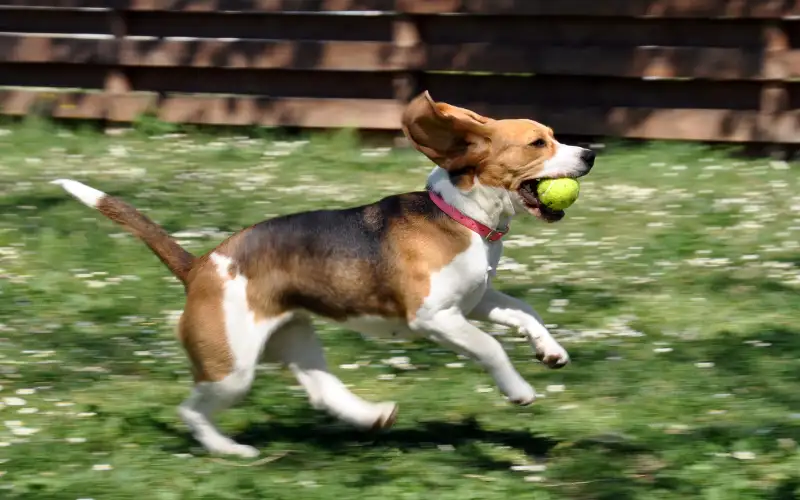
Take a Beagle. Ask ten people what a Beagle is like. At least half will say “stubborn,” or “won’t come when called.”
But a Beagle was bred to track a scent for miles. It worked out of sight of the hunter, making its own decisions the entire way. That same trait, once it moves into a living room, gets called stubbornness. It isn’t. It’s independence, doing exactly what generations of breeders selected it to do.
Every breed carries a version of this story.
A Border Collie’s intensity was shaped by controlling a flock all day, every day. A guardian breed’s wariness of strangers exists to protect a farm at night, when no one else is watching.
Dog temperament traits aren’t random. They’re the direct result of centuries of selecting for a specific job. Once you see your dog’s traits this way, “difficult” often turns into “makes complete sense.”
It’s a small shift in perspective with a big practical payoff.
The Science Behind Dog Temperament Traits
This isn’t just a nice reframe.
The C-BARQ is a behavioral assessment tool developed at the University of Pennsylvania’s School of Veterinary Medicine. It has been used to evaluate roughly 50,000 dogs across more than 300 breeds. Researchers, trainers, and everyday owners all rely on it to understand behavioral patterns.
Separately, researchers using the Dog Personality Questionnaire found five consistent traits across large samples of dogs. These were aggression toward people, aggression toward animals, fearfulness, responsiveness to training, and activity or excitability.
Different tools, different countries, similar conclusion. Dogs have real, measurable, individual character, and it can be broken down into specific, nameable parts.
The 7 Traits That Shape Every Dog’s Character
Professional trainers avoid vague words like “good” or “naughty.” Instead, they break character down into specific traits. Every dog carries each one to some degree, whether that’s high, medium, or low.
The seven below come from established Italian cynology training texts, translated here into plain, practical language. They line up closely with the categories researchers use, just organized around everyday situations instead of laboratory tests.
The Traits You See Every Day
Docility is how willingly your dog accepts guidance from someone he trusts. It isn’t submission. A dog can be confident and still be highly docile.
Ask yourself this: once you’ve built a relationship with your dog, does he generally accept your requests? Or does it take real convincing every time?
Sociability is your dog’s need for company, not just his tolerance of it. A highly sociable dog doesn’t just enjoy being around others. He genuinely needs it, and can struggle without it.
Ask yourself this: does your dog actively seek out company, from people or other dogs? Or is he perfectly content being the only one in the room?
Vigilance is how much attention your dog pays to what’s happening around him. A watchful dog notices every sound at the door before you do. A low-vigilance dog barely registers it at all.
Ask yourself this: does your dog clock every small change in his environment? Or does very little seem to catch his attention?
Reactivity is how quickly your dog responds once something catches his attention. It’s the speed of the response, not the size of it. A dog can be highly reactive and still be gentle.
Ask yourself this: does your dog react the instant something happens? Or does he take a beat before deciding how to respond?
The Traits That Show Up Under Pressure
Hardiness is how well your dog tolerates physical or emotional stress without it derailing his behavior. A dog with high hardiness bounces back fast from a startling noise or an uncomfortable vet visit.
Ask yourself this: does your dog recover quickly from something stressful? Or does it linger and color his mood for a while afterward?
Drive, or fighting spirit, is your dog’s willingness to keep pushing toward a goal instead of giving up. This shows up in play and in problem-solving. You’ll see it in a dog who won’t stop working at a toy stuck under the couch.
Ask yourself: does your dog stick with a hard puzzle, or does he lose interest and wander off quickly?
Assertiveness is professionally called “aggressiveness” sometimes, though that English translation sounds far harsher than it should. It’s your dog’s natural capacity to respond to something he perceives as a threat.
Every dog has this to some degree, and it isn’t automatically a bad thing. It’s what kept his ancestors alive long before dogs lived in houses.
Ask yourself this: around genuinely new or uncertain situations, does your dog generally stay relaxed? Or does he tend to respond defensively first and think later?
How to Read Your Own Dog
Go through the seven questions above with your actual dog in mind. Not the dog you wish you had, and not the one described in a generic breed profile online.
There’s no scoring system here, and there shouldn’t be. This isn’t a test with a passing grade. It’s a way of getting a clearer, more honest picture of the individual you’re living with.
You’ll probably notice your dog runs high on some traits and low on others. That combination matters more than any single trait on its own.
Picture a dog high in reactivity, low in docility, and low in sociability. He generally needs far more structure, patience, and calm consistency than a dog who’s the opposite on all three.
Neither combination is better. They just call for different handling, different expectations, and different kinds of patience from you. This tends to be somewhat breed-typical too.
That said, individual dogs always vary from their breed’s average in one direction or another. Curious about the research behind why dogs have consistent, measurable personalities at all? I’ve written more on that in Do Dogs Have Personalities? What the Science Says.
Two Very Different Dogs, Two Different Approaches
A quick example makes this easier to picture.
Imagine Dog A: high vigilance, high reactivity, moderate assertiveness, low sociability.
He notices everything, responds fast, and would rather observe a new dog from a distance than rush over to greet him. None of that makes him a bad dog. It just means his owner gets better results with calm, predictable routines, plenty of advance notice before new situations, and patience with a dog who needs time to warm up.
Now imagine Dog B: high sociability, high docility, low vigilance, moderate hardiness.
He barely notices the doorbell, follows guidance easily, and would happily greet a burglar with a wagging tail. His owner’s job looks completely different. Training comes easily, but a low vigilance, low-hardiness dog might genuinely struggle at a loud, crowded event that Dog A would take in stride.
Neither dog is easier or harder overall. They’re just different, and knowing which traits are running high or low tells you exactly where to focus your energy, instead of guessing.
Puppies vs. Adult Dogs: Timing Matters
One more thing worth knowing before you start observing.
A puppy’s character is still very much in formation. What looks like low docility or high reactivity at four months old can shift a great deal. Good socialization, consistent handling, and time all play a role.
An adult dog’s character, on the other hand, is generally much more settled. That doesn’t mean an adult dog can’t change at all. It means change tends to take more patience, and usually asks more of you than it would with a puppy.
Either way, these seven traits give you a starting point, not a permanent verdict.
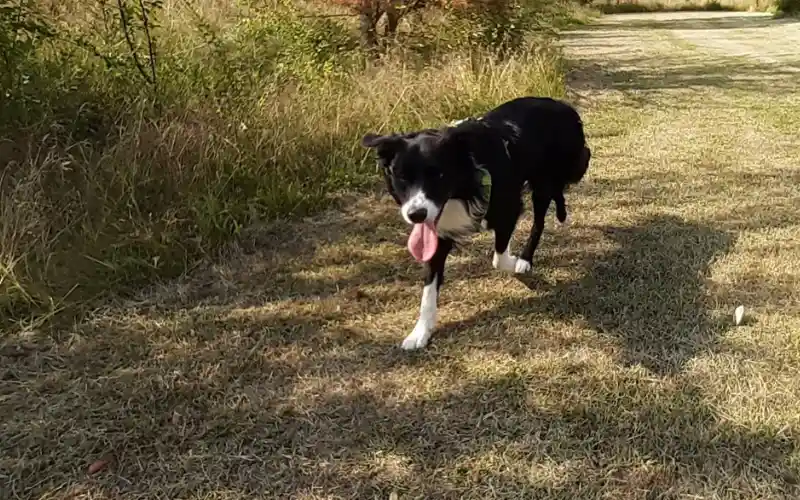
Dog Temperament Traits: When “Difficult” Is Actually Just Design
Once you’ve mapped out your dog’s traits, a lot of everyday behavior starts making more sense.
A dog high in vigilance who barks at every passerby isn’t being a nuisance on purpose. He’s doing exactly what that trait predicts he’ll do. My post on why dogs bark so much goes deeper into working with that trait, instead of fighting it head-on.
The same logic applies to hardiness. A dog who takes longer to settle after something stressful isn’t overreacting for effect. He’s telling you, honestly, where his baseline sits.
Does that sound familiar? Especially if you’ve noticed your own stress rubbing off on him during a hard week, my post on catastrophizing as a dog owner is worth a read too.
The Real Value of Understanding Dog Temperament Traits
This is really the whole point of understanding dog temperament traits. Not to label your dog, and definitely not to excuse away every behavior with a shrug.
It’s just about finally seeing him clearly. That way, the two of you can work with what’s actually there, instead of what you assumed was there before you looked closely.
The next time your dog does something that frustrates you, try running it through these seven traits before reacting. Is this vigilance doing exactly what vigilance does? Is this drive looking for an outlet it isn’t getting?
More often than not, the “problem” turns out to be a trait with nowhere useful to go, not a dog who’s being difficult on purpose. That single shift in framing tends to lower everyone’s frustration, yours included.
It’s also exactly how the K9 Training Institute’s Total Transformation Masterclass approaches things from week one. The program adapts to your dog’s specific profile, whatever breed or mix he happens to be. It doesn’t force every dog through one rigid method. If you’d like a structured, step-by-step path built around who your dog actually is, it’s worth a look.
What did you learn about your own dog going through these seven traits?
I’d love to hear which one surprised you most in the comments below. These real observations often help other readers see their own dogs more clearly too.