
Disclosure: This post about kids and dogs contains affiliate links. If you click through and make a purchase, I may earn a commission — at no extra cost to you. I only recommend products and courses I genuinely believe in, and all opinions expressed here are my own.
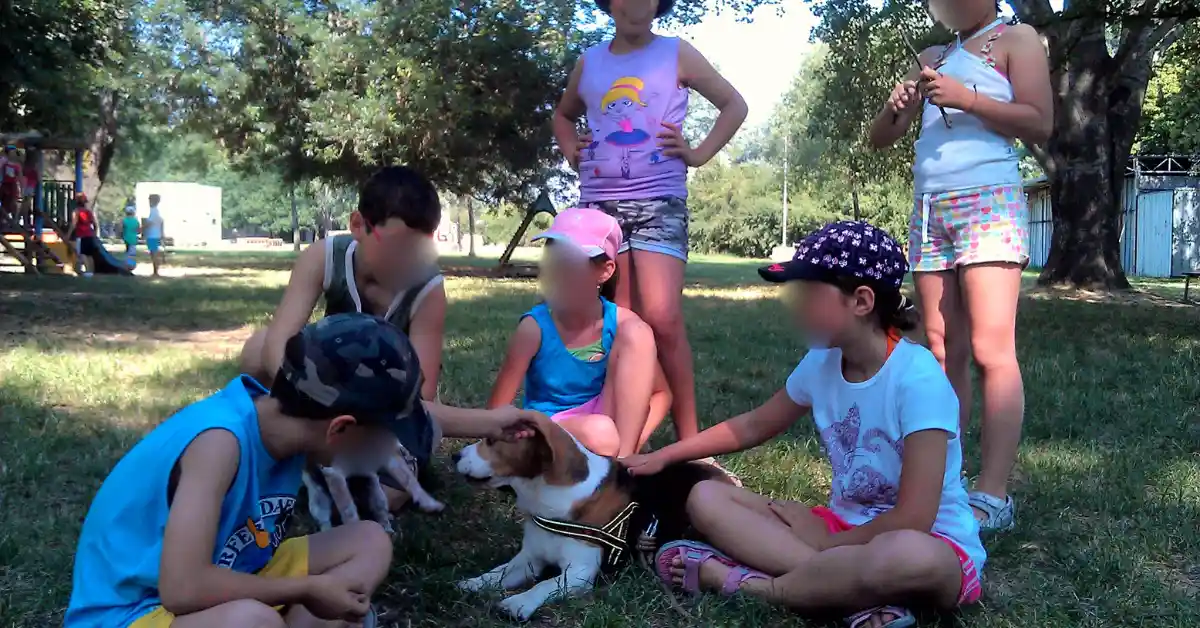
Kids and dogs. Picture the two together and it’s easy to imagine instant, effortless love. Two little ones, one on four legs, naturally in sync.
Real life is messier than that picture. Kids and dogs can absolutely build a wonderful bond. But that only happens when the adults in the house set things up the right way from the start.
When something goes wrong, the dog often gets blamed. Wild, disrespectful, even “stupid.” The truth is simpler, and less comfortable. Keeping everyone safe and happy is an adult job, not a dog’s.
The Myth of an Automatic Bond Between Kids and Dogs
Nothing about a good relationship between a child and a dog happens automatically. It’s built, one calm, supervised moment at a time.
Sometimes people skip that step, and things go smoothly anyway. That’s when the myth gets reinforced. Other times something does go wrong, and a scared or overwhelmed dog gets labeled as the problem.
In reality, the dog was almost always reacting to a situation the adults didn’t set up for success. That distinction matters. It changes how you prepare. It also changes who you hold responsible when things get bumpy.
Timing Matters: A New Puppy and a New Baby Don’t Mix Well
If you get to choose when a puppy joins your family, try not to bring one home right as a new baby is arriving too. It’s a practical issue more than anything else.
A newborn already asks for enormous amounts of time and attention. Adding a puppy on top of that, one who also needs constant supervision and structure, is a lot to manage well.
Dogs generally understand that a toddler belongs to the human species. But they’re often genuinely confused by a baby’s sounds and sudden movements. Waiting until your child has a bit more independence tends to make the introduction smoother for everyone.
If you’re planning ahead for a puppy’s arrival, my post on what to bring (and skip) when picking up a new puppy is worth reading well before pickup day.
The Non-Negotiable Rule: Always Supervise Kids and Dogs Together
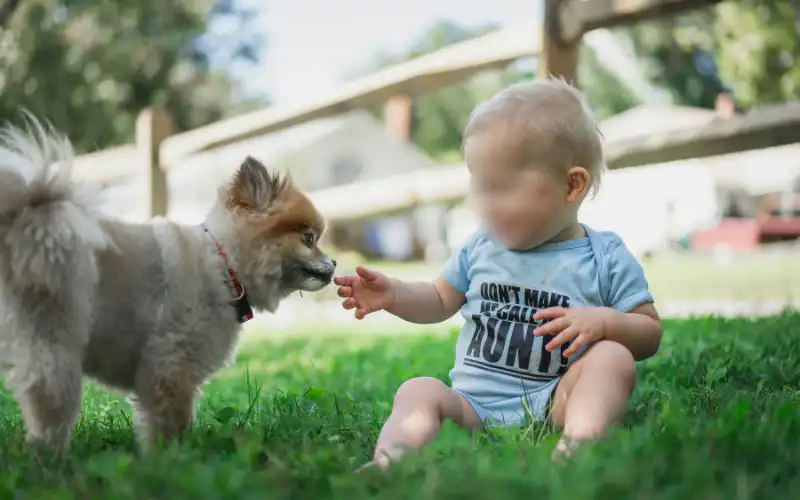
This is the one rule with no exceptions. Never leave young kids and dogs alone together, especially with children under ten.
The American Veterinary Medical Association recommends never leaving children unsupervised with dogs, since even a familiar, well-trained family pet can react unpredictably in certain situations.
A puppy tends to treat a toddler like a fellow littermate rather than a trusted leader. That means rough, careless play can escalate fast if nobody’s watching closely.
Give Your Dog a Real Escape Hatch
Supervision doesn’t mean hovering every second of every day. It means your dog always has somewhere calm to retreat when the energy in the room gets to be too much. A crate, a baby gate, or a quiet room off-limits to kids all work well for this.
A dog who can remove himself from an overwhelming situation is far less likely to ever feel like snapping is his only option. This is also where teaching a dog to enjoy time alone pays off in an unexpected way. A dog who’s comfortable with quiet, solo time adapts far more easily to needing a break from an energetic child.
Teach Gentle Hands, Every Single Time
A bigger dog makes this lesson easier to teach, since a toddler simply can’t overpower one. With a smaller or bouncier puppy, the stakes go up. Either way, the rule stays the same.
No hitting, no ear or tail pulling, no poking at eyes, no rough handling of any kind.
Preventive Vet notes that involving children in positive reinforcement training tends to work well for everyone, and it also helps kids develop a more empathetic way of communicating with animals, and by extension, with other people.
A dog who’s never been frightened by a child will almost always choose to spend more time with them, not less.
Involve Your Child in the Care, Not in the Leadership
It’s genuinely hard for most parents to actually neglect their kids in favor of a dog. Still, a child can easily feel like the dog is getting more attention. That ‘jealousy’ is worth heading off early.
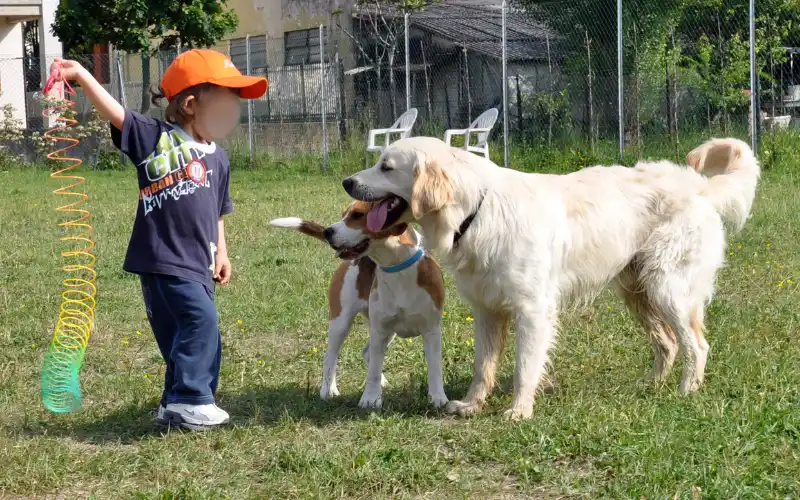
Give your child small, age-appropriate jobs, like filling the water bowl or helping with a gentle brushing session. It builds real responsibility and a stronger bond at the same time.
What shouldn’t fall on a child’s shoulders is “the role of leader.” Dogs, especially young ones, need a stable reference point to look to for guidance. That figure needs to be an adult. A dog who sees a young child as more of a playmate than a guide can struggle to find that steady presence elsewhere in the house.
Keeping the “leadership role” with the grown-ups makes the whole family dynamic easier for your dog to read, and it ties into something bigger than this one topic: the everyday question that actually makes someone a better dog owner.
Calm Is the Password Between Kids and Dogs
If there’s one word to teach every child in the house, it’s this one: calm.
The message your dog and your kids should both absorb is simple. Stay calm, and the fun continues. Get too wound up, and the interaction pauses for now. This one small habit, more than almost anything else, is what turns a shaky first introduction into a genuinely peaceful, lifelong friendship.
If you’d like real, structured guidance on this exact topic, the K9 Training Institute’s Total Transformation Masterclass includes an entire bonus class dedicated to kids and dogs! It covers everything from safe introductions to handling nipping and rough play. It’s one of the most practical parts of the whole course for any family with young children at home.
Have kids and dogs found their rhythm in your house, or is it still a work in progress?
I’d love to hear your story in the comments below. These real experiences often help other parents more than any guide can.