
Disclosure: This post about “dog won’t come when called” contains affiliate links. If you click through and make a purchase, I may earn a commission — at no extra cost to you. I only recommend products and courses I genuinely believe in, and all opinions expressed here are my own.
You call your dog. Nothing happens. You call again, louder this time. Still nothing.
If this sounds familiar, you’re not alone. Your dog isn’t being stubborn either. In most cases, a dog who won’t come when called has simply learned something, without anyone meaning to teach it. He’s learned that coming to you isn’t worth it.
The good news? That’s a completely fixable problem. It usually comes down to a few small, everyday habits.
Dog Won’t Come When Called: You’re Not Failing — You Might Be Talking to a “Machine”
Here’s a thought worth sitting with. Most of us grew up surrounded by machines.
Push a button, get a result. Press play, the movie starts. Somewhere along the way, that habit of thought leaks into how we treat dogs. We call, and we expect an instant, automatic response, as if “come” were a button we just pressed.
But a dog isn’t a machine. A dog is a sentient being, with feelings, preferences, and moods, just like you. Sometimes he genuinely doesn’t feel like coming.
That’s not defiance. That’s simply what it means to be a living, thinking creature instead of a piece of software.
The moment we stop expecting robotic obedience, and start building a real relationship instead, a dog comes when called far more often. He starts wanting to, rather than just obeying.
Why Your Dog Won’t Come When Called: The Everyday Mistakes
Most recall problems aren’t really about the dog. They’re about a handful of habits that happen almost automatically. Nobody realizes they’re working against the very behavior they want.
Scolding a Dog Who Finally Shows Up
Dogs live mostly in the present moment. Cause and effect, for them, are tightly linked in time.
Your dog wanders off, ignores you for five minutes, then finally arrives. If you scold him right then, he doesn’t connect the correction to the wandering. He connects it to arriving.
From his perspective, “come” just earned him trouble. Even an irritated tone counts here. Next time, he’ll be a little slower to show up.
Only Calling to End the Fun
If the only time you call your dog is to leash him up and leave the park, “come” quietly becomes a synonym for “the fun is over.”
Dogs notice that pattern fast. Once they do, coming to you starts to feel like a trade nobody wants to make.
Chasing Your Dog Instead of Letting Him Chase You
This one trips up almost everyone at some point. Your dog stalls, so you jog toward him to grab his collar.
But being chased is genuinely fun for a dog. It can turn your recall attempt into a game, just not the one you were hoping for. Now he’ll bolt every time, because being chased is its own reward.
My post on how to play with your dog goes deeper into which chase games actually strengthen your bond, and which ones quietly work against a reliable recall.
Using a Different Word Every Time
“Come,” then “here,” then just his name, shouted three times in a row. To your dog, these can sound like three unrelated sounds.
Recall training works best if the same word means the same thing, every single time.
How to Get Your Dog to Come When Called, Every Time
The fix isn’t complicated, but it does take consistency. Here’s the version that actually works in practice, with real dogs, in real backyards.
Pick One Cue, and Protect It
Choose a single word. Your dog’s name plus “come” works well, or any short cue you like. Use it only when you’re genuinely ready to reward whatever happens next. Never use it for anything your dog might dislike.
The San Francisco SPCA’s trainers put it simply: never call your dog for anything they won’t like, and never call them if you don’t think they’ll actually come. Never repeat it in a panic if he doesn’t respond right away.
Start Where It’s Easy
Practice in a quiet, distraction-free space first.
Ideally, catch your dog already moving toward you for some other reason. Say the cue right as it’s happening, then reward generously. This teaches the word before you ever test it against real distractions.
Reward Every Single Arrival, No Exceptions
Every time your dog reaches you, treat it like the best thing that happened all day.
Praise, a treat, a quick game, whatever your dog loves most. It doesn’t matter if he took the scenic route and sniffed every blade of grass along the way. He came.
The American Kennel Club recommends rewarding eye contact and movement toward you generously, even with lots of treats or play sessions early on, since that’s the whole point of building the habit. That’s what gets rewarded, every time, without fail.
Become the Best Game in the Yard
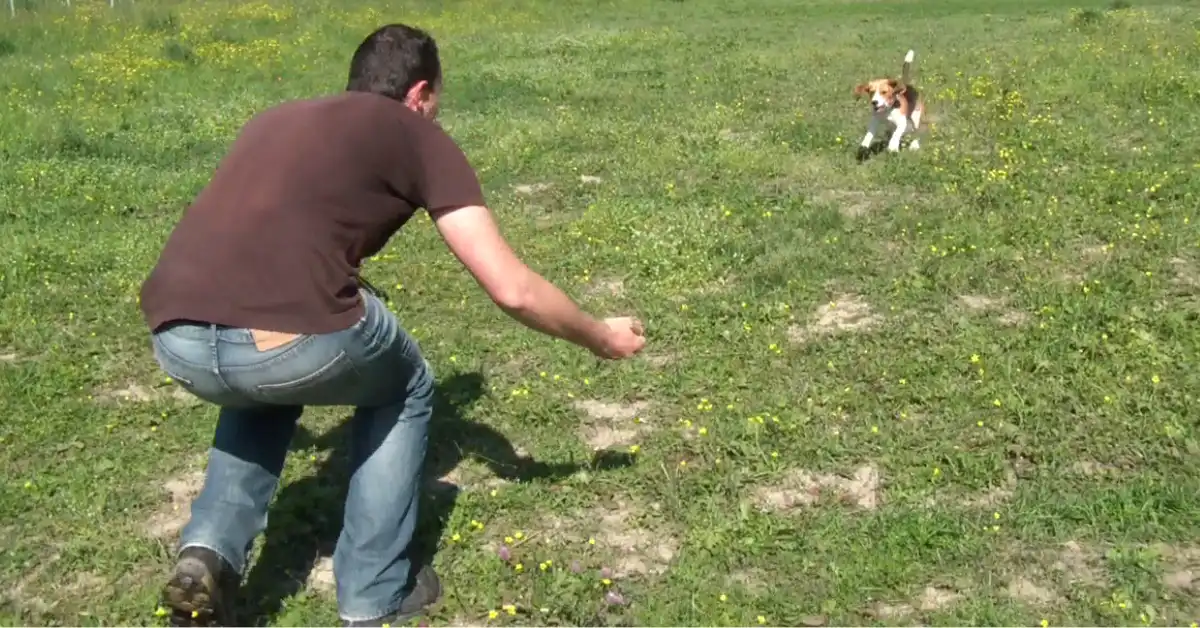
If your dog is hesitating, don’t move toward him. Turn and jog the other way instead, calling him as you go. Welcome him with real enthusiasm when he catches up.
This flips the whole dynamic. Instead of being chased, which he’d love, he gets to chase you. He’ll love that just as much, and it actually strengthens the exact response you’re after.
A quick safety note: only practice this kind of distracted recall if you’re sure your dogs won’t compete over the reward — when in doubt, skip it and keep things calm.
How to Get Your Dog to Come When Called: What This Really Comes Down To
A reliable recall isn’t a trick you install. It’s a byproduct of a good relationship, one where your dog trusts that coming to you is consistently, reliably worth it. That’s really what makes a dog come when called, again and again, no matter what’s happening around him.
That takes a fair amount of patience, especially early on. It starts with seeing your dog as the feeling, thinking individual he actually is, rather than a tool that should obey on command.
If that idea resonates with you, it’s worth reading more about what real empathy toward a dog looks like in everyday life, since it changes far more than just recall.
If you’d like a fully structured way to build this skill, the “Coming When Called” class inside the K9 Training Institute’s Total Transformation Masterclass walks through exactly this approach. It covers how to choose a cue your dog has never learned to ignore, and why chasing your dog is one of the biggest recall mistakes owners make without realizing it.
Has your dog ever “forgotten” how to come when called out of nowhere?
I’d love to hear what finally worked for you in the comments below.
These real stories often help other readers more than any guide ever could 🙂