
Disclosure: This post about dog car sickness contains affiliate links. If you click through and make a purchase, I may earn a commission — at no extra cost to you. I only recommend products and courses I genuinely believe in, and all opinions expressed here are my own.
A quick note before we start: I’m a certified dog trainer, not a veterinarian. This post is for general informational purposes only and isn’t a substitute for professional veterinary advice. If you’re noticing signs of dog car sickness, please check in with your own vet first to rule out any underlying health issue.
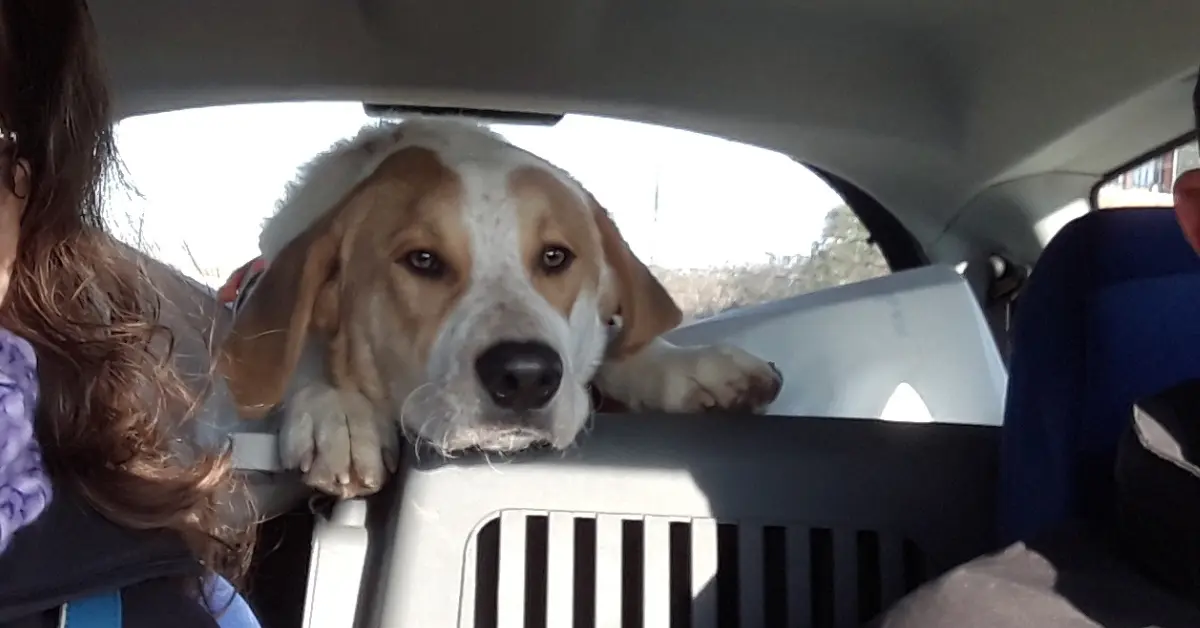
If your dog drools, paces, or throws up every time the car starts moving, you already know how disruptive dog car sickness can be. It’s messy. It’s stressful for everyone in the vehicle.
I hear about it constantly from clients. Some have started avoiding road trips. Others skip vet visits, or even a simple drive to the park. Here’s the reassuring part: dog car sickness is rarely permanent.
There’s a clear, gentle path toward fixing it.
What Dog Car Sickness Actually Looks Like
Before we jump into solutions, it helps to know exactly what you’re dealing with. A dog struggling with car sickness usually shows one or more signs within the first few minutes of a drive.
Watch for heavy drooling, restless pacing, or lip licking. Yawning, whining, and heavy panting are common too, especially when it seems out of proportion to the temperature.
Some dogs go further and vomit shortly after the car starts moving.
Others look disoriented. They glance around as if searching for something they can’t quite place.
These signs can overlap with plain old fear of the car. Honestly, the two often feed each other. A dog who feels nauseous once may start dreading the car itself. That dread can trigger symptoms even before the engine turns on.
Try to read your dog’s body language early. Waiting for the vomiting stage makes every step below harder than it needs to be.
What Causes Dog Car Sickness?
The root cause is usually physical, behavioral, or a mix of both. According to VCA Animal Hospitals, motion sickness is more common in younger dogs because the parts of the inner ear responsible for balance aren’t fully developed yet.
Most puppies grow out of it by around one year old. That’s genuinely good news if you’re raising a puppy who gets queasy on every outing. Patience alone solves a good portion of these cases.
For adult dogs, the picture looks a bit different. The Merck Veterinary Manual explains that motion sickness stems from stimulation of the inner ear’s balance organ, which connects directly to the brain’s vomiting center. Fear of the vehicle itself can also play a role. In some cases, it can trigger symptoms even in a car that isn’t moving at all.
In practice, this often means one thing. A dog who only rides in the car to visit the vet may start dreading the vehicle itself. That dread can build up long before motion ever enters the picture.
When to Loop In Your Veterinarian First
I always recommend a quick check-in with your vet before starting any car sickness protocol.
This matters even more if your dog is older and this is a new behavior. It also matters if vomiting happens during short, calm drives with no obvious trigger.
Sudden-onset symptoms in an adult dog can sometimes point to something unrelated to motion. An ear infection or a vestibular issue are two common culprits. Ruling those out first saves you from training around the wrong problem.
If you’re not sure who to ask, my guide on how to choose a veterinarian for your dog can help you find someone you trust with these questions.
How to Help Your Dog Get Past Car Sickness
Once your vet confirms there’s nothing medical going on, the real work begins.
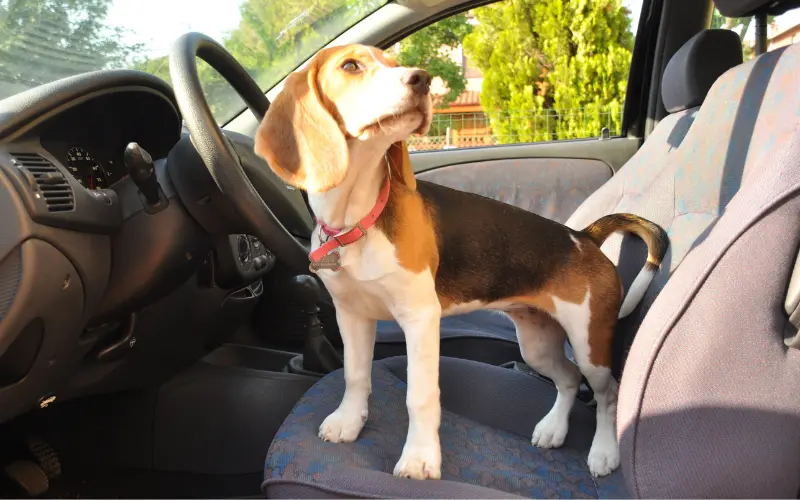
It’s about building a new, calm relationship between your dog and the car. This is a gradual process. Rushing it tends to backfire, so give each stage as many sessions as your dog needs before moving on.
Step 1: Make the Parked Car a Boring, Safe Place
Start with the engine off and the car staying put. Walk your dog to the car on a leash. Let them hop in and out freely, and reward calm behavior with praise and a small treat.
The goal here isn’t excitement. It’s boredom. A dog who finds the parked car unremarkable is already halfway to tolerating a moving one.
Step 2: Turn the Engine On, Stay Parked
Once your dog settles into the parked-car routine without stress signals, repeat the exercise with the engine running. Sit there for a minute or two. Reward calm behavior, then turn the engine off again.
Some dogs react to the vibration and noise alone. This stage often reveals problems that never showed up with the engine off.
Step 3: Take It On the Road, Slowly
Now you can attempt a short drive, sometimes just around the block. It often helps to schedule this right after a long walk, when your dog is pleasantly tired rather than wound up.
If your dog stays relaxed, stretch the distance gradually over several sessions. Reinforce quiet, settled behavior with a few small treats along the way.
Notice any drooling, stiffening, or restlessness? Stay calm yourself, end the drive without a fuss, and head home. Next time, simply make the trip shorter.
Try to end early drives with something genuinely fun, like a quick game in a safe, open space. This builds a positive memory that outweighs the queasy one.
Practical Tips That Make a Real Difference
A few small adjustments help regardless of where your dog is in the training process.
- Skip a large meal right before travel.
- Don’t send your dog off on a completely empty stomach either, since that can make nausea worse for some dogs.
- Crack a window for fresh airflow, and keep the car cool.
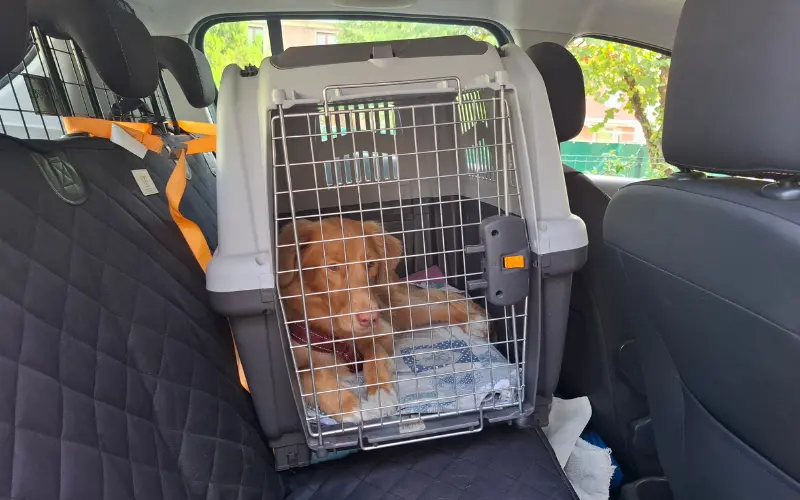
- Face a crate or carrier forward if you use one. Watching the scenery whip sideways through a window can worsen the sensory confusion behind dog car sickness.
- Some owners have good results with a bit of lavender aromatherapy in the car. It’s been linked to calmer, quieter dogs during travel. A small ginger snap before the trip works for some picky stomachs too, though results vary from dog to dog.
If Dog Car Sickness Still Won’t Budge
Worked through every step above, and your dog is still struggling? It’s worth revisiting your vet about options like anti-nausea medication. This can break the cycle while you keep building positive associations.
It’s also worth double-checking the basics of how your dog actually rides. My post on dog car safety covers proper crate and harness setup. It also explains why tethering your dog securely can ease car sickness, since it limits the sliding and swaying that makes nausea worse. And if travel days leave your dog skipping meals entirely, not just during the drive, take a look at when to worry about a dog that isn’t eating.
This exact gradual approach — parked and calm, engine on and calm, then finally moving — is also the backbone of how car introduction is taught inside the K9 Training Institute’s Total Transformation Masterclass.
Tethering your dog is specifically recommended there as a tool that can help with car sickness while keeping them safe. If you’d like a fully structured, week-by-week version of this training, it’s worth a look.
Has your dog ever struggled with car sickness? What finally worked for you?
I’d love to hear about it in the comments below. Real-world stories like yours often help other readers more than any guide can.