
Disclosure: This post about how to play with your dog contains affiliate links. If you click through and make a purchase, I may earn a commission — at no extra cost to you. I only recommend products and courses I genuinely believe in, and all opinions expressed here are my own.
Most owners never think twice about how to play with your dog. You throw the ball, your dog brings it back, you throw it again. What’s there to get wrong?
Quite a lot, actually. Play isn’t just a way to pass the time. It’s one of the main languages a dog uses to learn about the world.
How you handle it shapes their character in ways most owners never expect. Get it right, and play becomes one of the most powerful tools you have. Get it wrong, repeatedly, and it can quietly undo real progress in training and in your relationship.
Play Isn’t Extra, It’s a Core Need
Here’s the mindset shift worth making first.
For a dog, play covers real ground: physical movement, social connection, and above all, learning. Puppies learn almost everything through play.
Adult dogs never fully lose that instinct either. It stays wired into them for life.
Suppressing that need doesn’t make it disappear. It just shows up somewhere else. Usually as frustration, poor impulse control, or a dog who’s harder to reach through normal training.
There’s no single formula that works for every dog. Early experiences, personality, health, and the relationship you’ve built together all shape what works best, something ethologist Marc Bekoff’s research on canine play backs up in real depth.
But there are a handful of general principles that hold up across almost every dog. That’s exactly what this guide on how to play with your dog covers.
How to Play With Your Dog Without Making Toys Boring
Before getting into specific games, one principle underlies all of them. If toys are scattered around the house all day, every day, your dog stops noticing them. Familiarity breeds boredom fast.
Keep favorite toys put away. Bring them out specifically when you’re ready to play together.
That single change transforms an ordinary toy into a genuine event. Your dog starts to associate that toy, and you, with something worth getting excited about.
Play becomes something you build together. Not something your dog does alone while you happen to be nearby.
Fetch, Done Right
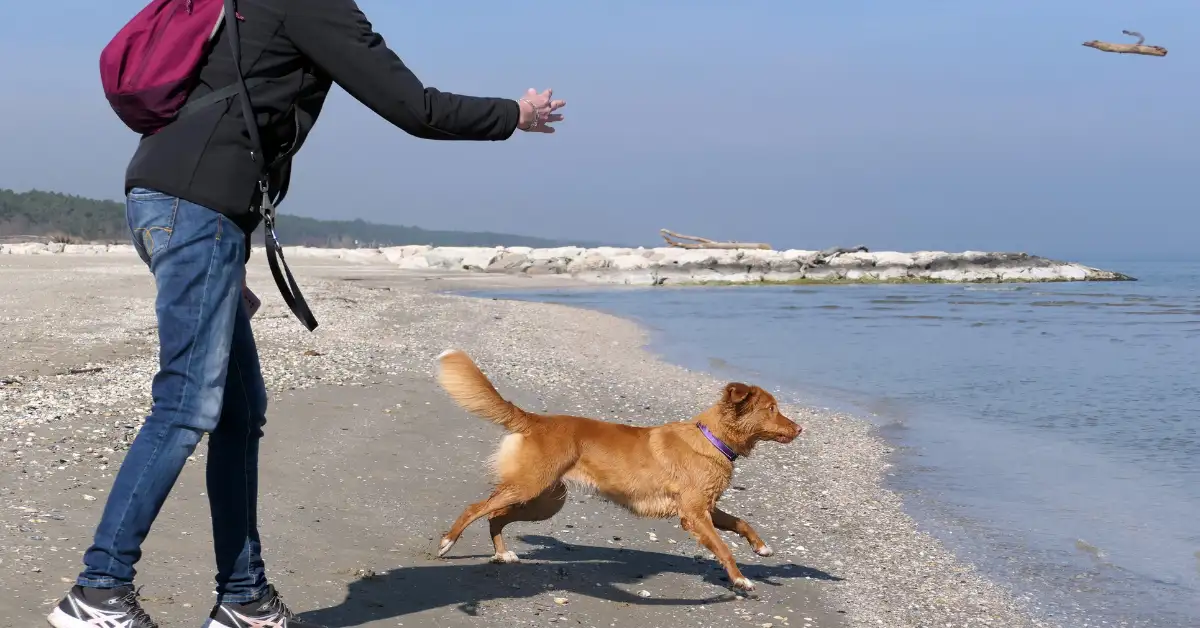
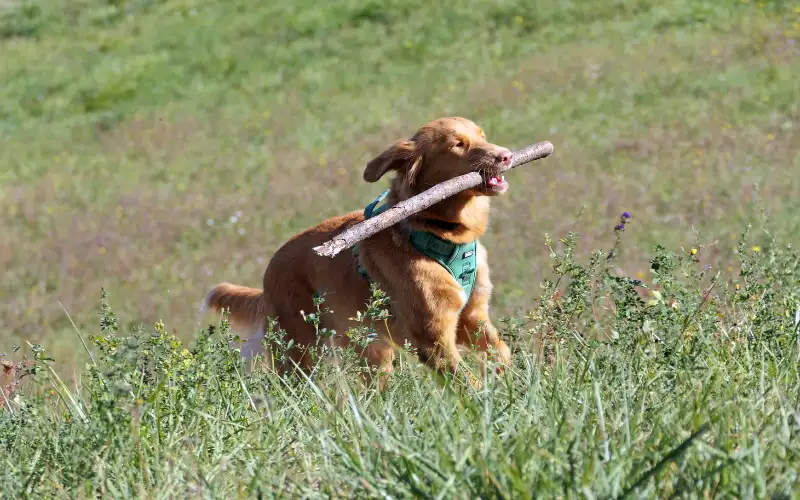
Fetch is the game most owners already play, and also the one most commonly ruined through repetition. Throw the ball, dog brings it back, throw it again. Over and over until someone gets bored, usually the dog first.
The AKC’s own collection of training games makes the same point: variety is what keeps a game like fetch mentally engaging instead of just physically tiring.
The fix is variety.
- Throw to different distances and directions instead of the same spot every time.
- Try different terrain: tall grass, a pile of leaves, somewhere your dog actually has to search a little.
- Bounce the ball sometimes so your dog has to catch it differently.
- Mix long throws with short ones.
Every bit of unpredictability keeps your dog’s brain engaged instead of running the same loop on autopilot.
You become the one creating the challenge. That keeps you central to the game instead of just the guy holding the ball.
Hide and Seek, Two Ways
This game does double duty. It’s genuinely fun, and it sharpens your dog’s senses, since finding something requires sight, hearing, smell, and a real sense of orientation all working together.
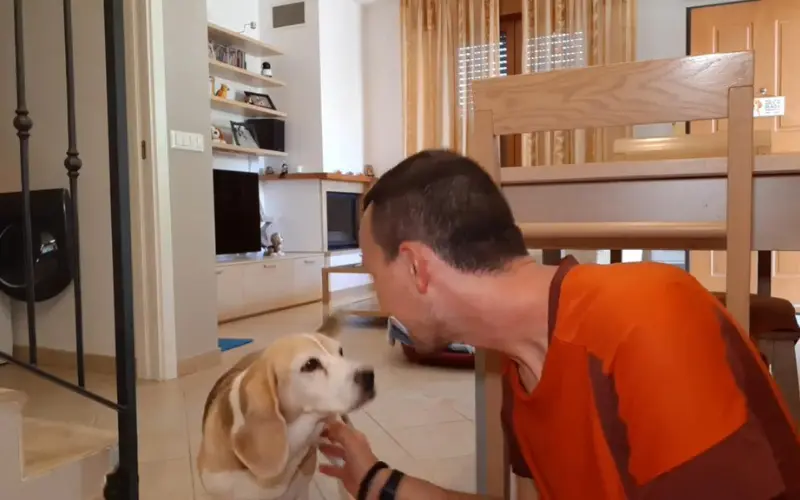
You can play it two ways. Hide yourself and let your dog find you, or hide a toy or treat and send your dog searching.
Both work well indoors on a rainy day and even better outside. If your dog won’t hold still long enough for you to hide, ask someone else to distract them, or step into another room briefly while they wait.
Chase, the Game Most Owners Get Backwards
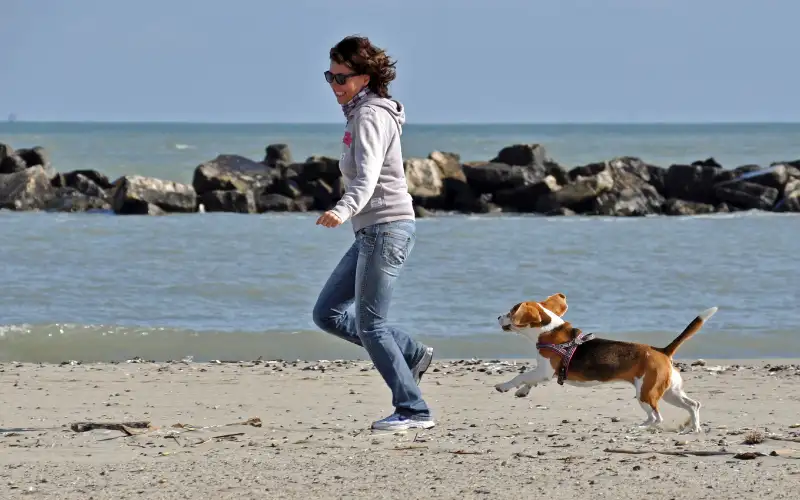
Chase is a classic, and also the game most likely to quietly wreck your recall if you play it the wrong way. Spend months chasing your dog every time they grab something and run, and you’re teaching them, very effectively, that distance from you is fun and rewarding. That’s the opposite of what you want.
Watch two dogs play chase together and you’ll notice something.
One runs a short distance, the other follows. Then the first one circles back, and often the roles flip entirely. It’s a two-way exchange, not a one-way pursuit.
You can mimic that by chasing your dog briefly, then backing away and inviting them to chase you instead. Speaking a little bit of their own language here goes a long way toward keeping recall intact.
Nose Games: Play That Builds Cooperation
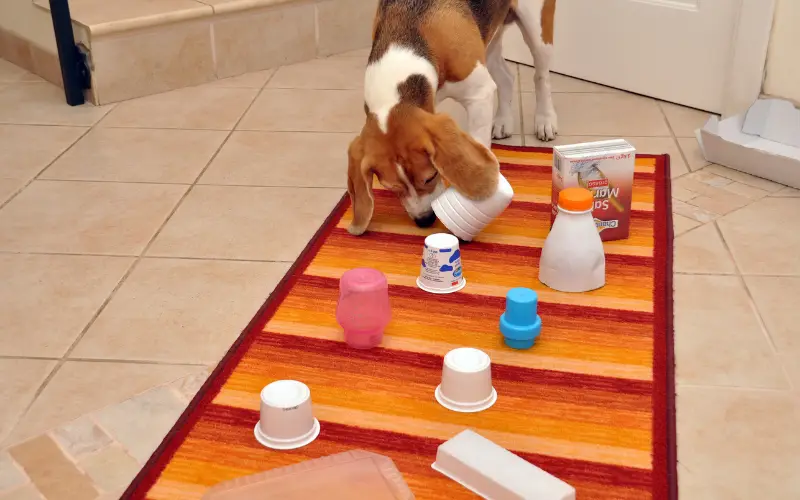
Nose work deserves a category of its own. Hiding treats, either scattered randomly or laid out as a scent trail, taps directly into one of your dog’s most powerful senses. It teaches real cooperation with you in the process.
Introduce a cue like “find it” the moment your dog puts their nose down to search, so the word and the action link up over time.
When your dog can’t locate something particularly well-hidden, they’ll often glance back at you for help. That’s your cue to point toward the general search area with your body.
See the game through to the end. If your dog wants to pause and sniff elsewhere, that’s fine, but keep gently redirecting attention back to the search rather than letting the moment fizzle out.
Once every treat turns up, reward generously with praise and affection in the spots your dog enjoys most. Typically the chest and sides rather than the top of the head.
If nose work turns out to be your dog’s favorite thing in the world, and for a lot of dogs it is, my post to scent work for dogs goes much deeper into something you can build on this foundation.
Puzzle Games: Play That Builds Self-Control
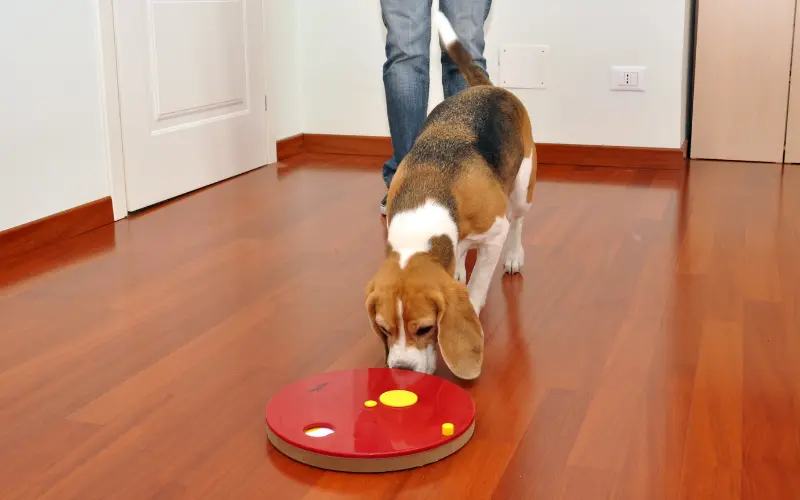
Puzzle or “problem solving” games belong to the broader world of mental stimulation. They teach something fetch and chase simply can’t: patience. Your dog has to work through a small challenge, and losing patience means losing the reward entirely.
Set the puzzle down somewhere calm, then step back and let your dog work through it without interference. They may glance at you, wander off briefly, or grumble a little in frustration. Resist the urge to help. Only by working through it independently does a dog actually build real self-control.
Praise generously once they crack it, but skip a food reward at the very end. Puzzle toys generally dispense treats along the way, so an extra one at the finish waters down the actual lesson.
For a broader overview of mental stimulation ideas beyond puzzle toys specifically, I’ve written a post worth exploring once your dog has the basics down.
Using Play to Shape Character, Not Just Burn Energy
Here’s a detail worth taking seriously if you own a dog from a breed with strong working instincts.
Every breed carries pieces of the predatory sequence in its genetics. A hound’s drive to chase scent, a herding breed’s eye-stalk-chase pattern, a terrier’s instinct to dig and pounce. I’ve written more about where these instincts actually come from if you’re curious about the bigger picture.
Play is one of the best tools you have for shaping how those instincts show up day to day.
You can’t erase a dog’s genetics, and trying to would be both pointless and unfair to who they are. But the right games, offered consistently, can take the edge off traits that tend to cause friction.
An overpowering chase drive, or a habit of tuning you out mid-sniff, are both good examples. Nose games and puzzle games in particular build exactly the cooperation and self-control that soften those rough edges over time.
How to Play With Your Dog: The Rules That Make Any Game Work
A few habits apply no matter which game you’re playing.
Never let play turn into your dog barking demands or shoving a toy into your hands. Ask for a sit or a moment of calm first, so the game itself becomes the reward for good behavior.
Avoid over-stimulating standoffs, and skip using your own body as a toy. Getting down on all fours or wrestling roughly blurs a line that’s better left alone. It tends to encourage exactly the mouthing and jumping you don’t want elsewhere.
Timing your rewards well during play works the same way it does in formal training. The occasional jackpot reward, bigger and better than usual, works beautifully for a first-time success at something tricky. Finally nailing a harder puzzle, or completing a tough scent search, are both perfect moments for it.
And above all: stop while your dog is still having fun. Ending a session on a high note keeps play feeling important and exciting, session after session, instead of gradually fading into something your dog takes for granted.
Building How to Play With Your Dog Into a Real Routine
You don’t need hours. Ten to fifteen minutes a day, spent genuinely engaged rather than half-watching your phone, does more for your dog’s wellbeing and your relationship than a much longer session done on autopilot.
K9TI’s Total Transformation Masterclass weaves structured play directly into its training approach, treating it as a legitimate teaching tool rather than just downtime between lessons.
How to Play With Your Dog: The Bottom Line
Knowing how to play with your dog changes what play actually accomplishes.
Done thoughtfully, it meets real needs, builds genuine trust, and gently shapes character over time. All while being simply, unmistakably fun for both of you. Not a bad return for fifteen minutes a day.
What’s your dog’s favorite game to play with you? I’d love to hear about it in the comments 🙂