
Disclosure: This post about how to choose a veterinarian for your dog contains affiliate links. If you click through and make a purchase, I may earn a commission — at no extra cost to you. I only recommend products and courses I genuinely believe in, and all opinions expressed here are my own.
Knowing how to choose a veterinarian for your dog is something most people don’t think about until they need one.
Then suddenly it’s urgent, and they’re making one of the most important decisions in their dog’s life under pressure.
Don’t let that happen to you. Finding the right vet is worth doing slowly and deliberately, before anything goes wrong. And it’s about much more than location and office hours.
Why the Relationship Matters as Much as the Credentials
Your dog can’t speak for themselves. That means the person who monitors their health and guides your decisions carries enormous responsibility. Not just technically, but humanly.
The right veterinarian isn’t just someone who runs the right tests.
They’re someone who listens to you, takes your concerns seriously, and communicates in a way that helps you actually understand what’s happening. Over the years, a good vet becomes your dog’s clinical advocate.
Someone who knows your dog’s history, knows your family, and can translate medicine into everyday life.
That kind of relationship doesn’t happen automatically. It’s built, visit by visit. Which is exactly why starting this search before you’re in crisis is so important.
The American Veterinary Landscape: A Note for Context
If you’re in the US, it helps to understand the kind of market you’re navigating.
American veterinary care today is split between independently owned practices and large corporate chains. Corporate groups have grown rapidly, and by some estimates corporate ownership now accounts for roughly half of all veterinary practices in the country.
Neither model is automatically better or worse. A large corporate clinic may have more equipment and longer hours. An independent practice is more likely to offer the consistent, personalized relationship I just described.
The same vet sees your dog over years, and knows their history without checking a screen first. Knowing which model you’re walking into helps you ask the right questions.
How to Choose a Veterinarian for Your Dog: Where to Start
Word of mouth from people you actually trust is still the best starting point. Ask your trainer, your neighbors with dogs, or friends who’ve had a pet for years.
Someone who tells you not just that a vet is competent, but how they handled a difficult conversation, and whether they felt heard, is giving you far more useful information than an online rating.
From there, narrow your options by proximity. In an emergency, every minute counts.
A vet fifteen minutes away is meaningfully more useful than one forty-five minutes away, regardless of how good they are. And, of course, in the end, you have to find a compromise between all these factors.
How to Choose a Veterinarian for Your Dog: Visit Before You Need To
Once you have two or three options, schedule a meet-and-greet before you bring your dog.
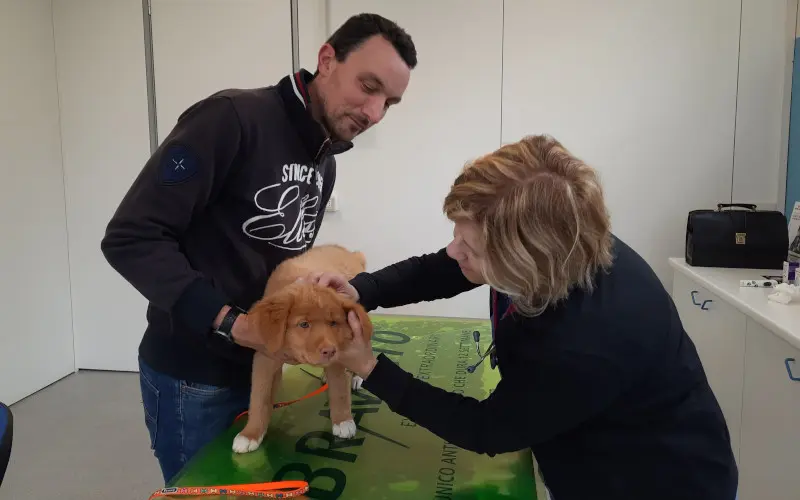
Many practices welcome this, especially for new clients. Arrive with a few questions prepared. Look around at whether the space feels clean and organized. Check how the front desk treats you. Watch whether the vet seems genuinely interested in your questions or distracted.
When you get time with the veterinarian, pay attention to how they communicate.
- Do they explain things in plain language?
- Do they ask about your dog’s lifestyle, not just their symptoms?
- Are they willing to discuss options rather than simply stating a protocol?
One question worth asking directly: what happens if I have an emergency outside your office hours?
This tells you a lot about how the practice is organized and how you’ll be supported when it matters most. Practices with 24-hour coverage or a close relationship with a trusted emergency clinic are significantly more valuable than those who point you to a generic emergency line.
What Good Veterinary Care for Your Dog Actually Looks Like
This is the part most guides skip. Technical competence matters enormously. But for everyday owners, some of the clearest signals of a good practice have nothing to do with equipment.
A good vet asks you questions. They want to understand your dog’s daily routine, what changed before the symptom appeared, how your dog behaves at home. They treat you as a source of information, not an obstacle.
A good vet also explains their reasoning. If they suggest an exam or a medication, they tell you why. “Based on what I’m seeing and what you’ve described, I think we should look at X because of Y” is the kind of communication that builds trust. “We need to run these tests” with no further context is not.
And a good vet respects your role as the dog’s owner.
That means explaining what a diagnosis actually means in practical terms. It means giving you real options rather than defaulting to the most expensive path. It means checking in with you as a partner rather than issuing directives.
The Vet as Your Long-Distance Ally
Here’s a scenario many owners don’t think about until they’re in it.
You’re traveling, your dog is with a sitter, and something seems wrong. The sitter can tell you what they’re observing. But you’re hours away, and the dog is at a clinic that doesn’t know your animal at all.
A vet who has a real relationship with you can act as an advocate in that moment.
They can take a call, help you interpret what the sitter is describing, and decide whether it’s genuinely urgent. If so, they can communicate with the new clinic far better than a stranger. Think of them as your dog’s medical translator when you’re not there.
This is worth raising during your initial visit. How does the practice handle remote situations or owners who need guidance while they’re away?
The willingness to engage with the question tells you something real.
When to Ask More Questions, and When to Switch
It’s completely reasonable to ask a vet to explain why they’ve reached a particular conclusion.
If they describe your dog as “anxious” or “lethargic” or recommend a specific treatment, you’re entitled to ask what observations led them there. Not to second-guess them, but to understand and participate in the decision.
A vet who responds to genuine questions with irritation or vague reassurances is worth reconsidering. Most good veterinarians actually appreciate engaged owners. Engaged owners catch early symptoms and follow through on care plans.
If after a few visits you consistently feel rushed or dismissed, that’s real information. The right practice exists for you and your dog. Finding it is worth the effort.
How to Choose a Veterinarian for Your Dog: One Last Thing About Anxiety
A word of honest caution. The vet relationship works best when it’s grounded rather than anxious.
An owner who calls the clinic every few days with new concerns puts both the vet and the dog in a difficult position. Part of learning how to choose a veterinarian for your dog is also learning to trust the one you’ve found.
Build enough confidence in them to settle into a steady relationship rather than a reactive one. That trust is part of the answer to how to choose a veterinarian for your dog that most guides never mention. I wrote about this tendency, and what it does to your dog, in a separate piece worth reading alongside this one.
If you’re navigating a new puppy’s first weeks
Alongside all of this, it’s also worth noting that building a vet relationship early — before any real problems arise — is one of the best things you can do for a dog who’s still adjusting to nighttime routines or other early transitions. And if you’ve been managing a female dog’s heat cycle, your vet is precisely the resource we discussed in that post for monitoring that things are progressing normally.
If you’re looking to build the kind of reliable, calm relationship with your dog that makes vet visits smoother and less stressful for everyone in the room, the foundational work covered in the Total Transformation Masterclass is a genuinely good place to start.
A dog who trusts you and responds to your cues is a very different animal at the vet’s table than one who hasn’t had that foundation built.
- Has finding a good vet for your dog ever felt harder than it should?
- Or have you been lucky enough to find one of those rare people who really felt like a partner?
Drop a comment below and tell me what made the difference. Even a small comment that might seem irrelevant to you can help other pet owners feel less alone 🙂