
Disclosure: This post about how to tell if your dog is overweight contains affiliate links. If you click through and make a purchase, I may earn a commission — at no extra cost to you. I only recommend products and courses I genuinely believe in, and all opinions expressed here are my own.
I’m a certified dog trainer, not a veterinarian. Nothing in this article replaces a professional exam. Learning how to tell if your dog is overweight at home is a useful first step. But only your vet can rule out medical causes and confirm a safe target weight for your dog.
Most of us don’t find out our dog has gained weight from a vet visit. We notice it slowly, the same way we might miss our own weight creeping up. We see that mirror every single day, so the change slips past us. If you’ve ever wondered how to tell if your dog is overweight, you’re already asking the right question. And you don’t need a scale to get a solid answer.
Nearly six in ten dogs in the United States are considered overweight or obese. That figure comes from the Association for Pet Obesity Prevention, and it surprises a lot of owners. Extra weight tends to arrive slowly. A pound here, a pound there, and “a little chunky” quietly becomes the new normal in our eyes.
Breed weight charts don’t really solve this problem either. A healthy Labrador Retriever might weigh anywhere between 55 and 80 pounds. A healthy Chihuahua can range from 4 to 6 pounds.
Sex, frame size, and muscle all shift that number in ways no chart can predict. What actually works is looking past the scale and reading your dog’s body instead.
How to Tell If Your Dog Is Overweight: The Two-Part Home Check
Veterinarians rely on something called a Body Condition Score. It’s a 1-to-9 scale from the World Small Animal Veterinary Association. It estimates body fat through sight and touch, not weight alone.
You can run a simplified version at home in under two minutes. It only takes two steps: a look from above, and a feel along the ribs.
Step 1 — The Waist Check From Above
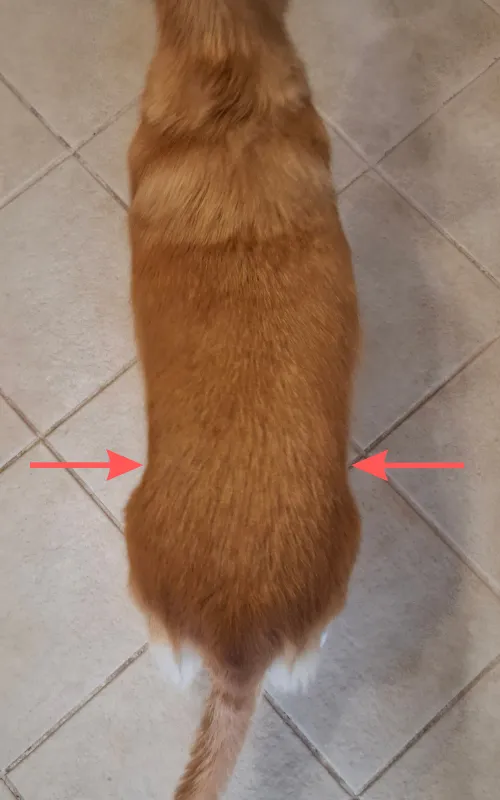
Stand behind your dog while they’re relaxed on all four legs. Look straight down at their back.
You’re looking for a waist: a gentle inward curve behind the ribs, right before the hips flare out again. Together they should form a loose hourglass shape.
If that curve is missing, or the sides run straight from ribs to hips, that’s a sign of extra weight. A bulge outward is an even clearer one.
A side view helps confirm it too. Get down at your dog’s eye level and check whether the belly tucks up between the ribcage and the back legs, or hangs flat.
Step 2 — The Hands-On Rib Check
Sight alone isn’t always reliable, especially on fluffy or double-coated breeds. So the second check uses touch instead.
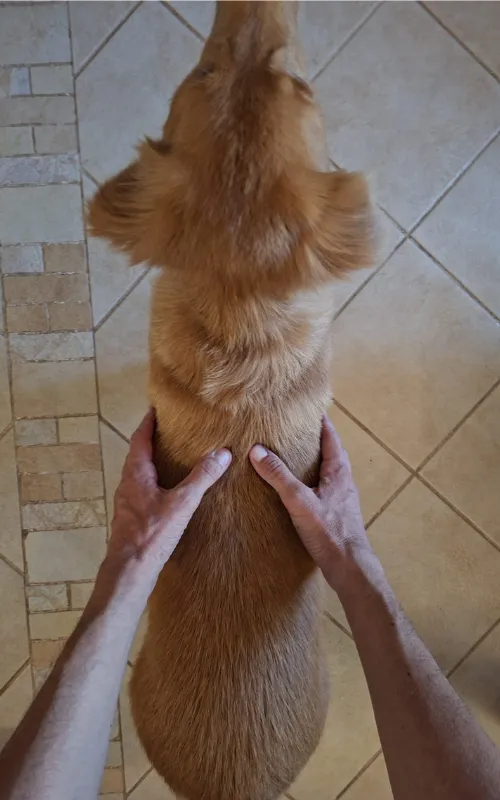
Place your thumbs on your dog’s spine. Spread your fingers gently down both sides of the ribcage, using only light pressure.
On a dog at a healthy weight, you should feel each individual rib without pressing hard. It should feel roughly like the bones on the back of your own hand. If you have to dig through a soft layer first, or the ribs seem to disappear altogether, that’s the touch version of the same answer the waist check gave you.
Here’s a quick way to calibrate your hands, based on the same comparison vets at VCA Animal Hospitals use with clients. Open one palm upward and press two fingers into the fleshy part below your thumb. That soft, padded feeling is roughly what an overweight dog’s ribs feel like. Now make a loose fist and feel your knuckles instead. That firmer feeling, closer to the bone, is closer to ideal.
What Can Throw Off the Reading
A few things make this check less obvious than it sounds. It’s worth knowing them before you draw conclusions.
Long or thick coats can hide a waist that’s actually there. They can also hide the absence of one. Running your hands along the sides, not just looking, corrects for this.
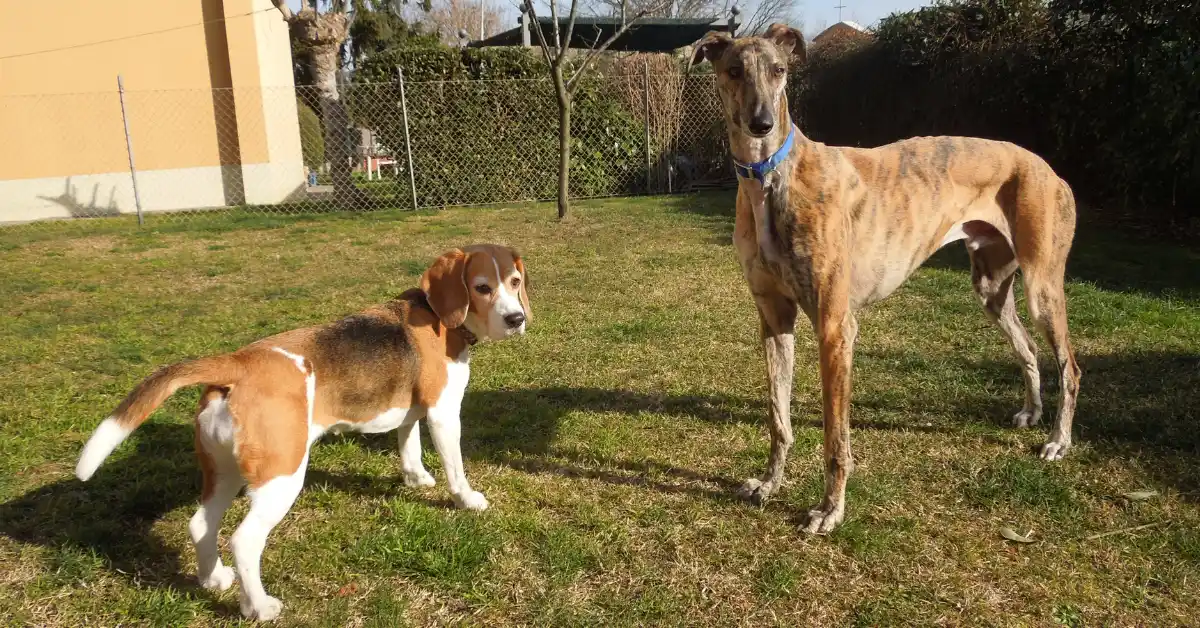
Naturally lean breeds like Greyhounds or Whippets show visible ribs at a healthy weight. So “visible ribs” isn’t automatically a red flag once you factor in body type.
Muscle mass matters too. A well-muscled, athletic dog can weigh more than a breed chart suggests. Muscle and fat carry very different meanings on the scale, even at the same number of pounds.
Puppies under about four months old often haven’t developed a defined waist yet. A slightly round belly at that age is normal, not a weight concern. Once your dog reaches adulthood, repeat this check every month or two. That habit catches a slow drift in either direction long before it becomes a bigger problem.
So Your Dog Is Overweight — Now What?
If both checks point the same direction, don’t panic. And please don’t put your dog on a crash diet on your own. Start with a call to your vet instead. Sudden weight loss plans can be unsafe. Some medical conditions, thyroid issues for instance, cause weight gain that no amount of extra walking will fix.
Once your vet has ruled those out, two everyday habits do most of the real work: what goes in the bowl, and how much your dog moves.
Fix the Food First
Measure meals with an actual cup instead of eyeballing it. That single change makes a bigger difference than most owners expect.
Be honest about treats too. A fistful of kibble or a couple of training treats won’t derail a whole day on their own, but a full pouch might.
Free-feeding a bowl that’s always full is one of the easiest habits to fall into. It’s also one of the hardest for a dog to self-regulate against. Two set mealtimes give both of you more control.
If your dog has the opposite problem and barely touches the bowl, that’s a different guide entirely.
If mealtimes at your house feel more like chaos than calm, structure helps more than willpower does. The meal-prep protocol inside the K9TI Total Transformation Masterclass walks you through building that structure step by step. It’s the same course I’ve used to sharpen my own approach with clients, and you can try the first lesson for free right here.
Then Add Movement
A bigger yard is not a substitute for a walk. That’s true no matter how much space your dog has to wander in alone. An extra fifteen minutes on the leash burns real calories. So does a slightly faster pace, or a game of fetch in a safe area.
Solo yard time rarely does the same. It also helps to have the whole household on the same page. Extra snacks from a visiting relative can undo a week of careful portioning in a single afternoon. It’s worth having that conversation early, rather than after the fact.
When to Call the Vet
Book a visit if the home check leaves you unsure. Do the same if your dog has gained or lost weight quickly without a clear reason. A visit is also worth it before any real change to diet or exercise.
One case worth flagging on its own: a recently spayed or neutered dog whose weight starts climbing. That shift is common, and it’s driven by hormones, not by anything you did wrong. I’ve written more about why that happens and how to handle it in a separate post on spaying and neutering.
How to Tell If Your Dog Is Overweight: The Bottom Line
You don’t need a scale, a chart, or a clinic visit to get a first honest read on your dog’s condition. Two minutes, two checks: a look from above, and a feel along the ribs. That’s genuinely enough to know where you stand.
Repeat it every month or two, and it turns a one-off worry into an easy habit. That’s exactly why learning how to tell if your dog is overweight is worth those two minutes.
Caught early, a few extra pounds are a quick fix. Caught late, they turn into joint strain, breathing trouble, and a shorter life together than either of you deserves.
Have you run this check on your own dog?
Were you surprised by what you found?
I’d love to hear about it in the comments below. Every dog carries weight differently, and your experience might be exactly what another owner needs to read today.