
Disclosure: This post about the question “why do dog breeds exist?” contains affiliate links. If you click through and make a purchase, I may earn a commission — at no extra cost to you. I only recommend products and courses I genuinely believe in, and all opinions expressed here are my own.
Why do dog breeds exist? Look at a Border Collie staring down a flock of sheep. Then look at a Beagle with its nose glued to the ground. It’s hard to believe they’re the same species. They are, though.
Dogs, wolves, ancient program: all three are connected here in a way most owners never hear explained.
I find this idea genuinely fascinating, and I think most dog owners never get to hear it explained clearly. Once you understand it, you’ll never look at breed traits the same way again.
Why Do Dog Breeds Exist? One Hunting Sequence, Many Pieces
Wolves hunt using a fairly predictable sequence of steps. They:
- search for prey
- lock onto it
- stalk closer
- chase
- grab
- and eventually kill and eat it.
Researchers call this the predatory sequence. It’s wired into the brain of every dog alive today, in one form or another.
Domestic dogs inherited this entire sequence from their wild ancestors.
None of it disappeared during domestication. What changed is which pieces got turned up and which got turned down. That single shift is the real answer to why dog breeds exist.
How Breeding Split One Sequence Into Many Breeds
Centuries ago, people didn’t breed dogs for looks. They bred them for a job. The job usually meant amplifying one specific slice of that hunting sequence while dialing down the rest.
A breeder who needed a dog to track a hare through the woods would keep only the puppies who excelled at searching and trailing scent. This selection happened generation after generation.
A breeder who needed help moving sheep would keep the puppies who stalked and circled. The puppies who tried to finish the chase with a bite got removed from the breeding pool instead.
Over many generations of this process, the chosen fragment became fixed. The rest of the sequence didn’t vanish. It just stopped being the main event.
This is exactly why a working sheepdog fixates on a moving object with that famous, intense stare. A scent hound, by contrast, barely looks up from the ground in front of it. Each breed kept a different slice of the same original program.
Real Examples You Can Recognize in Everyday Dogs
Herding breeds like Border Collies and Australian Shepherds were selected to keep the eye, stalk, and chase phases. Breeders deliberately bred out the bite and kill stages. That’s why a herding dog can circle a flock for hours without ever harming a single sheep.
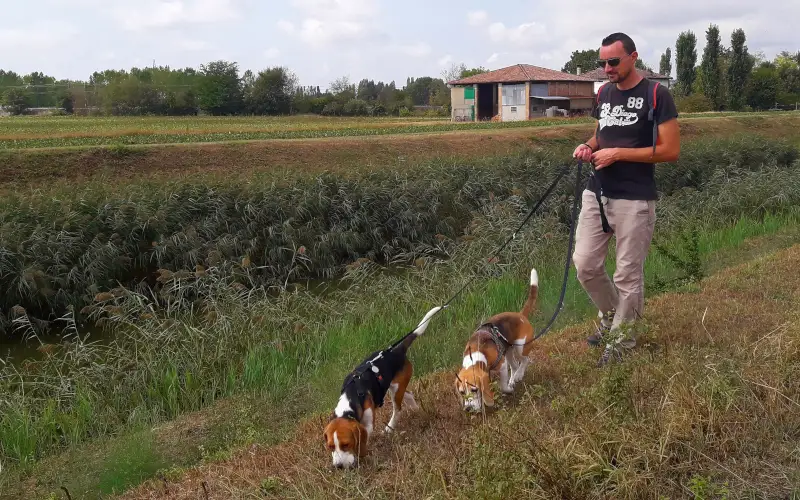
Scent hounds, including Beagles, were bred to specialize in the very first phase: searching and tracking by smell. Their long ears help trap scent particles near the nose. Their drive to follow a trail can override almost everything else around them, including you calling their name.
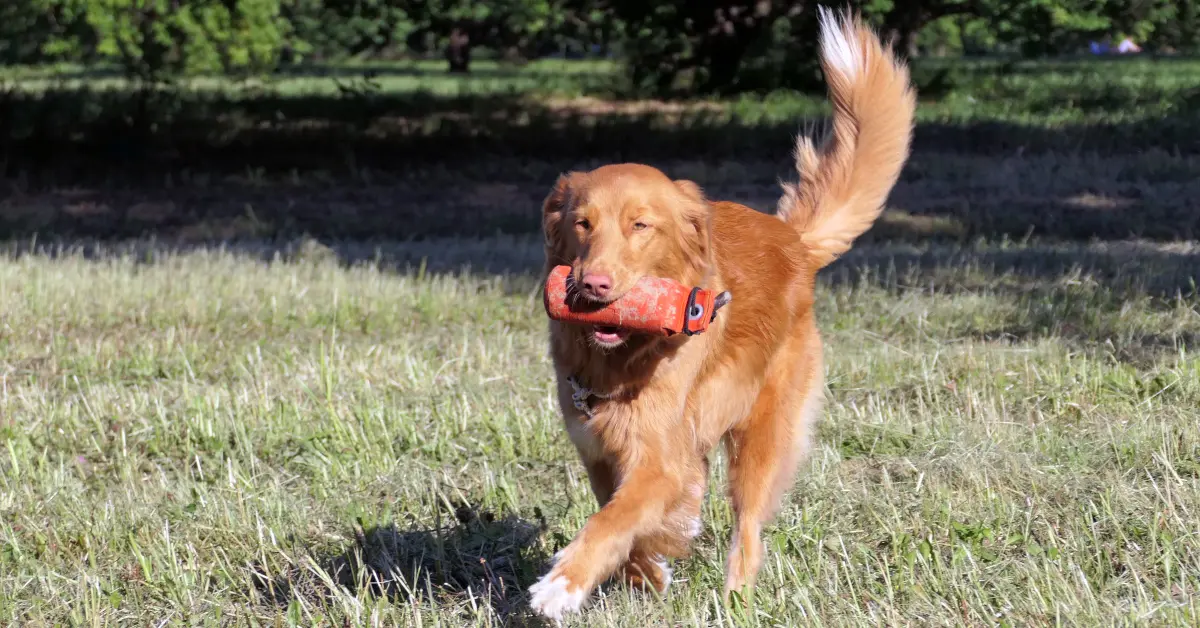
Retrievers and many sporting breeds kept the chase and the grab, but lost most of the bite. That’s the genetic reason behind a Labrador’s famous “soft mouth.” It’s built to carry a bird back to the hunter without crushing it.
Terriers went the opposite direction. Breeders wanted dogs that would actually finish the job on rats and other vermin. The grab and kill phases were kept strong instead of being suppressed.
None of these dogs lost the rest of the sequence completely. A Beagle can still chase, and a Border Collie can still sniff out a trail. Each breed just has one phase turned up loud enough to become its defining trait.
If you’re still wondering why do dog breeds exist in such different shapes and temperaments, this fragment-by-fragment selection is really the whole answer.
Why This Matters for the Dog You Live With Today
Understanding this explains so much everyday behavior that otherwise looks random or even frustrating.
A Border Collie nipping at joggers’ heels isn’t being aggressive. They’re running an ancient herding script on the wrong target. A Beagle who won’t come when called mid-sniff isn’t being stubborn. Their nose is doing exactly the job it was bred for, three centuries ago.
This reframing matters because it changes how you respond.
A behavior rooted in a breed’s core function isn’t something you can train away completely. It is something you can manage and redirect once you understand where it’s actually coming from.
I’ve seen this play out directly in two posts on this blog. The digging instinct in terrier-type dogs and the chasing behavior some dogs show toward joggers or bikes are both fragments of this exact sequence, expressed in a context their breed never anticipated.
It also explains why no two dogs are quite the same, even within a breed. Individual variation within the predatory sequence is part of why dogs have such distinct personalities. I get into this in more depth in a separate piece on individual dog personality.
From Function to Fashion: Why Do Some Dog Breeds Exist Mostly for Looks
Most of today’s recognized breeds were formalized fairly recently. This mostly happened within the last 200 years, once kennel clubs started keeping written breed standards and holding organized dog shows. Before that, dogs were bred almost entirely for function rather than appearance.
That shift changed quite a bit. Breeding started to prioritize a specific look over working ability in many lines.
This is part of why you’ll sometimes meet a Border Collie with zero interest in herding, or a Beagle who couldn’t care less about a scent trail. The instinct is still there in the genes far more often than not. It’s just sometimes left without much of an outlet in a typical pet household.
This disconnect between instinct and modern lifestyle is actually one of the most common sources of frustration I see in my work as a trainer.
A working-line dog with strong instincts can end up stuck in an apartment with no outlet for that drive. That dog often gets labeled as a “problem dog” when the real issue is unmet needs.
Working With Why Do Dog Breeds Exist, Not Against It
If you recognize your own dog in any of this, the fix isn’t suppression. It’s redirection. A Beagle does better with regular scent games than with constant correction for sniffing too much. A herding breed does better with structured play that channels the chase instinct than with punishment for nipping.
This is one of the areas where a deeper, structured approach to training really earns its keep.
Working with a dog’s instincts takes more nuance than a few generic tips. The Total Transformation Masterclass spends real time on exactly this kind of breed-informed, instinct-aware training. It’s worth exploring if you want a framework that goes beyond surface-level fixes.
What’s your dog’s breed actually built for, and how much of that shows up in their everyday behavior? I’d love to hear which piece of the sequence your own dog seems to have inherited the strongest. Tell me about it in the comments below 🙂