
Disclosure: This post about how to stop your dog from jumping on people contains affiliate links. If you click through and make a purchase, I may earn a commission — at no extra cost to you. I only recommend products and courses I genuinely believe in, and all opinions expressed here are my own.
If you’re searching for how to stop your dog from jumping on people, I’m guessing you’ve had a moment like this. You open the front door, and forty pounds of pure joy launches at your chest. Maybe it’s muddy paws on your work clothes. Maybe it’s a guest who smiles politely while stepping back. Or maybe it’s an older relative who could actually get hurt.
I see this every week in my work as a dog trainer. And here’s the good news: jumping is one of the most fixable behaviors there is. You don’t need harsh corrections or special gear. You need a clear plan, a bit of patience, and a willingness to change a few of your own habits. That last part is usually the hardest one!
Why Dogs Jump on People in the First Place
Let’s start with the “why,” because it changes how you’ll feel about the whole thing. A jumping dog isn’t being rude or stubborn. In most cases, your dog is simply trying to say hello.
Dogs greet each other face to face. Our faces are way up high, so your dog does the logical thing and goes up to meet them. Add a big dose of excitement, and you get a launch.
Then we make it worse without meaning to. Think about what most of us do when we come home. We use a high, squeaky voice. We bend down, hug, rub ears, and say “Hi, baby, I missed you!” I call these our very human, very primate greetings. They feel loving to us, but to a dog they pour fuel on the fire.
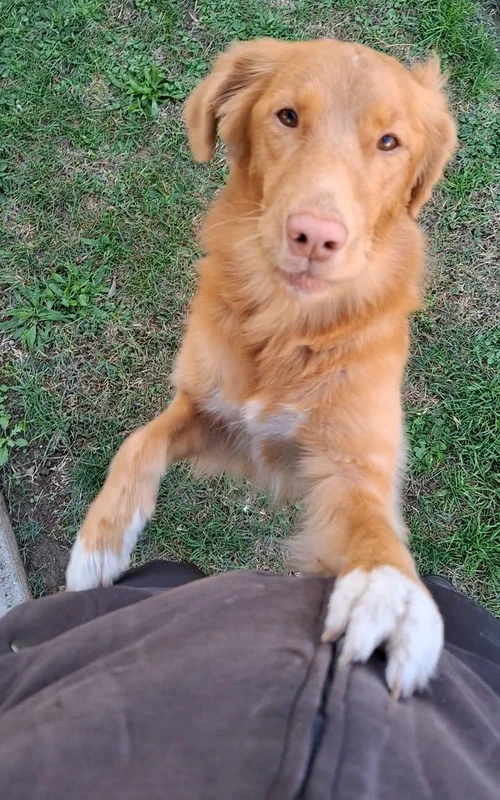
So the dog learns a simple rule: the more excited I get, the more attention I get. Every jump that earns a touch, a word, or even a push teaches that rule again. If you’ve read my post on emotional contagion in dogs, you know how quickly our own energy spreads to them.
The Homecoming Rule: Wait Until Your Dog Calms Down
This is the first thing I tell every client, and it’s the one that makes the biggest difference. When you walk through the door, hold back your greeting for a minute or two.
I know it feels cold. But those first minutes are when excitement peaks. If you add hugs and happy talk right then, you push your dog over the edge.
Instead, walk in calmly. Put your bags down. Don’t look at your dog, don’t talk, and don’t touch. You aren’t punishing anyone here. You’re simply waiting for the wave of excitement to pass.
Usually one or two minutes is enough. Some dogs need longer, and that’s fine. Once your dog is visibly calmer, with four paws on the floor and a softer body, greet them warmly but quietly. A few slow strokes on the chest are perfect.
Over time, your dog learns something powerful. The reunion with their family is still wonderful, but it only begins when their mind is calm. A calm dog gets the good stuff. A frantic dog gets a pause.
How Fanta Learned to Greet Us
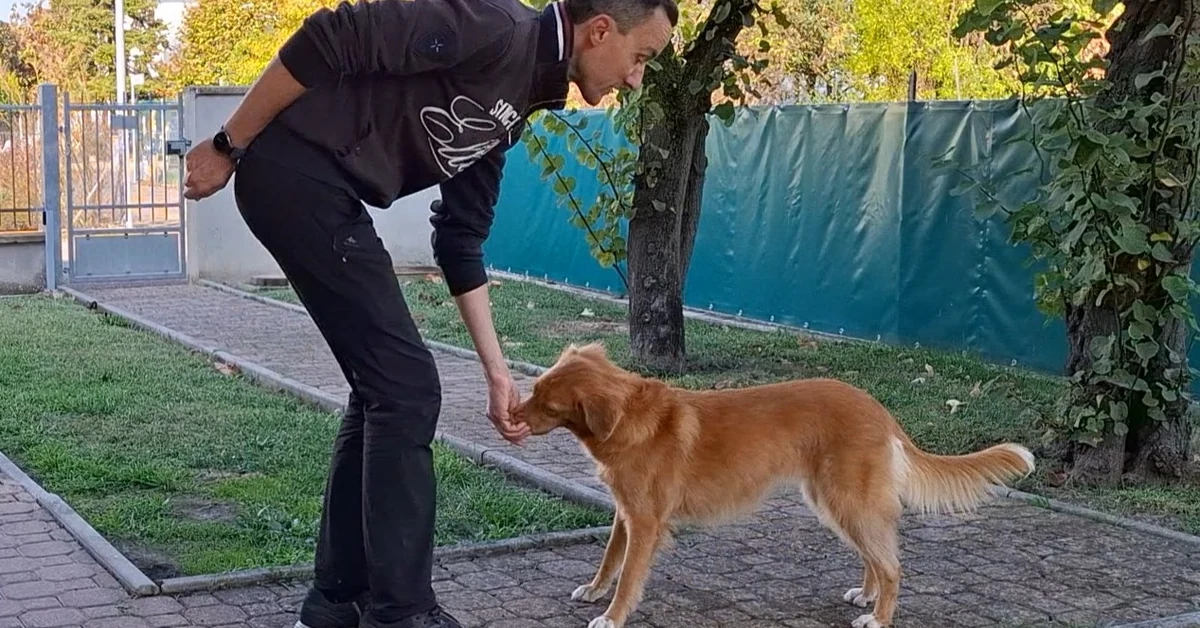
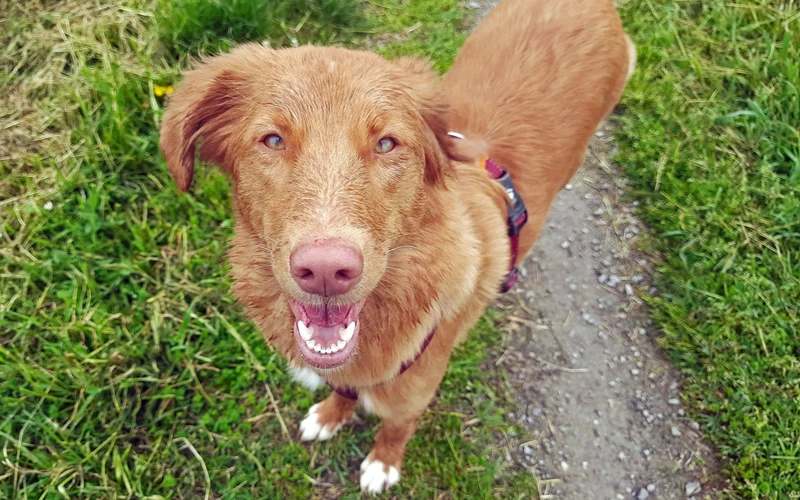
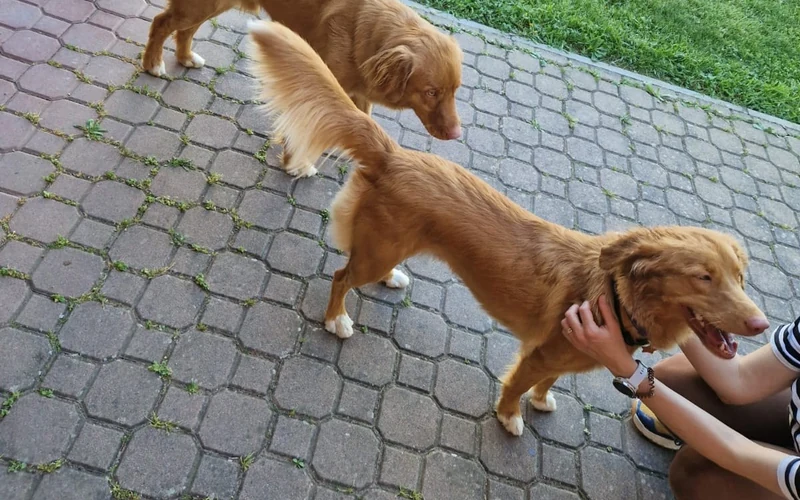
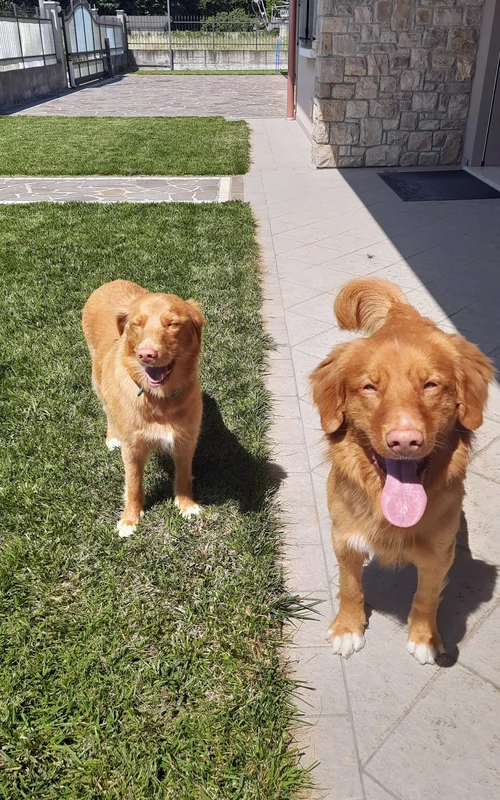
This is exactly how we taught Fanta, our Nova Scotia Duck Tolling Retriever. As a puppy, she greeted us by springing up like a coiled spring. We waited a few dozen seconds, turned away when she tried to climb, and greeted her once she settled. Today she welcomes us home with a wiggling body and her feet on the ground.
Use Body Language to Stop Your Dog From Jumping on People
Here’s something many owners don’t realize. Dogs read our posture long before they process our words. Body language is their first language, and research on dog communication keeps confirming how much they rely on it.
That’s why shouting “No! Down! Off!” rarely works. To an excited dog, your voice is just more noise and more attention. You can do everything in this section in complete silence.
Turn Your Back
The moment your dog starts to jump, turn around and give them your back. Fold your arms against your chest and look away. Stop interacting completely until all four paws are back on the floor.
When your dog lands and stays down, turn back and greet them calmly. If they jump again, turn away again. It’s simple, but it’s very clear. Jumping makes you disappear, and standing nicely brings you back. For many families, this alone is enough to stop the dog from jumping on people at home.
Claim Your Personal Space
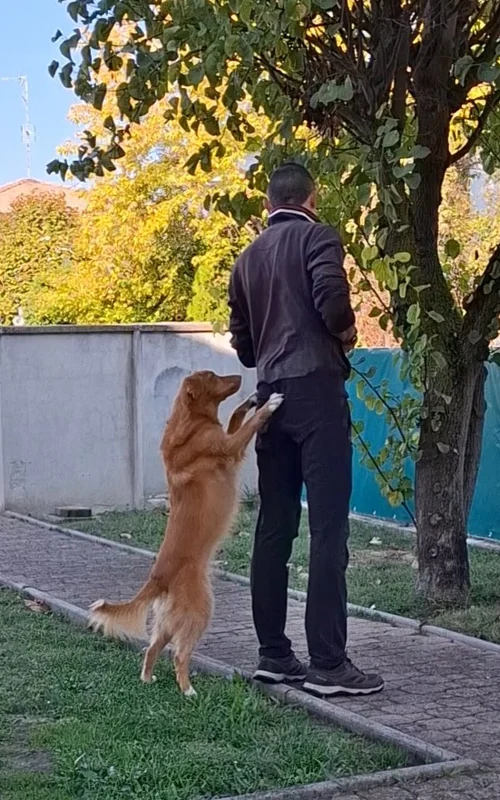
Some dogs just circle around to your front. In that case, you can use your body to protect your personal space. If you have good balance, lift one knee calmly in front of you as a quiet barrier. Your dog meets your leg instead of your chest.
A quick, honest note: the ASPCA advises against kneeing a jumping dog, and I completely agree. Kneeing is a punishment, and punishment has no place here. What I’m describing is different. Your knee stays still, like a closed door, and simply keeps a little distance between you and your dog. Never push it forward or bump your dog with it. If you’re not steady on one leg, or your dog is small or very young, just turn your back instead.
The K9 Training Institute teaches a similar idea. You keep walking forward a few steps into your dog instead of stepping back. Your hands stay at your sides, and you turn your head away. Stepping back actually helps a dog balance on you. Moving forward quietly takes that option away.
Teach Four Paws on the Floor (And Make It Worth It)
Stopping the jump is only half of the job. To truly stop your dog from jumping on people, they also need to know what to do instead. In my experience, this is where most owners give up too early.
The goal is simple: four paws on the floor. Reward that position generously, especially in the moments when your dog would usually jump. Deliver the treat low, near your dog’s front feet, so their attention stays down there.
From there, give your dog a job. A sit, a down, or simply looking at you are all great choices. These come from basic obedience training, and they work because a dog can’t sit and jump at the same time.
Practice these skills when your dog is calm first. Make them easy and rewarding. Then you can ask for them when the excitement starts to rise.
If you want a structured, step-by-step version of this, the K9 Training Institute’s Total Transformation Masterclass covers it well. Masterclass 7 has a full lesson on calm homecomings and greeting guests. Masterclass 4 adds a “say hello” exercise for greetings on walks. I’ve used both with my own clients.
How to Stop Your Dog From Jumping on People When Guests Arrive
Guests are a different level of challenge. The doorbell rings, strangers smell exciting, and everyone talks at once. For many dogs, this is the hardest moment of the day.
For milder cases, have your dog sit a few steps away from the door, not right in front of it. Let your guest come in and settle first. Only then release your dog to greet them, and only while all four paws stay down.
For more intense dogs, I recommend a simple management step. Gently move your dog away from the entrance before the door opens. If needed, keep them on a leash. This helps their excitement stay below the point of no return. A baby gate or a quiet room works too, as Best Friends Animal Society also suggests.
Once your guests are inside and everyone has calmed down, unclip the leash. Then let your dog say hello to people at a slower pace.
Ask your guests to help, too. They should greet your dog only when the paws are on the floor. A friend of ours once came to visit with Fanta’s brother. She crouched down sideways to greet Fanta at her level, so Fanta had no reason to jump up. Small choices like that make a huge difference.
Two Real Dogs, Two Real Turnarounds
Every dog is different, so I want to share two clients who taught me a lot. I’ve changed their names to protect their families’ privacy.
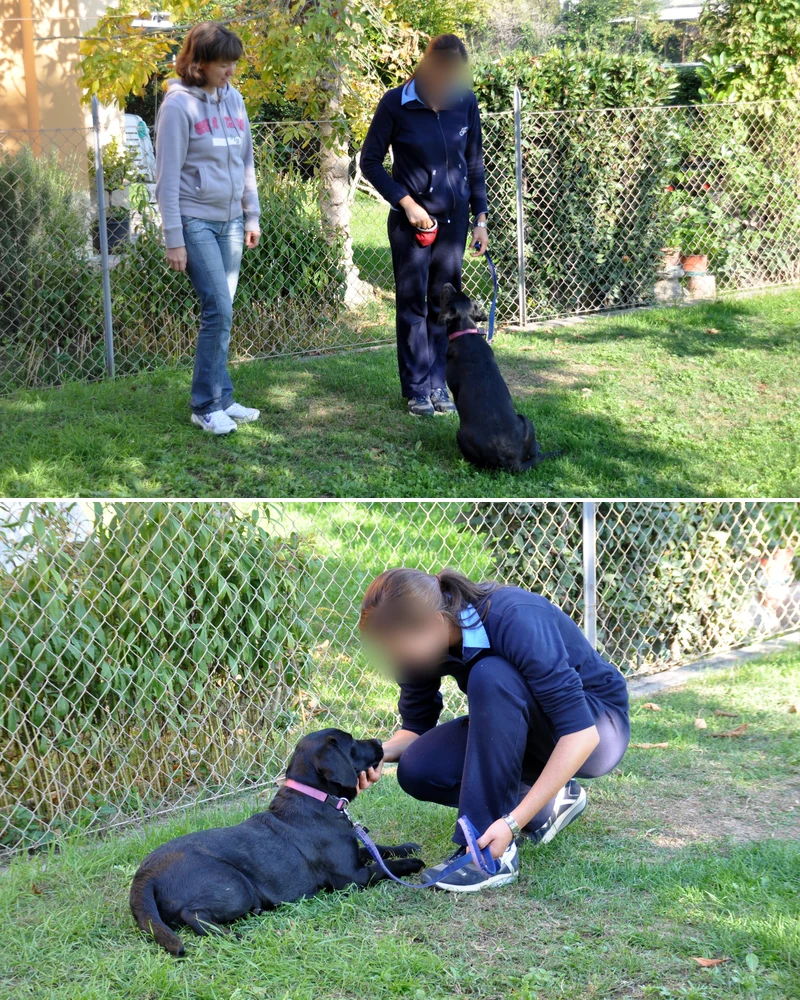
Maggie, the Labrador Who Hit Like a Linebacker
Maggie was a young black Labrador when we met her. She was still a puppy, but her size and speed made every greeting a full-body tackle. Jumping wasn’t her only challenge, so we built a complete basic training plan for her.
Along with four paws on the floor, we taught her attention, sit, and down. We made each exercise very clear and very rewarding. That way, she could offer them easily whenever her excitement started to climb. In about two weeks, Maggie learned to stay composed when someone walked through the door.
Skye, the Australian Shepherd With Too Much Joy
Skye is an Australian Shepherd around one year old, right in her most energetic phase. Her family includes an older person who simply couldn’t handle her climbing. We needed results quickly.
We followed the same steps you’ve read here. Skye learned that she could get all the greetings and petting she wanted with her feet on the ground. She didn’t need to reach anyone’s face. Near the end of our work together, she greeted me at her door standing or sitting calmly. She switched positions constantly from sheer enthusiasm, but her paws stayed down!

When Old Habits Sneak Back: Fanta’s Story
I want to be honest with you, because perfect success stories aren’t very helpful. Fanta has learned to greet us beautifully, but she isn’t a robot.
She is very sensitive to what people carry in their pockets, especially food. When someone she knows well won’t share a snack, she sometimes shows her frustration by climbing up on them. It happens more in tense or exciting moments.
So we go back to the basics whenever this shows up. We turn away, we wait, and we reward calm. If we let it slide, the old habit would grow strong again. Training isn’t a switch you flip once. It’s a conversation you keep having.
Common Mistakes When Trying to Stop a Dog From Jumping on People
Some reactions feel natural but backfire. Here are the ones I see most often:
- Pushing your dog off. Your hands become part of the game, and touch is a reward.
- Saying “no” while looking at your dog. Eye contact and talking are still attention.
- Stepping backward. It actually helps your dog balance on you.
- Kneeing, yelling, or any punishment. These damage trust and often raise excitement.
- Mixed rules at home. If one family member allows jumping, your dog will keep trying.
Consistency matters more than any single technique. If you have children, my post on kids and dogs explains how to involve them safely.
How Long Does It Take to Stop a Dog From Jumping on People?
Most dogs improve within a few weeks of consistent practice. Maggie took about two weeks. The K9 Training Institute suggests that the learning phase for calm greetings usually lasts three to four weeks.
Young, energetic dogs may need more time and more outlets. Is your dog jumping all day, not just at greetings? Then look at their daily routine first. My post on whether your dog is really hyperactive can help you find what’s missing. And if your jumper is still a baby, these ideas pair well with my guide on how to stop puppy biting.
Expect some setbacks, especially with new people or exciting days. That’s normal. Each calm greeting you reward makes the next one a little easier. That’s how you stop a dog from jumping on people for good.
Final Thoughts on How to Stop Your Dog From Jumping on People
In the end, it’s really about changing the conversation. Your dog is asking for connection. You’re simply teaching them a calmer way to ask.
Wait before you greet. Use your body instead of your voice. Reward four paws on the floor, and give your dog a job when excitement rises.
Do it consistently, and you’ll soon have a dog who welcomes you home with a happy wiggle instead of a tackle.

If you’d like a complete program that walks you through these steps, start with K9TI’s free training workshop. You’ll find any current course offers there. One honest note: the course sometimes uses words like “dominant” for jumping. I don’t see dogs that way, but the practical steps are solid and kind.
Now I’d love to hear from you.
Does your dog greet you like a rocket?
What has worked for you so far?
Share your story in the comments below.
I read every one, and your experience might be exactly what another reader needs today.