
Disclosure: This post about “dog in heat” contains affiliate links. If you click through and make a purchase, I may earn a commission — at no extra cost to you. I only recommend products and courses I genuinely believe in, and all opinions expressed here are my own.
A dog in heat is one of those topics every owner of an unspayed female eventually has to learn about. It’s a completely natural part of a female dog’s life. It can also feel confusing and a little alarming the first time you see it happen.
I want to walk you through exactly what’s going on, what to expect, and how to handle it without panic. None of this needs to feel like a crisis. It just needs a bit of structure.
What Does It Mean When a Dog Is in Heat?
“Heat,” also called the estrous cycle, is the recurring period when a female dog’s body is fertile.
She becomes capable of reproducing during this window. It’s driven entirely by hormones. Male dogs never go into heat themselves. They simply react to the scent of a nearby female who is.
The first heat usually arrives somewhere between six months and two years of age. The timing depends heavily on breed and size. Smaller breeds tend to start earlier. Larger breeds often start later.
Don’t worry if your dog’s first cycle comes a bit early or late. Even a skipped first cycle is completely normal.
How Long Does a Dog Stay in Heat?
A full heat cycle typically lasts around three weeks.
It can run a bit shorter or longer depending on the dog. The cycle breaks down into two practical phases worth knowing.
During the first week or so, you’ll usually notice the clearest signs. These include frequent licking of the genital area, visible swelling of the vulva, and the start of bloody discharge. This is the proestrus phase. Your dog is not yet receptive to mating during this stage.
The middle stretch is the fertile window, called estrus.
Discharge often lightens or becomes less consistent here. This can be misleading if you assume things are wrapping up. This is actually when your dog is most likely to get pregnant if she mates.
In the final days, things gradually return to normal. Discharge tends to increase again briefly, and she becomes less interested in male attention.
How Male Dogs React to a Dog in Heat
This is the part that catches a lot of owners off guard.
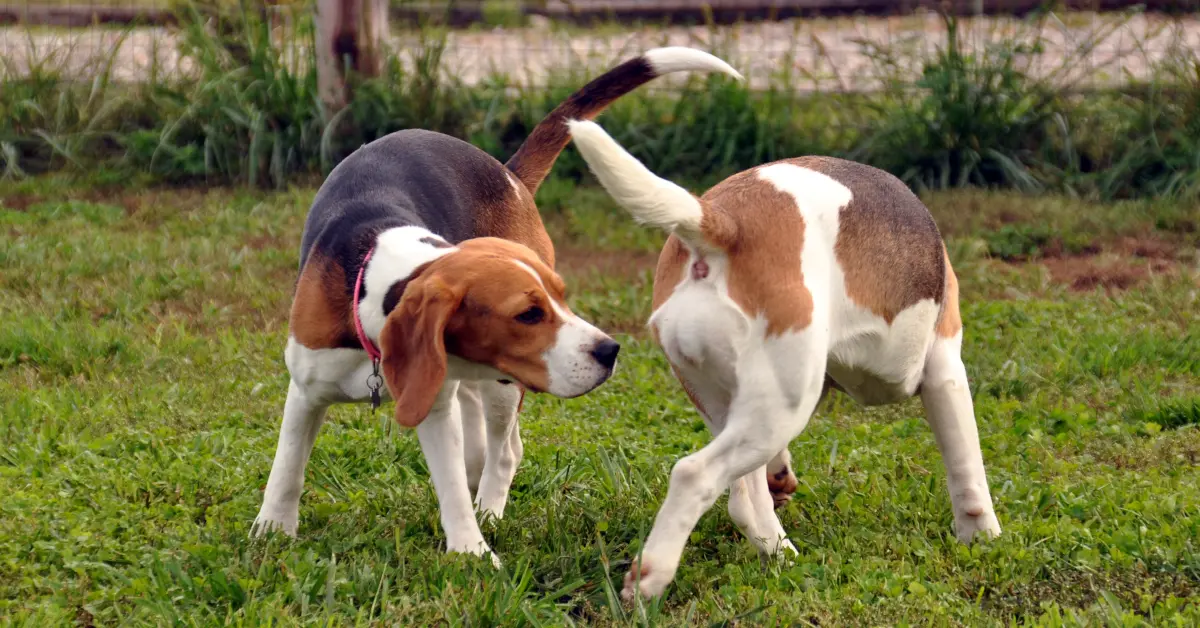
It especially surprises those who don’t have a female dog themselves but live near one. A dog in heat releases pheromones that intact males can detect from a remarkable distance. Under the right wind conditions, this can mean miles away.
Reactions vary a lot between individual male dogs.
Some become simply more attentive or persistent, trying to get close to the female whenever possible. Others get genuinely overwhelmed by the hormonal pull. I’ve seen males pace constantly or whine for hours.
Some completely refuse food for a day or more because the drive to find the female overrides their normal appetite.
In more extreme cases, an intact male fixated on a female in heat may attempt risky escapes.
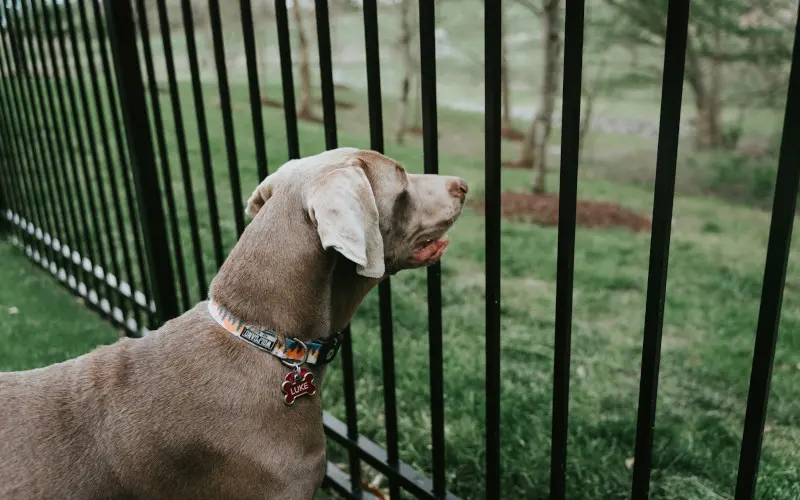
He might squeeze through gaps, jump fences, or pull hard enough against a leash to injure himself, all in an attempt to reach her. If you own a male dog and notice this level of distress, limit his exposure to the scent and keep him secured. Contact your vet if the refusal to eat lasts more than a day or two.
Why Attention and Trust Matter Most Right Now
Moments like these are exactly when a strong foundation of attention and trust really shows its value.
A dog who’s used to checking in with you, listening even when something exciting (or hormonally overwhelming) is pulling at his attention, handles this kind of stretch with far less drama.
Building that level of focus and connection is a core piece of what the Total Transformation Masterclass works on, alongside direct Q&A access to K9TI’s trainers for the specific situations a generic guide like this one can’t fully cover.
Their free webinar is a solid starting point if you want to build that kind of reliable attention before the next heat cycle catches you off guard.
How to Handle a Dog in Heat Safely
If you’re the one with a female dog in heat, your main job for about three weeks is straightforward. You need to prevent unplanned mating and manage the mess with some basic supplies, while staying relatively calm about both.
Keep her on a leash for every walk during this period, with no exceptions. A dog in heat can attract male attention quickly. The courtship process usually has visible warning signs you can act on, but only if she isn’t loose and out of reach. Gently but firmly redirect any persistent males who approach her, especially if their owners aren’t doing it themselves.
This is also the right time to avoid the dog park entirely, along with any other space where off-leash dogs gather. A crowded, unfamiliar group of dogs is already a lot for any dog to navigate. Add the hormonal tension of a female in heat, and the risk of fights climbs fast for everyone involved. If your usual routine includes any off-leash time in unfenced areas, pause that habit completely for these few weeks.
For the bleeding itself, washable or disposable dog diapers work well for many dogs. They protect floors, furniture, and rugs. Some dogs tolerate them better than others. If yours won’t keep one on, simple coverings like old blankets or waterproof throws can limit the cleanup on favorite resting spots.
When to Loop In Your Veterinarian
A good, honest relationship with your vet matters more during this period than almost any other time in your dog’s life.
They can confirm your dog’s heat is progressing normally. They can also address concerns if bleeding seems unusually heavy or prolonged, and help you think through the decision around spaying with real information instead of guesswork.
This is also the conversation to have if you’re undecided about spaying altogether.
There’s no universal right answer for every dog. Your vet can walk you through the actual tradeoffs for your dog’s specific breed, age, and health history rather than generic internet advice.
A Few Things Worth Remembering
Every dog experiences this differently. Some females barely change their behavior at all. Others become noticeably clingier, more irritable, or more vocal for a few weeks. Both are within the range of normal.
If you’re navigating this for the first time, the goal isn’t perfection. It’s awareness.
Watch for the signs and keep her secured and leashed. Skip the group hangouts for a few weeks, and lean on your vet for anything that doesn’t fit the pattern. The whole thing passes faster than it feels like it will.
Has your dog’s heat cycle ever caught you off guard, or thrown a wrench in your usual routine? I’d love to hear how you handled it. Drop a comment below and share what worked for you.