
Disclosure: This post about the question “when can puppies go outside?” contains affiliate links. If you click through and make a purchase, I may earn a commission — at no extra cost to you. I only recommend products and courses I genuinely believe in, and all opinions expressed here are my own.
If you’ve just brought a puppy home, you’ve probably already asked your vet when can puppies go outside. And you’ve probably gotten an answer that felt a little frustrating: wait until the vaccines are done.
That advice is correct, and important. But taken too literally, it can quietly cost your puppy something just as important. Let’s talk about how to protect both things at once.
Why Every New Owner Asks When Can Puppies Go Outside
Here’s the real tension nobody explains clearly enough. Your puppy’s immune system is still developing. Until the vaccine series is complete, exposure to unknown dogs and contaminated ground carries a real risk of disease. Your vet is right to warn you about that.
But your puppy’s brain is also developing, on a much tighter deadline.
The window for building a confident, well-adjusted temperament is short. It largely closes around 12 to 14 weeks of age. If you keep your puppy sealed off at home until that window closes, you trade one risk for another.
Fear and reactivity later in life are a real cost, not a hypothetical one.
The Critical Socialization Window, Explained
Puppies are wired to accept new experiences easily during their first three months of life. New people, new sounds, new surfaces, calm dogs — all of it gets filed away as “normal” during this stage, almost automatically.
After around 14 weeks, that openness fades. The same new experiences start getting filed under “unfamiliar,” and unfamiliar things are exactly what a fearful adult dog tends to react to.
This is exactly why the American Veterinary Society of Animal Behavior takes a clear position: puppies should start socializing before their vaccine series is finished, not after.
Their data is sobering. Behavioral problems, not infectious disease, are the leading cause of death in dogs under three years old. Under-socialization is a genuine, measurable risk. It’s just one most new owners never hear about at the vet’s office.
So, When Can Puppies Go Outside?
The honest answer is: sooner than most people think, just not the way most people picture it.
Before the First Vaccines: Carry, Don’t Walk
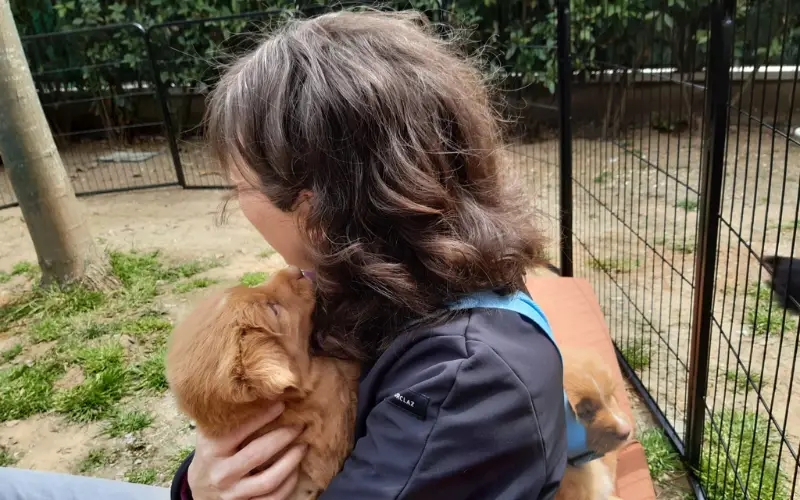
Your puppy doesn’t need paws on the sidewalk to start learning about the world. Carry her, or use a puppy sling, stroller, or wagon, through calm outdoor spaces. She can see, hear, and smell everything from a safe height, with zero contact with contaminated ground. A quiet street, a friend’s clean backyard, or the parking lot outside the pet store all count.
After the First Round: Controlled, Low-Risk Outings
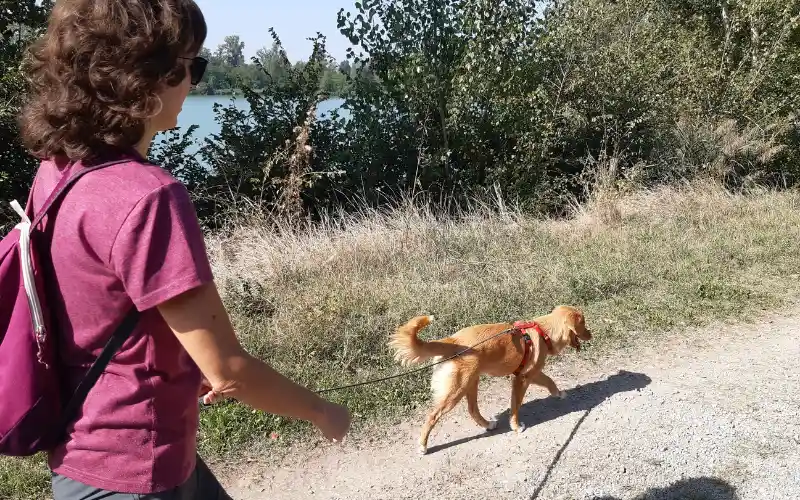
Most vets consider a puppy reasonably protected about one to two weeks after the first set of core vaccines, roughly 8 to 9 weeks of age. This is the point where short, careful walks can start. Choose clean routes. Avoid areas with heavy dog traffic, and skip anywhere covered in droppings from unknown dogs.
What to Avoid Until Vaccines Are Complete
Dog parks, pet stores’ floor level, and any dog whose vaccination and health status you don’t know personally are all worth waiting on. This isn’t about being overly cautious. It’s about controlling the one variable — exposure to disease — while you actively work on the one that matters just as much: exposure to life.
Everyday Ways to Socialize Without the Risk
Socialization doesn’t require a dog park or a crowded street. Most of it can happen safely, right now, with a little intention.
- Invite one or two calm, fully vaccinated, healthy adult dogs over for a supervised visit at your place.
- Let your puppy meet a handful of new people of different ages, sizes, and appearances.
- Take short car rides, just to get comfortable with motion and sound.
- Let her experience different surfaces at home: tile, grass in your own yard, a bathmat, gravel in a bucket.
Every calm, positive exposure during these early weeks is a deposit in your puppy’s emotional bank account.
And speaking of early foundations, if you’re still getting your setup right at home, this guide on what to actually bring when you pick up a new puppy covers the essentials without the overwhelm. House training matters here too, since a puppy who’s confident indoors settles into new outdoor routines more easily — this potty training guide walks through it step by step.
What Happens If You Wait Too Long
I see this pattern often enough to recognize it immediately. An owner, understandably cautious, keeps their puppy almost entirely indoors until 16 or even 20 weeks. Then the vaccines are finally done, and it’s time to “start” socializing. But the window has already mostly closed.
This is really the heart of the “when can puppies go outside” question: it was never just about disease risk. The result of waiting too long is often a dog who reacts to normal city noise with genuine alarm.
Or one who panics around unfamiliar dogs, not out of aggression, but real fear. None of this happens because the owner did anything wrong on purpose. It happens because good advice, followed a little too literally, left an important gap.
Once your puppy is fully vaccinated, group settings become a real option. If you’re wondering whether the dog park is the right next step, I’ve written an honest answer to that exact question — it’s not always the best choice, even later on.
When Can Puppies Go Outside? Bringing It All Together
So, when can puppies go outside without gambling on either their health or their temperament? The real answer is a process, not a single date on the calendar.
Talk to your vet about your specific puppy’s risk factors and local disease prevalence. Follow their vaccine schedule closely.
And in parallel, get intentional about calm, controlled exposure from week one. These two things were never actually in conflict. They only look that way if you focus on just one of them.
If you want a more structured framework for building confidence and focus in a young dog from the very start, this is exactly the kind of foundation the K9TI Total Transformation Masterclass is built around. I point new puppy owners toward it often, because getting this early period right saves years of harder work later.
A Quick Word of Encouragement
If you’re reading this with a puppy asleep in your lap right now, worried you’ve already gotten something wrong: you almost certainly haven’t. Awareness this early puts you ahead of most owners I meet. Small, calm, consistent exposure, starting today, is enough.
If you have questions about your own puppy’s specific situation, drop them in the comments.
And if you’re ready to build real structure into these first few months, the K9TI Total Transformation Masterclass is a solid place to start.