
Disclosure: This post about feeling frustrated with dog training contains affiliate links. If you click through and make a purchase, I may earn a commission — at no extra cost to you. I only recommend products and courses I genuinely believe in, and all opinions expressed here are my own.
You set aside twenty minutes. You have the treats, the plan, and the best intentions. Then your dog sniffs the floor, ignores the cue you practiced all week, and wanders off.
Ten minutes later, you’re the one who wants to wander off. If you’ve ever felt frustrated with dog training, I want you to know something first. That feeling doesn’t mean you’re bad at this. It usually means you were taught to see mistakes in the wrong light.
In my experience, most owners don’t struggle because of their dog. They struggle because of what a mistake seems to say about them.
So in this post, I want to take that belief apart, piece by piece. Then I’ll give you a practical way to use mistakes as fuel instead of evidence against yourself.
Why We Get So Frustrated With Dog Training
Think back to school for a moment. A wrong answer earned a red mark, and enough red marks earned a bad grade. At home, a broken glass often meant a scolding. At work, an error can still feel like a stain on your reputation.
None of this happened out of cruelty. It’s simply how most of us grew up. But the lesson sinks in deep: mistakes are something to hide, avoid, or explain away.
Over time, that lesson turns into a quiet and very unfair equation. “I made a mistake” slowly becomes “I am a mistake.” Or at least, “I’m worth a little less.”
Now bring that equation to a training session.
Your dog misses a cue in front of the neighbors. Suddenly you’re not just a person teaching a dog. You’re a student waiting for a grade, and you can almost feel the red ink.
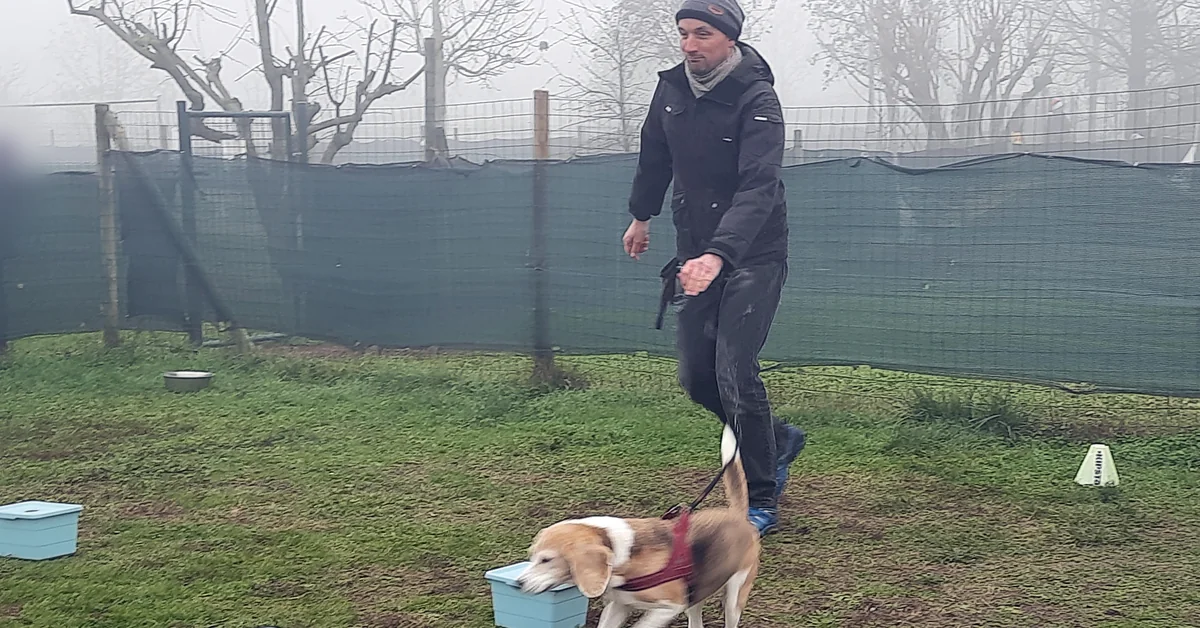
Simona and I know this feeling well. With Diana, and still sometimes with Fanta, we’ve caught ourselves carrying that old report card into the yard. That’s why the goal of this post is a simple shift.
Instead of suffering through mistakes, I want you to start using them as an ally.
A Mistake Is Information, Not a Verdict
Here’s the first thing to reframe. A mistake doesn’t define your value as a person or as a dog owner. It’s simply information. It tells you, “This attempt didn’t work the way you expected.”
That’s it. No judgment comes built into it. We add the judgment ourselves.
It also helps to separate two words we often treat as the same.
- Making a mistake is a moment. It happens, and then it’s over.
- Failing, in the real sense, is something else. It means you stop trying, or you refuse to look at what went wrong.
So you can make a hundred mistakes and never fail. You can also avoid every mistake and still fail, simply by never attempting anything new.
That last point matters more than it sounds. If you only practice what you already do perfectly, you’re repeating the past. You aren’t learning anything.
Without some room for error, there’s no exploration, for you or for your dog.
Young dogs show us this every day. As I wrote in my post on patience with a puppy, they learn by trying, getting it wrong, and trying again.
What Science Says About Learning From Mistakes
This isn’t just a comforting idea from a dog trainer. Cognitive scientists have studied it for decades.
Columbia University psychologist Janet Metcalfe reviewed this research in the Annual Review of Psychology. Her conclusion surprised many educators. Avoiding errors at all costs may actually work against learning. Mistakes followed by clear feedback tend to help people learn more deeply. She also points out that analyzing why the error happened is a crucial part of the process.
Dogs are no different on this point. Like us, they’re mammals, and they learn a great deal through trial and error. Each “wrong” choice teaches them something about what works. When we answer with calm, clear feedback, the right choice becomes easier to find next time.
This is also why I appreciate one detail in the K9 Training Institute’s Total Transformation Masterclass. In the very first class, the trainer explains that the videos feature mostly untrained dogs. You watch real dogs making real mistakes. That choice was deliberate, because honest errors teach you more than a flawless demo ever could.
The Hidden Gifts in Every Mistake
Once you stop fighting mistakes, you start noticing what they give you.
Deeper understanding. A success that happens by luck teaches you very little. When something breaks, though, you have to figure out why. That search builds real knowledge, the kind that sticks.
Resilience. The more often you handle mistakes calmly, the less frightening they become. Performance anxiety shrinks. You grow more flexible when life throws something unexpected at you, and with dogs, it always does.
Connection. People rarely bond with someone who seems flawless. We connect with those who face difficulties in a human way. Your dog feels this too. A tense handler is hard to read, as I explain in my post on emotional contagion in dogs. A relaxed handler who shrugs off a mistake is easy to trust.
What Our Dogs Taught Us About Getting It Wrong
When Simona and I started Scent Game with Diana, we handled mistakes badly. Scent Game is a scent-detection discipline, and Simona later became a certified instructor. Back then, though, we were beginners, and it showed.
Diana had to find the one box holding the target odor. Early on, she often picked the wrong one. Sometimes I couldn’t keep up with her pace, so I didn’t support her focus the way she needed. Each time, we felt frustrated and oddly guilty, as if we had let her down.
The truth was the opposite. Diana’s future skill grew right there, one wrong box at a time. Every miss taught her a little more about the scent she was looking for. If this world sounds interesting, my post on scent work for dogs is a good place to start.
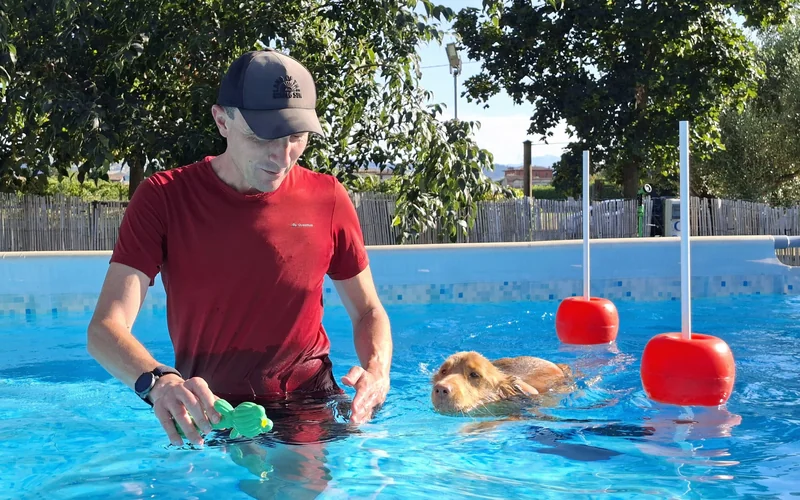
Today, Fanta and I practice a water discipline called “Swim Dog”. It’s a swimming course with obstacles, and as a Toller, Fanta adores the water. Water slows everything down, so it amplifies every mistake. If we didn’t own our errors there, we’d both quickly stop trying anything new.
How to Stop Feeling Frustrated With Dog Training
If you’re often frustrated with dog training, knowing all this is a good start. Changing the habit takes practice. Here are three shifts that help me and the owners I work with.
Separate who you are from what happened. Notice the words you use. “I’m a disaster” is a judgment about your whole self. “I made a mistake in this step, so how can I fix it?” is an analysis. The second sentence gives you somewhere to go.
Say “I got that wrong” out loud. Admitting a mistake right away releases a surprising amount of tension. You no longer have to hide it or invent excuses. It also builds trust at home, in your training group, and at work. Others feel free to be honest, too.
Practice a growth mindset. Stanford psychologist Carol Dweck describes two ways of seeing our abilities. A fixed mindset treats them as set in stone. A growth mindset treats you as a work in progress. I like to picture skills as muscles you can strengthen, and your training skills work exactly this way. Swap the fear of getting it wrong for curiosity about what you can learn.
If you tend to expect the worst before a session even begins, my post for the anxious dog owner may help, too.
A 3-Step Reset for When You’re Frustrated With Dog Training
Here’s a small process to use the next time a session goes sideways. It takes about a minute.
1. Accept the first emotion. Frustration will show up, and that’s normal. Name it without judging yourself. “I’m frustrated right now” is enough. You don’t need to add “and it’s my fault.”
2. Analyze without drama. Ask yourself two questions. What concrete cause led to this result? What can I do differently next time? Maybe you raised the difficulty too fast. Maybe your dog was tired, or the place had too many distractions.
3. Adjust and restart. Put the correction into practice right away, even in a tiny form. Go back one step and ask for something your dog can do easily. That quick success replaces the feeling of being stuck with action.
Remember to build in real pauses, too.
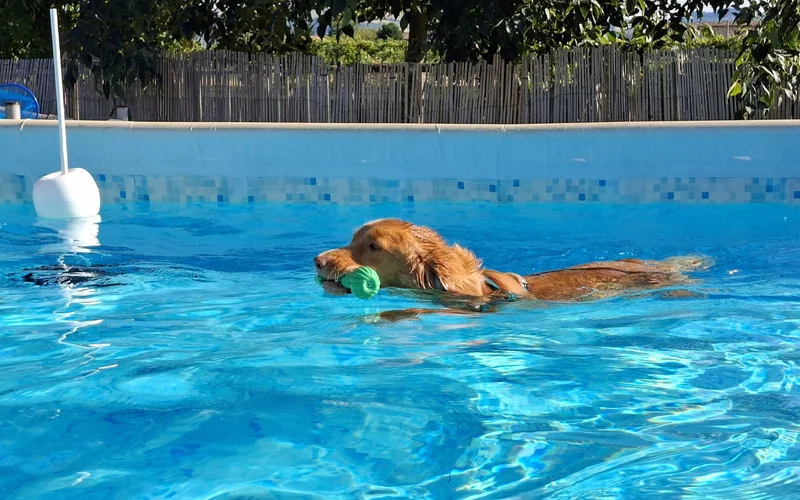
In the pool, I give Fanta calm breaks to rest and absorb what she’s learning. She often spends them swimming back with a little rubber toy, because retrieving is pure joy for her. A pause isn’t wasted time. It’s part of the learning.
Give Yourself (and Your Dog) the Right to Get It Wrong
Letting go of the need to never make mistakes is the first step toward exploring life with calm curiosity. That’s true with your dog, and it’s true everywhere else.
The K9TI course reflects this spirit as well. The Total Transformation Masterclass asks you to move at your own pace. You only start the next day’s homework once your dog has truly mastered the current one, however long that takes. As the trainers remind you, it’s a marathon, not a sprint.
I still think about a moment from Diana’s advanced Scent Game days.
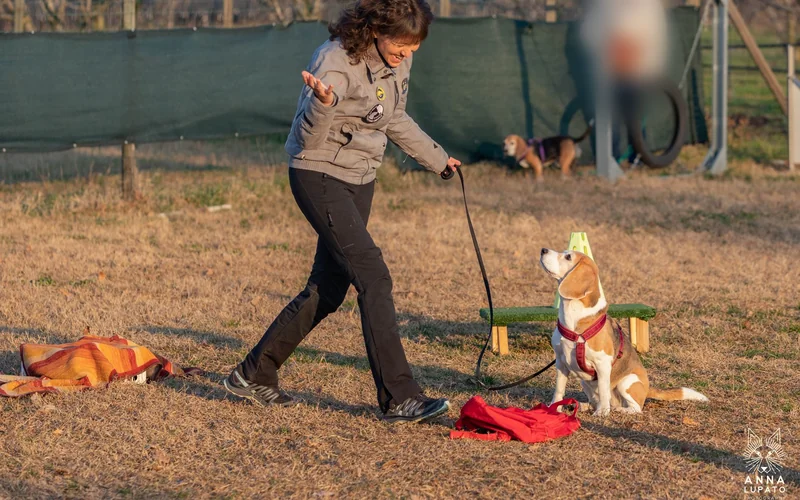
She found a hidden odor, and Simona celebrated with her as if they’d won a championship. That joy didn’t come from a perfect record. It came from all the mistakes they had shared along the way.
The only real mistake is the one we learn nothing from. So give yourself permission to try, get it wrong, learn, and improve together with your dog. Do it on everyday walks, in your living room, or in whatever sport you share.
Now I’d love to hear from you. What’s a mistake that ended up teaching you and your dog something important?
Tell me about it in the comments.
Your story might be exactly what another owner needs to read today.