
Disclosure: This post about what to do when your dog refuses to walk contains affiliate links. If you click through and make a purchase, I may earn a commission — at no extra cost to you. I only recommend products and courses I genuinely believe in, and all opinions expressed here are my own.
You step out the door, leash in hand, ready for a nice walk. Three steps later, your dog stops. Not to sniff a tree or check out a mailbox. They just plant all four paws on the sidewalk and won’t budge. You coax, you wait, you tug a little. Nothing.
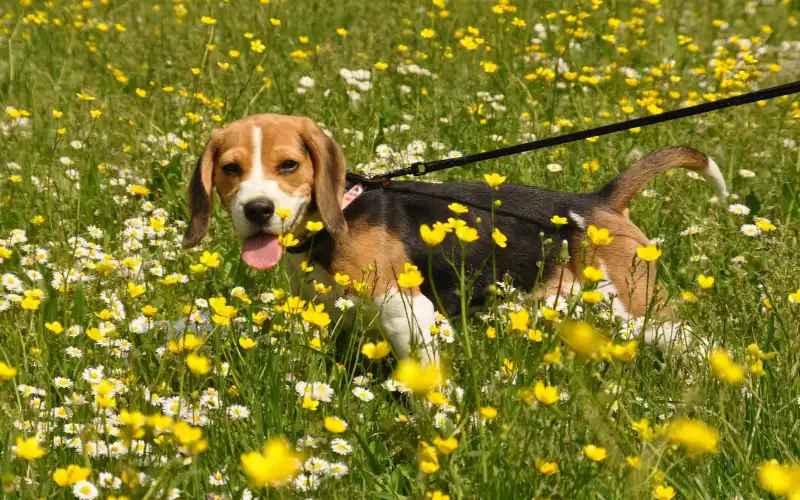
If your dog refuses to walk like this, you’re not alone. I see it all the time as a trainer, and I lived it at home too. Diana, our Beagle, had her moments of turning into a furry statue in the middle of a walk.
It happens more often than people think, especially with puppies.
The good news is that there’s almost always a reason behind it. Your dog isn’t being stubborn or trying to embarrass you in front of the neighbors.
They’re telling you something, and our job is to figure out what.
What It Really Means When Your Dog Refuses to Walk
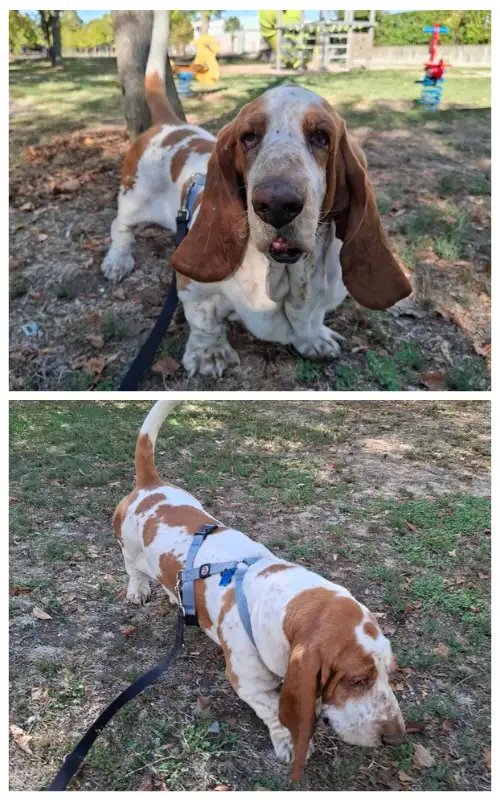
Let’s clear one thing up first. A dog who stops every few yards to sniff grass, fences, and street corners is not refusing to walk. That’s a dog being a dog. The nose is how dogs read the world, and for scent hounds especially, it’s the job they were born to do. There’s nothing to correct there.
What I’m talking about is different. It’s the dog who freezes for no visible reason. No smell, no squirrel, no other dog in sight.
Sometimes it happens halfway through the walk. Other times it starts right outside your front door, before the walk has even begun. And if you try to urge them forward, they lean back and dig in even harder.
That freeze is communication.
In my experience, it usually points to one of three things: physical discomfort, fear, or a walk that simply doesn’t feel good to them. Let’s go through them in order, starting with the one you should never skip.
Before Anything Else: Is Your Dog in Pain?
If your dog refuses to walk all of a sudden, after months of happy outings, call your vet first. Please don’t skip this step, even if the behavior seems “just behavioral.”
Dogs are remarkably good at hiding pain.
According to the veterinarians at VCA Animal Hospitals, reduced stamina on walks, reluctance to use stairs, and a preference for sitting or lying down during breaks can all signal discomfort. Sore joints, a hurt paw pad, a hidden injury, or early arthritis can make any walk feel like a chore.
Check the simple things too. Look at their paws for cuts, splinters, or burrs. Notice whether the sidewalk is scorching hot or icy. Make sure the collar or harness isn’t rubbing or pinching anywhere.
If you don’t have a vet you fully trust yet, here’s my guide on how to choose a veterinarian for your dog. Once your vet confirms your dog is healthy, you can look at the behavioral side with a clear mind.
Why a Dog Refuses to Walk: The Most Common Reasons
Once pain is off the table, the reason a dog refuses to walk is almost always emotional. Here are the reasons I come across most often.
Fear of Something Specific
A loud truck, a barking dog behind a fence, a garbage can that crashed over last week. Dogs can learn to avoid a spot after just one scary experience. If your dog always freezes at the same corner, that corner probably holds a memory.
Too Much at Once
Sometimes it’s not one big thing but many small ones. Traffic, strangers, a skateboard, a bicycle bell. Trainers call this “trigger stacking.” Each stressor adds up until your dog hits the brakes. Certified behavior consultant Ren Volpe explains this really well in her article on what to do when your dog balks on walks.
A Puppy Still Figuring Things Out
Puppies are the champions of the sidewalk sit-in. Everything is new: the leash, the noises, the strange feeling of being attached to a human. A little hesitation at this age is completely normal. If your puppy is still getting comfortable with their gear, my post on how to get a puppy used to a collar and leash walks you through it step by step.
The Walk Isn’t Their Idea of Fun
Some dogs stop because they want to go a different way. Others stop because they don’t want the walk to end. And plenty of dogs find the same short loop around the block, done at a brisk pace on a tight leash, pretty boring. Can you blame them?

Three Mistakes to Avoid When Your Dog Refuses to Walk
Over the years, I’ve watched a few common reactions turn a small hiccup into a daily battle. I’d avoid these like the plague.
Playing the Drill Sergeant
Raising your voice, scolding, or going full “I’m the boss here” doesn’t fix anything. All your dog learns is that you become unpredictable when things get tense. That makes them less likely to trust you, not more.
Scooping Them Up
For most dogs, being lifted off the ground and carried around is unsettling. They lose control of their own body. On top of that, if you pick your dog up every time they stop, they’ll quickly learn a new rule: “When I don’t like a place, someone carries me out of it.” That can make the freezing happen more often. Save carrying for real emergencies, like a busy crosswalk.
Dragging Them Like a Sack of Potatoes
I left this one for last because it’s the most important. Pulling a frozen dog toward you confuses them and can strain their neck and joints. Done regularly, it can even teach them to pull on the leash. Worst of all, it can damage their trust in you in a single moment. You stop being their safe person and become the one who forces them into scary places.
What to Do When Your Dog Refuses to Walk
Here’s the core idea behind everything that follows: you want to become the most interesting thing on that sidewalk. Following you should feel safe, rewarding, and even fun.
Start With Your Own Calm
Before you try anything, take a breath. Dogs are incredibly tuned in to our emotional state. If you’re frustrated or embarrassed, your dog feels it, and their worry grows. I’ve written more about this in my post on emotional contagion in dogs. Your calm is the foundation for every technique below.
Use Your Voice (Yes, the Silly One)
A cheerful, high-pitched, slightly ridiculous voice works wonders. It grabs your dog’s attention and signals that something good is happening. Will the neighbors give you a funny look? Maybe. Your dog won’t care, and neither should you 🙂
Talk With Your Body
Dogs read body language far better than words. Try taking a step or two toward your dog, then turn and walk off in the direction you want to go. In dog terms, you’re inviting them to follow.
Another option is to walk a small circle around your dog, then head off in your chosen direction. The movement often breaks the freeze. Keep all of this within the length of the leash, and never yank or pull.
The Open Invitation
If your dog already comes when you call, this one is gold. Move to the end of the leash, crouch down, open your arms, and call them in a playful voice. When they take even a few steps toward you, celebrate it.
The K9 Training Institute recommends almost the exact same move in Module 4 of their Total Transformation Masterclass: squat down, call your dog to you, and praise them when they arrive. I always find it reassuring when a structured program confirms what works in daily practice.
If you’d like to see how this fits into a complete approach to walking together, their free workshop is a good place to start.
Food and Toys: A Bridge, Not a Crutch
Many trainers, K9TI included, advise against dangling treats to lure a dog forward. In general, I agree. A dog who walks only for a cookie hasn’t really learned anything.
Still, with a nervous puppy, I sometimes use a favorite treat or toy as a short-term bridge. Let them sniff it, invite them calmly, and reward the moment they decide to move.
Keep this for the early days only. The real goal is for your relaxed, playful presence to become the reward.
Make the Walk Worth Walking
Sometimes the fix isn’t about the stop itself. When a dog refuses to walk, the walk itself can be part of the problem. A dog who enjoys the outing has far fewer reasons to refuse it.
Try these simple changes:
- Use a longer leash, six feet or more, so your dog doesn’t feel trapped.
- Let them sniff, because sniffing helps a nervous dog settle down.
- Vary your route so tricky spots don’t become daily standoffs.
- Slow down, since your dog’s pace isn’t always your pace.
If you want fresh ideas, my guide to the enrichment walk for dogs is full of easy ways to make any route more interesting.
For a hesitant dog, a walk that feels like an adventure can be the key that unlocks everything.
When Your Dog Refuses to Walk Every Single Time
If every walk ends in a standoff, don’t give up on walks. Dogs need movement, exploration, and time outside. Without them, frustration builds and often shows up in other ways at home.
Instead, shrink the goal. Go out, walk a short stretch your dog can handle, and head back home. The next day, go a little farther. Then a little farther again. Small, successful outings build confidence much faster than long, stressful ones.
There’s a balance to strike, though. You shouldn’t force your dog into anything. But you also shouldn’t follow them blindly every time they freeze or turn toward home.
Respect the fear, then help them work through it gently. If the freezing comes with strong fear signals, like trembling, hiding, or heavy panting, a certified force-free in-person trainer or a veterinary behaviorist can be a great ally.
Every Dog Is Their Own Person
There may be areas your dog never loves. There will be days when they feel less like walking. That’s not a training failure.
Your dog is a living being with a personality all their own, and their mood goes up and down just like yours. If you’re curious about this, I dug into the science in my post asking do dogs have personalities in the first place.
The better you know your dog, the easier it becomes to read why they stopped. A shy dog needs patience. A bold dog may just need a better reason to keep going.
Walking Together Again
With calm, patience, and a little playfulness, you can translate one simple message into your dog’s language: “Come on, there’s nothing to fear. Let’s walk together. You can trust me.”
And who knows? You might both start having fun out there.
If you’d like a step-by-step framework for building that kind of trust, the Total Transformation Masterclass by K9TI is a great next step. It covers everything from calm leashing to loose leash walking, and the free workshop is an easy place to begin.
Now I’d love to hear from you. Does your dog refuse to walk in one particular spot, or at a certain time of day?
What have you tried so far?
Share your story in the comments below.
Your experience might be exactly what another reader needs today.