
Disclosure: This post about the question “Is my dog dumb?” contains affiliate links. If you click through and make a purchase, I may earn a commission — at no extra cost to you. I only recommend products and courses I genuinely believe in, and all opinions expressed here are my own.
Is my dog dumb? It’s one of the most common things dog owners say out loud, usually right after something specific happens.
A dog barks at the gate and doesn’t stop the second you ask. Another doesn’t come sprinting the instant you call his name. And suddenly, out comes the word: dumb.
I want to make a case for something different here. Not that every dog is a secret genius. Just that the question itself is broken.
Once you see why, you’ll never look at your “stubborn” dog quite the same way again.
Why We’re So Quick to Ask “Is My Dog Dumb?”
Humans love ranking things. Give us two of anything, and we’ll try to decide which one is better. It’s a useful habit for choosing a laptop. It’s a fairly terrible habit for judging a mind that isn’t human at all.
Here’s the problem with it. Ranking only makes sense when you’re comparing the same category, on one specific, measurable trait.
Comparing two internet connections works, because you’re measuring one clear number. Comparing a chess player to a hockey player doesn’t work nearly as well. “Skill” means something completely different in each sport.
Now ask whether a Border Collie is smarter than a Beagle. You’ve made the exact same mistake behind almost every “is my dog dumb” complaint I hear. You’re comparing two different jobs, not two scores on the same test.

What “Intelligence” Actually Means for a Dog
Psychologist Stanley Coren spent years studying this exact question. His research, published through the American Psychological Association, broke canine intelligence into three distinct types.
- Instinctive intelligence is what a dog is bred to do without ever being taught it. A Beagle following a scent trail is using it. So is a Border Collie eyeing a flock of sheep.
- Adaptive intelligence is what a dog figures out entirely on its own, through trial and error.
- Working and obedience intelligence is how fast a dog learns from us. It’s the closest thing dogs have to classic school learning.
Notice something important here.
A dog can be exceptional at one of these types and fairly unremarkable at another. Neither result makes that dog dumb. It just makes “how smart is my dog” a strange question to ask on its own.
You have to specify which kind of smart you actually mean.
Dogs Are Smarter With Language Than You’d Guess
This is also why obedience rankings can mislead you if you take them too literally.
Border Collies and Poodles usually top those lists, and both breeds are genuinely gifted. But that ranking measures one type of intelligence: working and obedience. It says very little about a Beagle’s nose. It says even less about a Greyhound’s read on a moving target, or a Golden Retriever’s radar for human emotion.
Dogs are also better with language than most people expect, regardless of where they land on that list. The average dog can learn somewhere around 165 words. Some can learn well over 200. A Border Collie named Chaser famously learned the names of more than a thousand individual objects.
Researchers spent years documenting the feat. None of that happened because Chaser was an outlier freak of nature. It happened because someone finally tested a dog’s memory properly, instead of assuming there wasn’t much there to find.
So, Is My Dog Dumb? You’re Probably Asking the Wrong Question
You’ve likely heard that dogs are about as smart as a two-year-old child. Dr. Alexandra Horowitz runs the Dog Cognition Lab at Barnard College. She has spent real energy pushing back on that particular comparison. In her view, it manages to both overstate and understate what a dog’s mind actually does, in the same breath.
Here’s why. A toddler and a dog don’t share one sliding scale called “smart.” Each one lives inside its own version of reality, built around whatever senses matter most to its species.
A dog’s world runs on scent in ways a toddler’s world simply never will. Ask a two-year-old to identify a person by smell alone, and the toddler loses badly. Ask a dog to recite the alphabet, and the dog loses just as badly. You simply tested the wrong species for that particular skill.
That’s the honest answer to “is my dog dumb.” Your dog isn’t failing some universal test that was designed for him. He’s acing a completely different one, built around senses and priorities you don’t happen to share.
Is My Dog Dumb? *Every* Breed Is Smart at Something Different
This is where breed history stops being trivia and starts being genuinely useful.
Guard breeds watch and assess everything around them. Retrievers fixate on carrying things back to you. Hounds track scent for miles without losing the thread. Herding breeds read the smallest twitch of movement in a flock, or, more often these days, in their own family.
None of this happened by accident. I’ve written a deeper look at why dog breeds exist and the work each one was built for, for the fuller picture.
A Beagle that goes selectively deaf mid-scent isn’t malfunctioning. That single-minded focus is precisely the trait breeders spent centuries reinforcing. A hound that gave up on a trail halfway through was useless to them.
The same determination gets labeled “stubborn” in a living room. Out in a field, it was the entire point of the breed.
Mixed-breed dogs get a fair share of this too. They often blend two or three working styles at once, which is part of why they can be so wonderfully unpredictable in the best sense.
Breed explains a lot of this, but it isn’t the whole story. Individual personality plays a real role as well, and that’s a related but genuinely different question from intelligence. I’ve explored whether dogs have real personalities in a separate post, if you’re curious how the two connect.
What Looks Like “Dumb” Is Usually Something Else
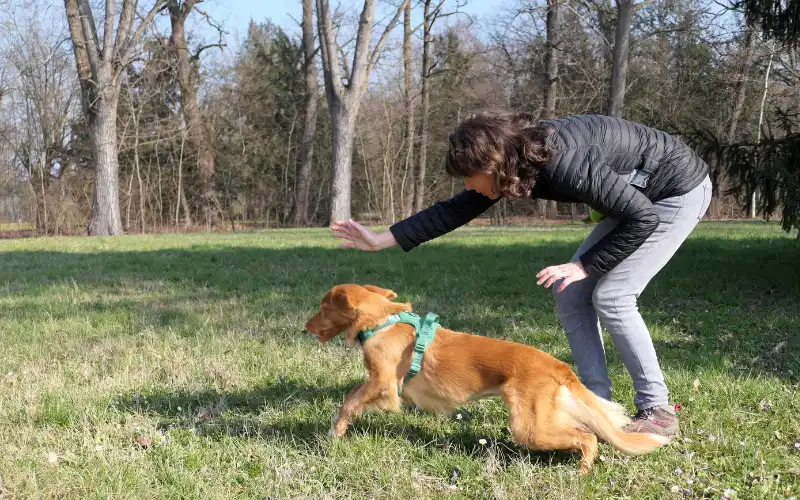
Most behavior people label dumb is actually a dog making a perfectly reasonable decision. He knows “come” often means the fun is about to end. So he quietly weighs the fun against the word, and sometimes the fun wins. That’s not confusion on his part. That’s a small, fast cost-benefit calculation, and most humans would make the identical call in his position.
The same goes for a dog who “ignores” a cue he technically knows. “Sit” repeated fifty times a day for no clear reason stops meaning much. Plenty of dogs simply stop treating it as worth a response. That isn’t forgetting. It’s a dog correctly noticing that the word has stopped predicting anything worth reacting to.
Some trainers argue the opposite of the popular assumption. A dog who pauses, evaluates, and decides whether a cue is worth following is often showing more intelligence, not less, than one who reacts like a pure reflex.
If this sounds familiar, I’ve written a full breakdown of what’s really going on when a dog won’t come when called. The short version: it’s rarely about intelligence, and almost always about what “come” has come to predict for him.
How to Actually Engage the Smart Dog You Already Have
Stop asking whether your dog is smart. Start asking what kind of smart he is, and everything gets more useful.
Try matching the game to the dog in front of you.
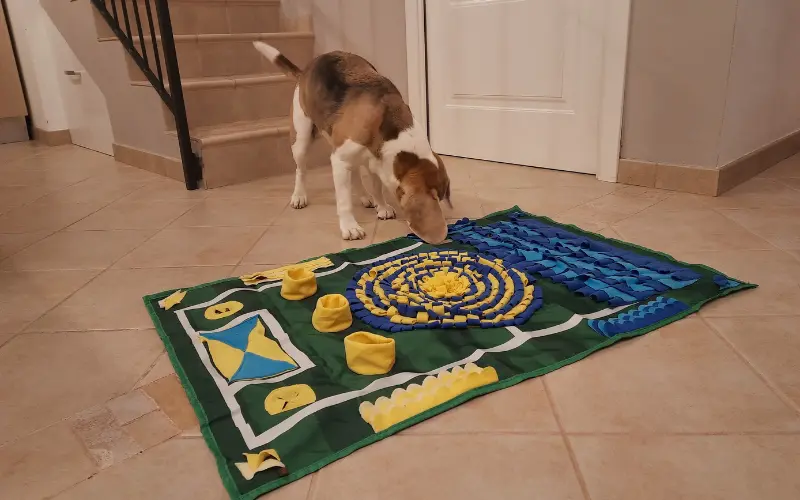
A scent-driven dog lights up over a simple nose-work game hidden around the yard. Puzzle feeders tend to win over a dog with strong adaptive intelligence. That type loves solving problems nobody assigned him. Trick training and structured short sessions suit a dog bred for close teamwork with a person. I’ve put together a broader guide on dog mental stimulation if you’d like more ideas to try this week.
This is also exactly where good training earns its keep. Working with a dog’s actual instincts, instead of demanding he ignore them, is the whole philosophy behind the K9 Training Institute’s Total Transformation Masterclass. It doesn’t ask your dog to stop being himself. Instead, it teaches you to speak in a way the specific, genuinely smart dog in front of you can actually understand.
So, is your dog dumb? I’d bet not.
I’d bet he’s just answering questions nobody ever thought to ask him.
What’s the “dumbest” thing your dog does that might actually be pretty clever once you think it through? I’d love to hear it in the comments 🙂